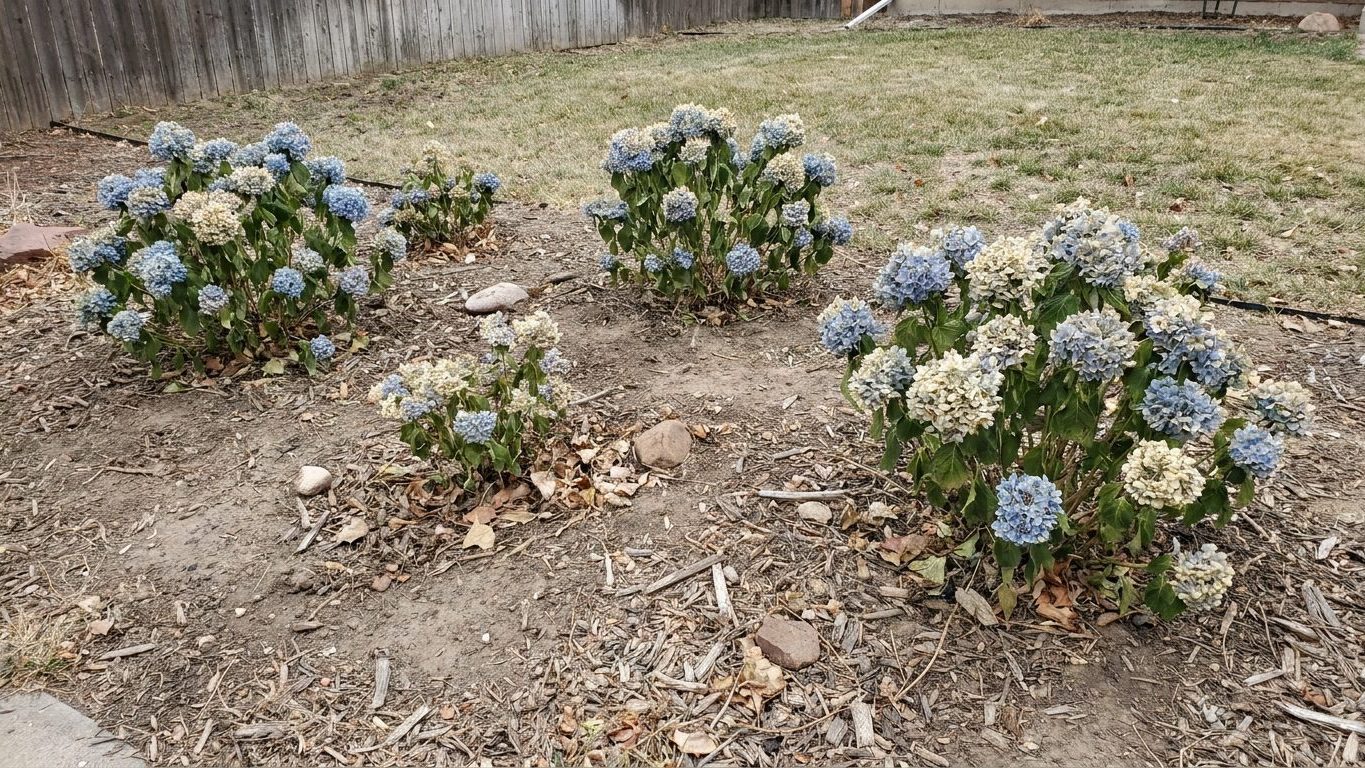
Yes, hydrangeas grow well in Delaware, and most of the state sits comfortably in USDA zones 7a to 8a. Panicle and smooth types thrive with almost no fuss. Bigleaf hydrangeas work too, but a late-spring frost around Wilmington can nip buds already swelling, so timing matters more here than the zone number alone suggests.
Hydrangeas Care Calendar for Delaware

NOAA NCEI’s 1991-2020 Climate Normals put Wilmington’s last spring frost between April 3 and April 14, and the first fall frost between October 26 and November 7, with the state spanning USDA zones 7a to 8a.
- Dormancy: the safest window to move a plant runs from the first fall frost through late winter, before new growth starts.
- Planting: get roots into the ground two to three weeks after the last spring frost, once mid-April soil has warmed, or wait for fall.
- Bud break watch: bigleaf buds swell in early April, right as Wilmington’s frost risk is still open, so keep row cover handy through mid-April.
- Pruning: cut old-wood bloomers right after their flowers fade in midsummer, and cut new-wood types back hard in late winter.
- Feeding: feed lightly three to four weeks after the last spring frost, once new leaves have unfurled, and skip a second round after midsummer.
- Fall prep: mulch four inches deep as nights cool toward the first fall frost window, to buffer roots through winter.
- Winter watch: check exposed buds after any hard freeze that follows a warm stretch, since that swing is what actually kills flowers here.
Every one of those windows shifts by a week or more once you leave Wilmington’s airport gauge, so treat this list as a starting line, not a guarantee for your own yard.
Delaware — the year and the numbers
- State
- Delaware
- USDA zones
- 7a-8a
- Last spring frost
- April 3 to April 14
- First fall frost
- October 26 to November 7
- Annual rain
- 45 in
- Lawn zone
- cool-season
- Source
- NOAA NCEI 1991-2020 Climate Normals, 32F freeze probabilities · Wilmington
Best Hydrangeas for Delaware
Not every hydrangea shrugs off a Delaware winter the same way. NC State Extension Gardener Plant Toolbox lists garden types spread roughly across zones 3 to 9, and that range hides real differences once a late frost hits swelling buds in Wilmington’s 7a to 8a stretch.
Panicle and smooth types bloom on new wood, so cold damage to last year’s growth costs nothing. Bigleaf and oakleaf set their buds the summer before, which is exactly where Delaware’s spring frost swings do the most harm.
| Kind | Verdict here | Why |
|---|---|---|
| Panicle | Reliable | Blooms on new wood, shrugs off a late frost |
| Smooth | Reliable | Also new-wood, tough through Delaware winters |
| Bigleaf | Good, watch timing | Old-wood buds vulnerable to April frost swings |
| Oakleaf | Good with shelter | Old wood too, but hardier stems than bigleaf |
| Climbing | Slow but workable | Needs a sturdy wall and a few patient years |
Climbing hydrangea earns its spot given a sturdy structure and patience for that first bloom. The other kinds, like mountain hydrangea, are on their own page for readers hunting something less common.
When to Plant, Prune and Feed Hydrangeas in Delaware
Every hydrangea task in Delaware counts forward or back from frost, not from a fixed date on a wall calendar. NOAA NCEI’s 1991-2020 Climate Normals set Wilmington’s last spring frost between April 3 and April 14, the anchor for everything below.
Old-wood bloomers need their cut timed to when flowering ends, not to a fixed season, or next year’s buds go with the clippings. New-wood types forgive a harder late-winter cut.
| Task | Window here | Counted from |
|---|---|---|
| Planting | Two to three weeks after last frost, or roughly six weeks before first fall frost | April 3 to 14 last frost, Oct 26 to Nov 7 first frost |
| Pruning old wood | Right after bloom fades, midsummer | Bloom time, not frost |
| Feeding | Three to four weeks after last frost | April 3 to 14 last frost |
Skip fall feeding altogether. Fresh growth pushed in the six to eight weeks before the first frost rarely hardens off in time and dies back anyway.
Hydrangeas Problems in Delaware and What Causes Them
No flowers on an otherwise healthy shrub

This usually traces to timing. NOAA NCEI’s 1991-2020 Climate Normals show Wilmington’s last spring frost can land as late as April 14, and bigleaf buds already swelling that week take the hit while the rest of the plant looks fine.
Leaves scorched by midsummer

Full afternoon sun plus a dry stretch burns leaf edges fastest, since Delaware’s humid summers don’t forgive a bigleaf planted without afternoon shade. Move it, or run a soaker hose through August.
Buds killed after a warm spell

A run of warm March days followed by a return freeze inside the April 3 to April 14 window kills swelling buds before they open, a pattern more common in low, frost-pocket sites than on a slope.
Delaware North to South: How the Dates Shift
Delaware runs barely 100 miles top to bottom, but the coast and the Piedmont edge up north don’t share a calendar.
- Northern Delaware (New Castle County, near the Piedmont hills): frost tends to linger a few extra days into spring, so I’d hold off planting a week past the Wilmington window.
- Central Delaware (Kent County, around Dover): flat farmland warms faster once spring arrives, often nudging the safe planting date earlier.
- Coastal Sussex County (Rehoboth and the bay side): the ocean moderates swings, usually pushing the first fall frost later and softening winter lows.
Whichever county you garden in, treat Wilmington’s dates as a starting point and nudge the calendar in the direction your own frost history points.
Delaware Extension Offices and County Contacts
Delaware’s 7a to 8a range covers a small state, but a county agent still knows your soil and your yard’s microclimate better than any statewide chart.
- University of Delaware Cooperative Extension: find your county office and ask about local frost pockets before you plant.
- Delaware’s month-by-month calendar: the full year mapped week by week for every task above.
- Which hydrangeas hold up here: a deeper look at kinds beyond the five compared above.
Whatever month you’re reading this, call your county office before you break ground on a new bed, and let them confirm this season’s frost outlook.
Common questions
Can I grow bigleaf hydrangeas in Delaware? Yes, across the state’s 7a to 8a range, but plant them where late frost can’t reach swelling buds, and expect an off year now and then near Wilmington’s April 3 to 14 frost window.
When is the best time to plant hydrangeas in Delaware? Two to three weeks after the last spring frost, once soil has warmed, or in fall a good six weeks before the first frost arrives.
Why didn’t my hydrangea bloom this year in Delaware? Check first whether it flowers on old wood, since a mistimed prune or a late frost on already-swollen buds are the two most common culprits here.