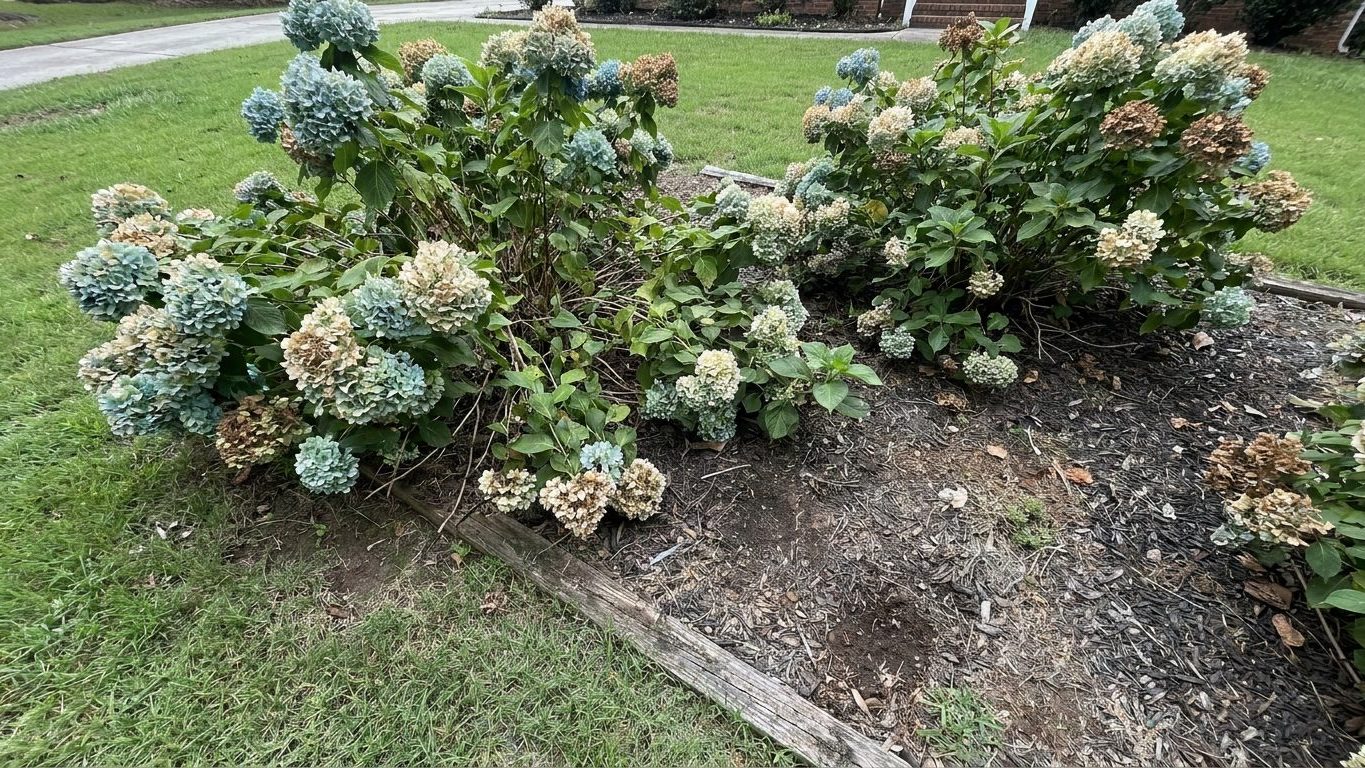
Georgia’s hardiness range runs 6a to 9b, wide enough that nearly any hydrangea sold at a nursery survives winter here. The real question is bloom, not survival: whether a plant’s buds dodge a late frost, and whether the calendar you follow matches your own corner of the state rather than Atlanta’s.
Hydrangeas Care Calendar for Georgia

NOAA NCEI’s 1991-2020 Climate Normals put Atlanta’s last spring frost at March 11 to March 29 and its first fall frost at November 13 to December 1, with the state’s own hardiness range running 6a to 9b, and every task on a hydrangea’s year bends around those two windows.
- Dormancy: the one safe window to move a plant, roots undisturbed and leaves down.
- Planting: two to three weeks after the last frost, once soil has warmed enough to work.
- First feeding: a light round as new growth pushes, timed to the state’s early spring window.
- Bud set and bloom: bigleaf types flower on last year’s wood through early summer, so pruning waits.
- Midsummer feeding: a second round carries color and vigor through the hottest stretch of the year.
- Fall planting: six to eight weeks before the first frost, giving roots time to settle before cold.
- Frost watch: as the first frost nears, mulch protects roots and any buds still forming.
Whichever month it lands in on paper, each step here counts from one of those two frost dates, not from a fixed date on a wall calendar.
Georgia — the year and the numbers
- State
- Georgia
- USDA zones
- 6a-9b
- Last spring frost
- March 11 to March 29
- First fall frost
- November 13 to December 1
- Annual rain
- 50 in
- Lawn zone
- transition-season
- Source
- NOAA NCEI 1991-2020 Climate Normals, 32F freeze probabilities · Atlanta
Best Hydrangeas for Georgia
USDA’s Plant Hardiness Zone Map puts Georgia at 6a to 9b, a range broad enough that survival isn’t the filter. The filter is whether a plant blooms on old wood or new, since old wood carries more risk after a mild winter here.
New-wood bloomers sidestep that risk entirely, flowering on stems the plant grows fresh each spring regardless of what winter did. Old-wood bloomers can still work, but they need a steadier hand and a sheltered spot.
| Kind | Verdict here | Why |
|---|---|---|
| Bigleaf | Mixed, better toward the south | Old wood buds risk a late frost in the state’s northern reach |
| Panicle | Reliable statewide | Blooms on new wood, comfortable across the full 6a to 9b range |
| Smooth (Annabelle-type) | Reliable statewide | New-wood bloomer, tolerant of the state’s whole zone spread |
| Oakleaf | Strong pick | Bred for southeastern heat and humidity, holds up end to end |
| Climbing | Workable, slow | Hardy through the range, just takes years to cover a wall |
The other kinds, including reblooming bigleaf cultivars bred to flower on new growth after a frost takes the old wood, get a fuller look on the which-ones-hold-up-here page, since the state’s zone range gives them more room than a quick verdict allows.
When to Plant, Prune and Feed Hydrangeas in Georgia
Georgia’s calendar gives hydrangeas three fixed windows: planting in March, April, September, or October, fertilizing in March, May, and July, and pruning bigleaf types in June or July, right after bloom fades.
Every one of those months is set against Atlanta’s frost dates, since NOAA NCEI’s climate normals put the last spring frost at March 11 to March 29, giving spring planting a firm starting line each year.
| Task | Window here | Counted from |
|---|---|---|
| Plant | March to April, or September to October | Spring soil warms after the last frost, fall closes six to eight weeks before the first |
| Fertilize | March, May, July | Spring growth push, then again at the height of summer heat |
| Prune bigleaf | June, July | Right after bloom fades, before next year’s buds start forming |
Prune bigleaf and oakleaf types only in that window, never in fall or winter, since next year’s flowers are already set inside the stems by late summer.
Hydrangeas Problems in Georgia and What Causes Them
No flowers on a healthy shrub

Bigleaf and oakleaf types set next year’s buds on old wood by late summer, and a mild stretch followed by a hard freeze inside the March 11 to March 29 window can kill those buds before they open. Skip fall pruning, and check the what-goes-wrong page for reblooming cultivars.
Leaves scorched on the sunny side

Georgia summers push well past what a bigleaf hydrangea tolerates in full afternoon sun, especially in the state’s warmer zones near the coast. Afternoon shade and deep, infrequent watering keep leaves from crisping by August.
Roots sitting in heavy clay

Much of the Piedmont holds thick red clay that drains slowly, and roots left wet through a humid summer rot before the plant shows any wilt. Raised beds or compost worked into the planting hole fix drainage before stress ever shows.
Georgia North to South: How the Dates Shift
Georgia’s 6a to 9b range isn’t one climate, it’s three, and the shift from mountain to coast changes both frost timing and how safely a hydrangea holds old wood through winter.
- North Georgia and the mountains (bordering Tennessee and North Carolina): frost lingers later here than the Atlanta dates suggest, so old-wood bloomers carry more risk.
- The Piedmont around Atlanta: this is the reference climate behind the state’s own numbers, with NOAA NCEI’s climate normals placing the spring frost window at March 11 to March 29 right here.
- The coastal plain toward Savannah (sharing weather with coastal South Carolina): frost arrives later in fall and clears earlier in spring, easing pressure on old-wood buds.
For how these same shifts play out somewhere with a real winter, the Michigan hydrangea page runs a frost calendar months earlier than Georgia’s.
Georgia Extension Offices and County Contacts
Georgia’s extension network, run through the University of Georgia, adjusts the state’s broad 6a to 9b range down to what actually happens in your yard.
- Your state page: the frost dates and pruning window for Georgia, gathered in one place.
- Which ones hold up here: a deeper look at cultivars suited to the state’s zone range and heat.
- What goes wrong here: the pests and soil issues tied to Georgia’s clay and humidity.
September sits inside the state’s fall planting window, so a call to your county office at extension.uga.edu before you dig is the fastest way to get it right. For the full picture across every kind of hydrangea, the hydrangeas guide covers the rest.
Common questions
When should I plant hydrangeas in Georgia?
Stick to March or April in spring, or September and October in fall, so roots have mild weather to settle in before either summer heat or winter cold arrives.
Do hydrangeas need pruning every year in Georgia?
Bigleaf and oakleaf types only need it in June or July, right after bloom, since they set next year’s buds soon after. Panicle and smooth types tolerate a late winter cut instead.
Which hydrangea handles Georgia’s heat best?
Oakleaf and panicle types hold up across the whole 6a to 9b range without much fuss. Bigleaf types do better with afternoon shade, especially south of Atlanta where summers run longest.