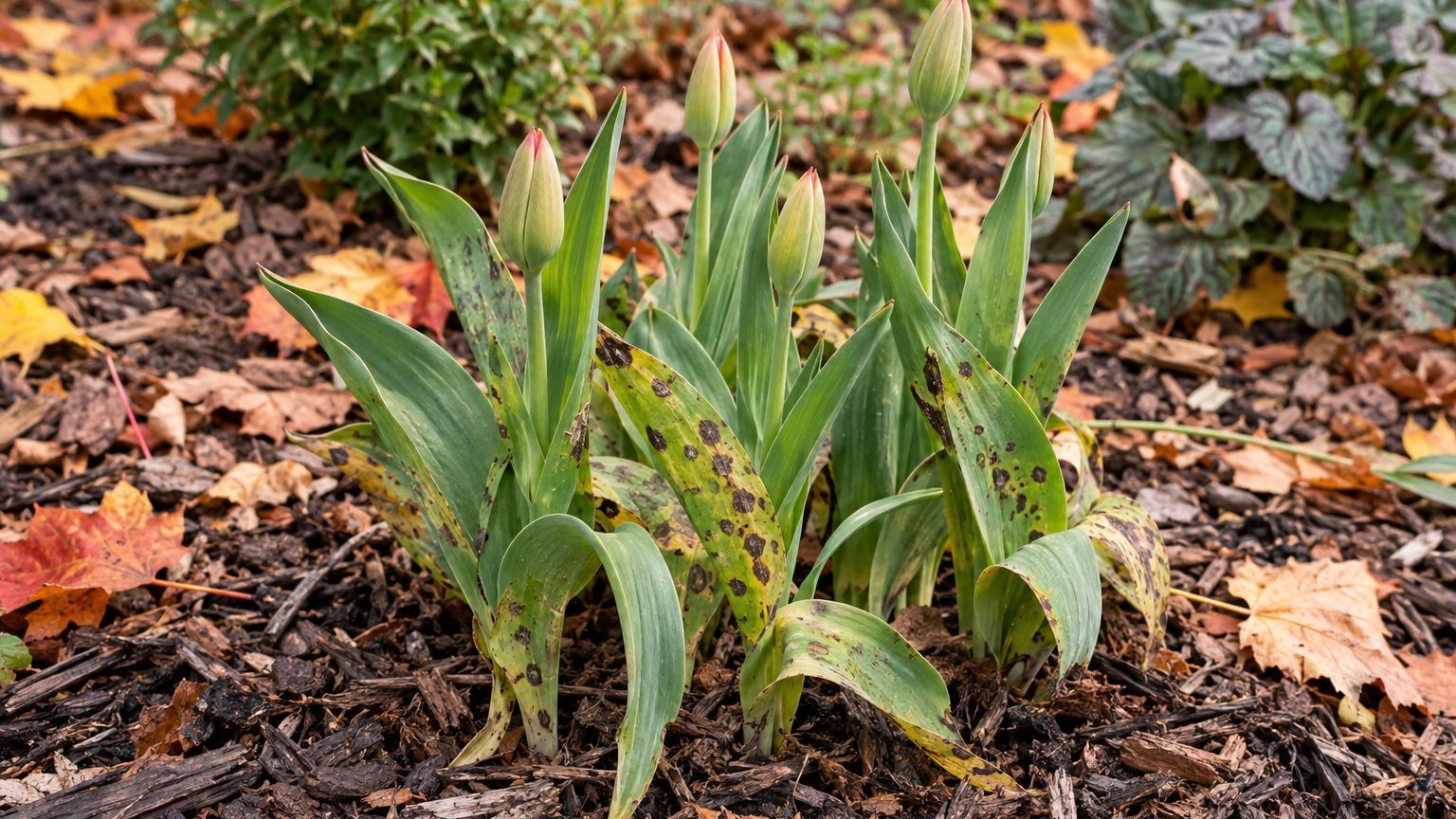
A tulip or daffodil that never breaks the soil in spring, or comes up and wilts, often has a bulb gone soft underneath. Rot in spring bulbs can be caused by fungi or bacteria, while wet soil and wounds in bulb tissue favor infection. Once a bulb is infected, it does not come back.
Bulbs Rotting in the Ground: What You See
The clearest evidence is underground, though the leaves give early warning.
- A bulb dug up from a failed spot feels soft or spongy, and the decayed tissue has turned brown to purplish-red.
- The decay starts at the roots or the base of the scales and climbs upward inside the bulb.
- Shoots fail to emerge in spring, or they emerge and wilt soon after.
- In Iowa, tulips with stunted, yellowed leaves that never fully emerge are a typical sign of bulb rot.
- Brown lesions show at and just below the soil line, with darkened strands inside the stem.
Plants that do come up from an infected bulb grow weakly and flower poorly, if at all.
From the almanac
Bulbs in your state
The dates on this page depend on where you live. Your state's page carries its frost dates, its USDA zones and the year laid out month by month.
Northeast
Southeast
- Alabama
- Arkansas
- Delaware
- Florida
- Georgia
- Kentucky
- Louisiana
- Maryland
- Mississippi
- North Carolina
- South Carolina
- Tennessee
- Virginia
- West Virginia
Midwest
Southwest
West
Pacific Northwest
Canada
Bulbs Rotting in the Ground or Something Else?
Several other bulb troubles also cause weak growth or ugly bulbs, and they call for different handling. Cutting the bulb open and looking at where the damage sits usually settles it.
Rot from the fungus described here starts at the base of the bulb and moves up, without a ringed pattern or a coat of mold.
| Looks like | How to tell them apart |
|---|---|
| Stem and bulb nematode damage | Slice the bulb crosswise: darkened scales form rings, and yellowish pockets hold the tiny worms. |
| Crown rot | The bulb is wrapped in layers of coarse white mold, which is not the brown to purplish decay of basal rot. |
| Smolder | Leaves are stuck together as they emerge, and foliage and flowers rot in a cold, wet season. |
Cool, soggy weather can favor overlapping problems, so check the bulb’s base and outer surface.
What Causes Bulbs Rotting in the Ground, and Where It Is Worst
Basal rot is caused by the soil fungus Fusarium oxysporum F. sp. Narcissi, which survives between seasons as microscopic spores. In Oregon, it becomes active in early spring or early summer when the soil reaches about 55 degrees Fahrenheit, and it attacks the bulb at its basal plate, the flat base where roots grow.
Wet ground gives the fungus its opening. Cool, soggy conditions and long stretches of wet weather favor infection, and bulbs sitting in water for long periods rot. Wet conditions favor bulb rot in Connecticut and South Carolina, so the problem is not confined to a particular region.
The fungus also arrives with the bulb itself. Wounds from digging, insects or rough handling let it in, and some bulbs carry a hidden infection with no symptoms until planting wakes it up. In Oregon, depending on soil temperatures, it can spread to neighboring bulbs along the roots.
How to Treat Bulbs Rotting in the Ground
Treatment means removing what is infected and changing the conditions around it, because a diseased bulb cannot be rescued.
- Pull up any plant that fails to emerge, wilts soon after emerging, or will not flower, so that the fungus has less bulb tissue to feed on and spread from.
- Dig carefully around the spot and check the neighboring bulbs; in Oregon, depending on soil temperatures, the fungus can travel between bulbs along the roots.
- Bag the diseased bulbs and old plant material and put them in the trash, because most home compost bins never get hot enough to kill the fungus.
- Rake out leftover plant debris from the bed, as the fungus winters over on diseased tissue from the year before.
- Improve a bed that stays wet by working in organic matter such as compost or shredded pine bark. In South Carolina, the advice is 2 to 3 inches of it.
- Mix it in deep enough to reach the root zone, which in South Carolina means 10 to 12 inches, so water drains below the bulbs instead of pooling around them.
Fungicide choices and approvals differ by state, so check what is allowed and useful where you garden. Bulbs that have already rotted will not come back, so the real gain comes from better drainage and clean replanting.
How to Prevent Bulbs Rotting in the Ground Coming Back
Prevention follows the bulb year, starting before planting and continuing through spring cleanup.
- In early spring, watch the bed for bulbs that fail to emerge and pull them promptly so the problem does not spread underground.
- When the soil warms and the fungus becomes active, keep standing water off the bed by clearing gutters, downspouts and low spots that flood after rain.
- After the foliage has turned yellow and died back on its own, clear the dead leaves and debris from the bed, but leave green leaves alone because they feed the bulb for next year.
- In fall, before planting, handle each bulb gently and set aside any that are soft, damaged or moldy, since wounds are an entry point for the fungus.
- At planting time, choose a spot with fertile, well-drained soil and loosen heavy soil with compost first.
Poets narcissus tolerates damp soil, while most spring bulbs need fertile, well-drained ground.
Where This Comes From
These details explain how to recognize bulb rot, remove affected bulbs, and make the bed less favorable to disease. Soil, weather and approved treatments vary by place, so use advice suited to local conditions before you replant or treat a bed.
Common Questions
Can a Healthy-Looking Bulb Still Be Infected?
Yes. Some bulbs carry the fungus without showing any sign, and the problem appears only after planting, when the fungus becomes active again. Firm, undamaged bulbs lower the risk, but cannot remove it.
Can Bulbs Rot While They Are in Storage?
They can. Basal rot often develops in storage, and infected bulbs can pass it to the ones next to them. Check stored bulbs before planting, toss the soft ones, and plant the rest as soon as the ground can be dug.
Which Spring Bulbs Tolerate Damp Soil?
Poets narcissus tolerates damp soil. Most other bulbs need fertile, well-drained ground, so a bed that stays soggy needs improvement before you plant anything else.