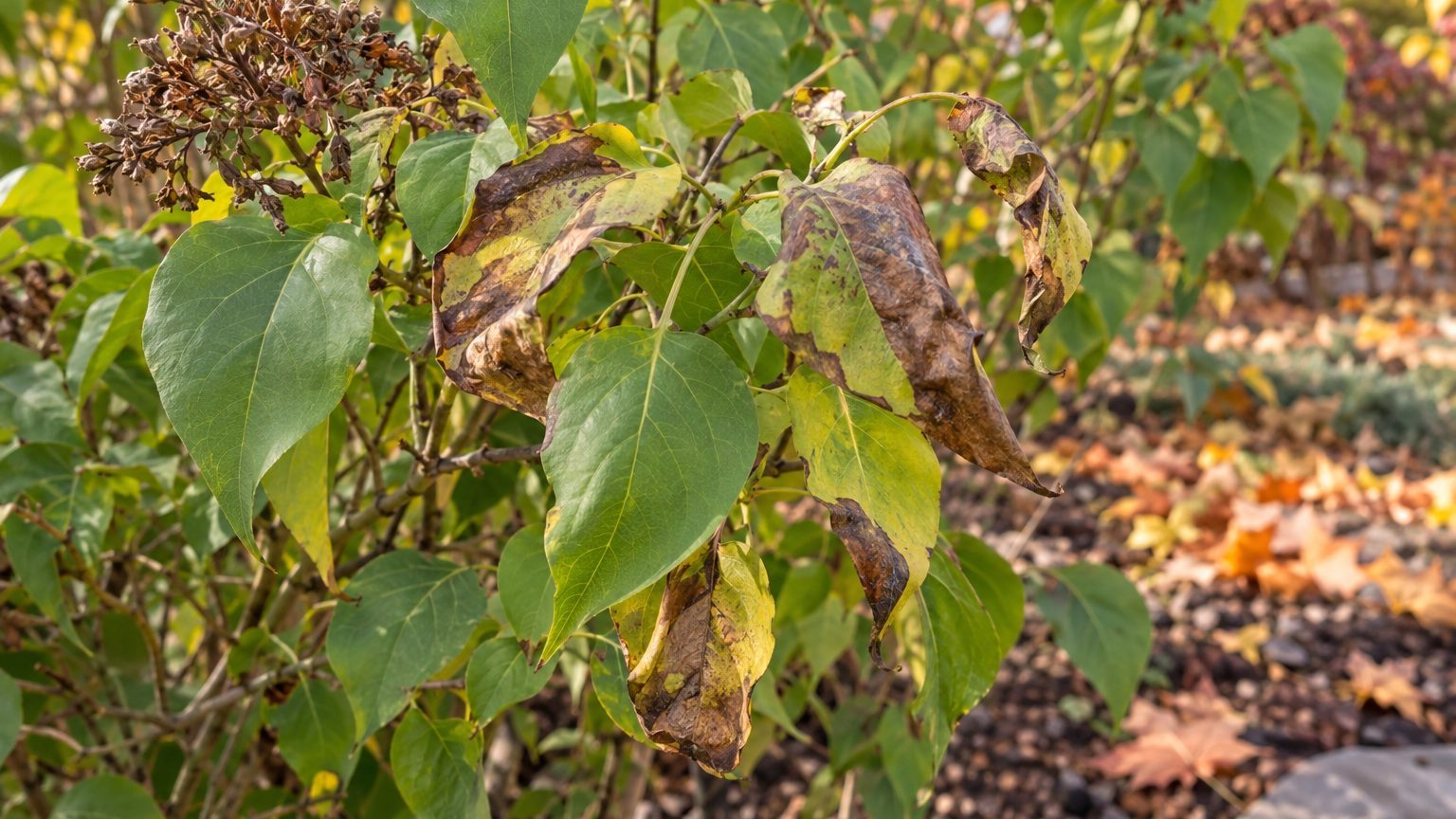
A lilac can look healthy and then suddenly appear singed. Often the cause is not thirst at all. Wilting on lilacs can point to bacterial blight in wet weather, though soil, heat and stem pests can produce the same droop.
Lilac Wilting: What You See

The signs that set blight apart show up on young growth in spring, so start your inspection there.
- Leaves look healthy at first, then suddenly appear scorched, as if held near a flame.
- Dark black streaks form on one side of young shoots.
- Flowers wilt and turn brown, and unopened buds blacken.
- Brown, water-soaked spots appear on leaves, starting pin-point small and growing to 1/8 inch or more.
- Spots merge, leaves twist out of shape, and eventually the leaves may die and drop early.
Spots that blend together and distort the leaf suggest that the problem is more than a dry spell.
From the almanac
Lilacs in your state
The dates on this page depend on where you live. Your state's page carries its frost dates, its USDA zones and the year laid out month by month.
Northeast
Southeast
- Alabama
- Arkansas
- Delaware
- Florida
- Georgia
- Kentucky
- Louisiana
- Maryland
- Mississippi
- North Carolina
- South Carolina
- Tennessee
- Virginia
- West Virginia
Midwest
Southwest
West
Pacific Northwest
Canada
Lilac Wilting or Something Else?
Several other troubles make a lilac sag or decline, and they call for different responses. Extra water can worsen wet-soil problems and will not stop a borer, so confirm what you are looking at before you act.
Pair what you see with where and when it appears. A droopy branch tells you little on its own.
| Looks like | How to tell them apart |
|---|---|
| Root rot from compacted, wet soil | The aboveground part of the shrub declines, and the soil is compacted and wet around the roots. |
| Stem borers | Holes in the stem near the base, with sawdust on the ground or on groundcover beneath the shrub. |
| Heat or light stress | Wilting begins after a change in exposure, such as a nearby tree being removed. |
| Lilac leaf blight (a fungus) | Brown spots begin at the leaf edges, join together, curl the leaves and drop them, after a wet spell. |
Verticillium wilt can also give a wilting look, so if none of the pairings above fit, your state extension office can help confirm it.
What Causes Lilac Wilting, and Where It Is Worst
A possible culprit is the bacterium Pseudomonas syringae, which infects newly emerging shoots, flower buds and leaves. It attacks Chinese, Japanese, Persian and common lilac alike, and it spreads in wet conditions.
In Oregon, cool, wet springs favor it, especially when rain follows a late frost or winter injury. In Iowa, the same bacterium strikes in early spring when weather is cool and wet. Wherever spring runs damp, expect more trouble.
Soil and site matter too. Lilacs want moist but well-drained ground, so underwatering or a waterlogged, compacted bed both set the plant up for decline. Extreme heat adds to it. Lilac leaf blight, the fungal look-alike, overwinters on fallen leaves and infects new foliage in wet spring weather, as noted for Vermont.
How to Treat Lilac Wilting
Fungicides do no good against bacterial blight, so confirm the cause before choosing a treatment.
- Check the soil first, so that you know whether the shrub is dry or sitting in packed, wet ground.
- Look at the base of the stems for holes and sawdust, because borers at the base can sink a stem quickly.
- Examine new shoots and leaves for black streaks and water-soaked spots, which separate blight from a watering problem.
- In Vermont, fallen leaves can carry fungal spores into the next wet spring, so remove and discard them.
- Check for compacted, wet soil and adjust watering so that roots get moisture without sitting in water.
- Take a sample to your state extension office if the cause is still unclear, since they can confirm the disease and advise on anything approved locally.
Avoid reaching for a spray on your own. Product rules differ by state, and extension staff know what is allowed where you live.
How to Prevent Lilac Wilting Coming Back
Prevention follows the wet season, since that is when both bacterial and fungal problems get their start.
- In Oregon, check stems for frost or winter injury before wet spring weather arrives.
- In Iowa, watch emerging shoots and buds in early spring during cool, wet spells, when infection can occur.
- Once leaves are out, water at the base and keep the soil moist but well drained, never soggy.
- In summer, notice any change in light or heat exposure, such as a removed shade tree, and give the shrub extra attention.
- In fall, rake up and dispose of fallen leaves so that fungal spores do not overwinter beneath the shrub.
Keeping mowers and string trimmers away from the base also protects the stems from wounds that borers and disease can use.
Where This Comes From
The details here draw on university extension guidance written for Oregon, Maine, Vermont and Iowa. Conditions and approved treatments differ by state, so confirm timing and options with your state’s extension service.
Common Questions
Can You Save a Lilac with Bacterial Blight?
Confirm the diagnosis before choosing treatment, because bacterial and fungal problems need different responses. Your extension office can confirm the diagnosis.
Should You Spray a Wilting Lilac with Fungicide?
Not for bacterial blight, since it is not a fungal disease. Fungicide will not help it, and a wrong guess wastes effort while the real cause continues.
Does Wilting Always Mean the Lilac Needs Water?
No. Soggy, compacted soil can cause root rot and decline too, so check the soil before adding more water.