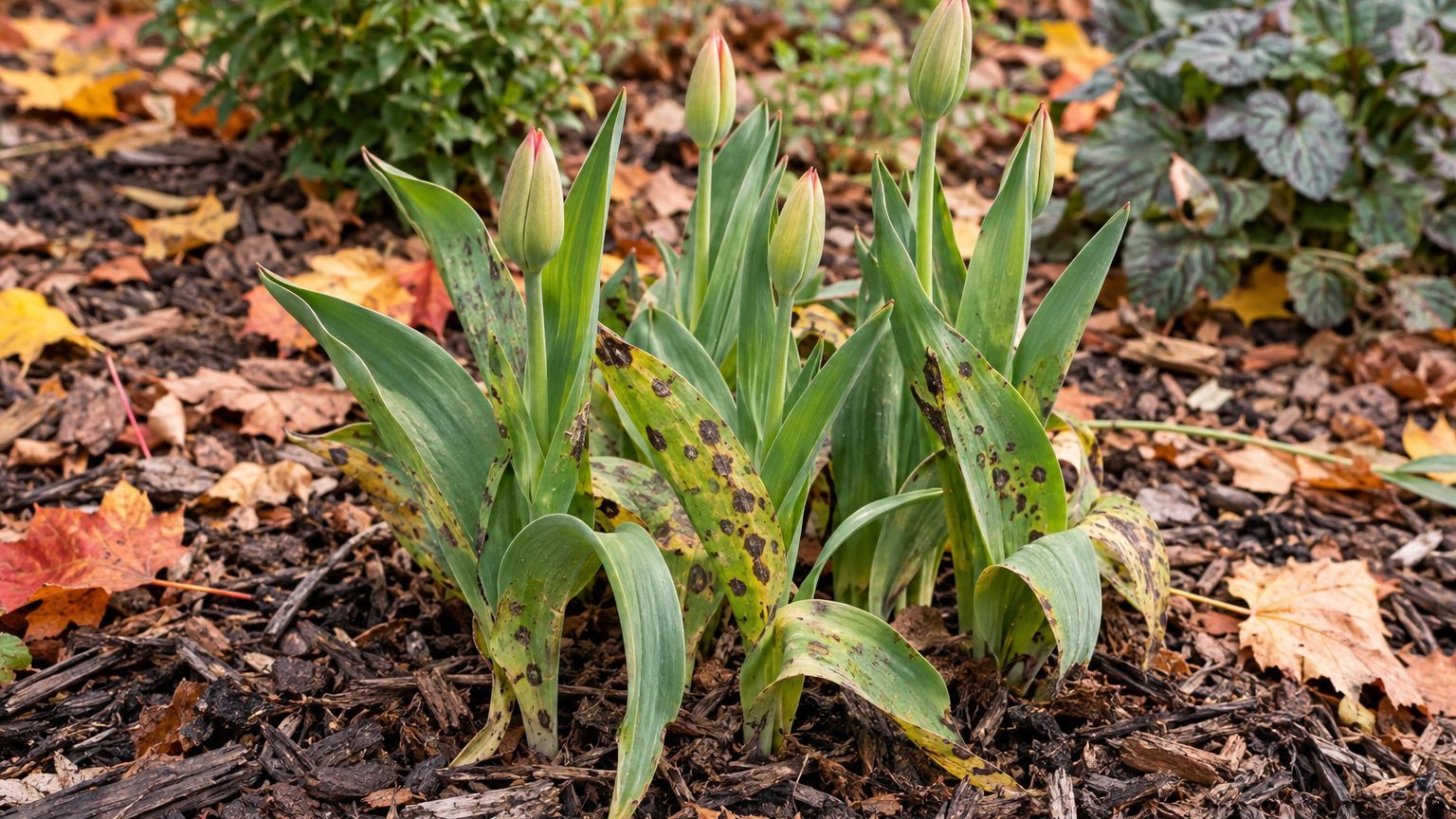
Green leaf tips pushing through the mulch in late winter, long before the garden looks ready for them, send many gardeners straight to the forecast. Tulips, crocus and daffodils sometimes wake during a mild spell and start growing ahead of schedule. The sprouting itself is usually harmless, and the spot where the bulbs sit tells you most of what you need to know.
Bulbs Coming Up Too Early: What You See
The picture is easy to spot once you know where to look, and it tends to repeat from year to year in the same places.
- Green foliage shows above the soil in late winter or early spring, while the rest of the yard still looks dormant.
- The early leaves cluster along a south or west wall, or on a south-facing slope, rather than scattered evenly across the bed.
- Bulbs planted tight against the foundation of the house are up well ahead of those out in the open lawn.
- Flower buds sometimes appear along with the leaves after a stretch of warm weather.
- When cold returns, growth slows and the buds are the tender part, with damage possible if temperatures drop well below freezing.
Firm, green leaves are a good sign, because the foliage itself is quite cold-hardy.
From the almanac
Bulbs in your state
The dates on this page depend on where you live. Your state's page carries its frost dates, its USDA zones and the year laid out month by month.
Northeast
Southeast
- Alabama
- Arkansas
- Delaware
- Florida
- Georgia
- Kentucky
- Louisiana
- Maryland
- Mississippi
- North Carolina
- South Carolina
- Tennessee
- Virginia
- West Virginia
Midwest
Southwest
West
Pacific Northwest
Canada
Bulbs Coming Up Too Early or Something Else?
A few look-alikes get mistaken for a bulb problem. The plant is fine in each case, but the cause and the right response differ.
Checking the leaves first, then the location, separates them quickly.
| Looks like | How to tell them apart |
|---|---|
| Frost-damaged flower buds | Leaves look healthy, but the buds themselves were hit after a night of hard freezing temperatures, so the damage sits in the bud rather than the foliage. |
| Normal early bloom in a warm microclimate | Bulbs by a building or in a sunny spot flower ahead of those out in the yard or in shade, so the timing difference follows the placement. |
A difference of weeks between neighboring beds is rarely a sign of trouble. It usually reflects how much warmth each spot holds.
What Causes Bulbs Coming Up Too Early, and Where It Is Worst
The trigger is warm weather in late winter or early spring. Bulbs respond to warm weather, so a mild stretch can start leaves and even flower buds before the season has truly turned.
Site decides how strongly that happens. Early emergence is often seen on south or west exposures. In Colorado, bulbs planted near a foundation, especially on south or west sides, or on a south-facing slope, are the ones most susceptible to early emergence and freeze injury.
Region plays a part too, since local weather and microclimates shift bloom timing. In Indiana, southern areas of the Midwest can be 3-4 weeks ahead of northern areas, so early growth that looks alarming in one yard is routine in another farther south.
How to Treat Bulbs Coming Up Too Early
Treatment is mostly restraint, with a little protection kept ready for the occasional cold night.
- Leave the foliage alone, because it is quite cold-hardy and does not need rescuing from a cool spell.
- Check the overnight forecast regularly, so that you know when a hard frost is coming.
- Cover the bulbs on unusually cold nights, since in Colorado a hard frost is the point at which covering is advised.
- Remove the covers in the morning, so that the leaves get light and the soil can warm again.
- Note which beds sprouted first, so you can adjust where you plant new bulbs in the fall.
Never cut or tie green leaves, even if they look ragged after a cold snap.
How to Prevent Bulbs Coming Up Too Early Coming Back
Prevention follows the calendar and begins with where the bulbs go into the ground.
- In fall, when planting new bulbs, avoid foundations and south-facing exposures.
- After the ground has frozen in fall, mulch existing plantings on susceptible sites. In Colorado, that means a six-inch layer of organic material such as straw or shredded leaves.
- In late winter, keep a cover or extra mulch within reach, so a hard frost does not catch emerged buds unprepared.
- In spring, once the flowers fade, let the foliage yellow naturally before you tidy the bed.
Planting out in the yard or in partly shaded beds, rather than beside a sunny wall, also tends to delay bloom.
Where This Comes From
The guidance here draws on university extension advice written for Colorado and Indiana. Frost dates and bulb timing vary widely from place to place, so confirm local details with your own state’s extension service.
Common Questions
Do Bulbs Come Up Sooner in a City than in the Country?
Often they do. Urban areas tend to be warmer than rural ones, and even certain areas of a single garden can be warmer than others.
Does Snow Help Bulbs That Have Already Sprouted?
Yes. Snow is a great insulator and may protect hardy flowers from frosty temperatures, so a blanket of it over young leaves is welcome rather than a worry.
Can Tulips, Crocus and Daffodils Handle Frost Once They Are Up?
In Colorado, spring bulbs such as these tolerate a light frost, or temperatures of 29 degrees Fahrenheit and above. Colder nights call for covering, as described above.