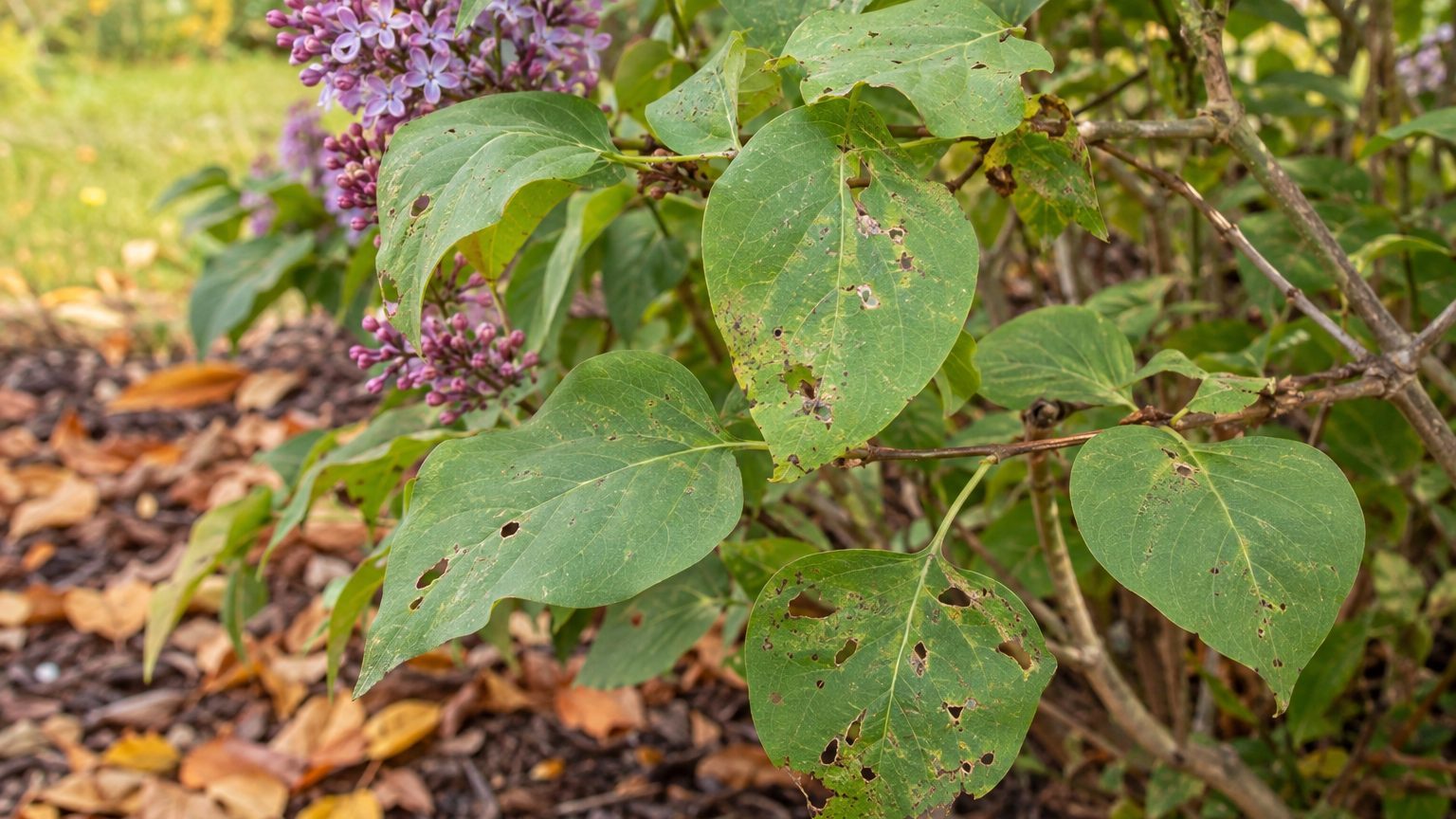
The lower branches fade in the shade of the upper canopy, and the shrub slowly turns tree-like. Pruning at the right moment brings it back to a shrub shape.
Leggy Lilac Bush: What You See

The clearest sign is a shrub that is bare at the bottom with all its growth and flowers held high up.
- The lower stems are bare of leaves, while the leaves and blooms crowd the top of the plant.
- The branches look sparse and thin, and the overall outline turns oval or rounded, often irregular.
- The stems at the base are thick and heavy, and the shrub may grow very tall, towering well above head height.
- Flowering fades from year to year, especially where the plant has not been pruned after bloom.
- In Maryland, the whole shrub can look bedraggled after a hot summer, with leaf infections adding to the tired look.
These signs build slowly, which is why a neglected lilac can seem to change overnight when you finally notice it.
From the almanac
Lilacs in your state
The dates on this page depend on where you live. Your state's page carries its frost dates, its USDA zones and the year laid out month by month.
Northeast
Southeast
- Alabama
- Arkansas
- Delaware
- Florida
- Georgia
- Kentucky
- Louisiana
- Maryland
- Mississippi
- North Carolina
- South Carolina
- Tennessee
- Virginia
- West Virginia
Midwest
Southwest
West
Pacific Northwest
Canada
Leggy Lilac Bush or Something Else?
Several lilac troubles also leave a shrub looking thin or scorched. Leaf diseases strip foliage, but they leave the shape of the plant alone. Check the pattern of the damage and when it appears before deciding that age is the cause.
| Looks like | How to tell them apart |
|---|---|
| Bacterial blight | Leaves look singed as if by flame, dark streaks run along one side of young shoots, and flowers wilt and brown. |
| Powdery mildew | A grayish-white, powdery coating sits on leaves, stems and petals, and it spreads where plants are crowded with poor air movement. |
| Leaf spot | Leaf damage shows up after humid, wet, warm weather. |
Lilac borers are a separate matter. They attack the thick, heavy stems of overgrown shrubs, so a leggy plant can end up with both problems at once.
What Causes Leggy Lilac Bush, and Where It Is Worst
Shade from the upper canopy contributes to the problem. As a lilac matures, the upper canopy shades the lower portions, and those stems lose their leaves. Lilacs lose their lower branches with age, so the branches become sparse and unproductive over time.
Skipped pruning makes it worse. A lilac that is not pruned regularly after the flowers fade turns leggy and unproductive, and large overgrown specimens end up unattractive. In Nebraska, a shrub of 15-20 feet may also have outgrown its spot in the landscape.
This happens wherever lilacs grow. Climate adds to it only through leaf disease: in Maryland, lilacs often look bedraggled after a hot summer with leaf infections, and in Oregon, cool, wet springs favor blight, especially when rain follows a late frost or winter injury. Disease usually does not kill the plant, but it can leave it looking poor for a while, maybe until next year.
How to Treat Leggy Lilac Bush
Pruning can correct the shrub’s leggy structure. Work in this order, and ask your state extension service about any spray before you buy one.
- Prune right after the flowers fade, so that you do not cut off next year’s buds.
- Cut the oldest stems back, taking about one third of the plant, until the shrub reaches the height you want in the landscape.
- Remove wood older than four years first, so the plant looks like a shrub and not a tree.
- Thin from the middle of the shrub, so that new shoots fill in evenly.
- For very old shrubs, consider rejuvenation pruning after the flowers fade.
A severe cut can leave the shrub with few flowers for a time. If leaf disease is also present, keep the plant watered during dry spells; once damage appears, it is too late to apply anything else.
How to Prevent Leggy Lilac Bush Coming Back
Renewal is a routine, and a light yearly cut is easier on the shrub than one hard cut after years of neglect.
- After the flowers fade, check older shrubs for dead or crowded wood and plan a rejuvenation cut if needed.
- Right after bloom, remove about one third of the oldest stems each year, because that steady turnover keeps the plant from becoming tall and leggy.
- Through the growing season, water early in the day or redirect sprinklers so the leaves dry quickly in the sun.
- After bloom, prune on a dry day to open up the plant, improve air circulation, and help prevent powdery mildew.
- Rake up and dispose of fallen leaves to help manage blight.
When planting new lilacs, little leaf lilac and Korean dwarf lilac are bushy species that rarely exceed five feet tall.
Where This Comes From
University extension guidance for lilacs includes pruning and disease advice written for Maryland, Nebraska and Oregon. Your own state’s extension service can confirm timing and approved treatments for your area.
Common Questions
Will a Leggy Lilac Bloom Again After Pruning?
Yes, once it is renewed. Lilacs need regular renewal pruning to stay vigorous and free-flowering, though flowering may thin out for a while after a hard cut.
Can You Cut a Lilac Back to the Ground?
For very old shrubs, rejuvenation pruning after the flowers fade may be a good idea. A gentler route is to renew the plant after it flowers.
Does Leaf Disease Cause Legginess?
No. Disease can leave a lilac looking bad, but it usually does not kill the plants. The bare lower stems come from shade and age.