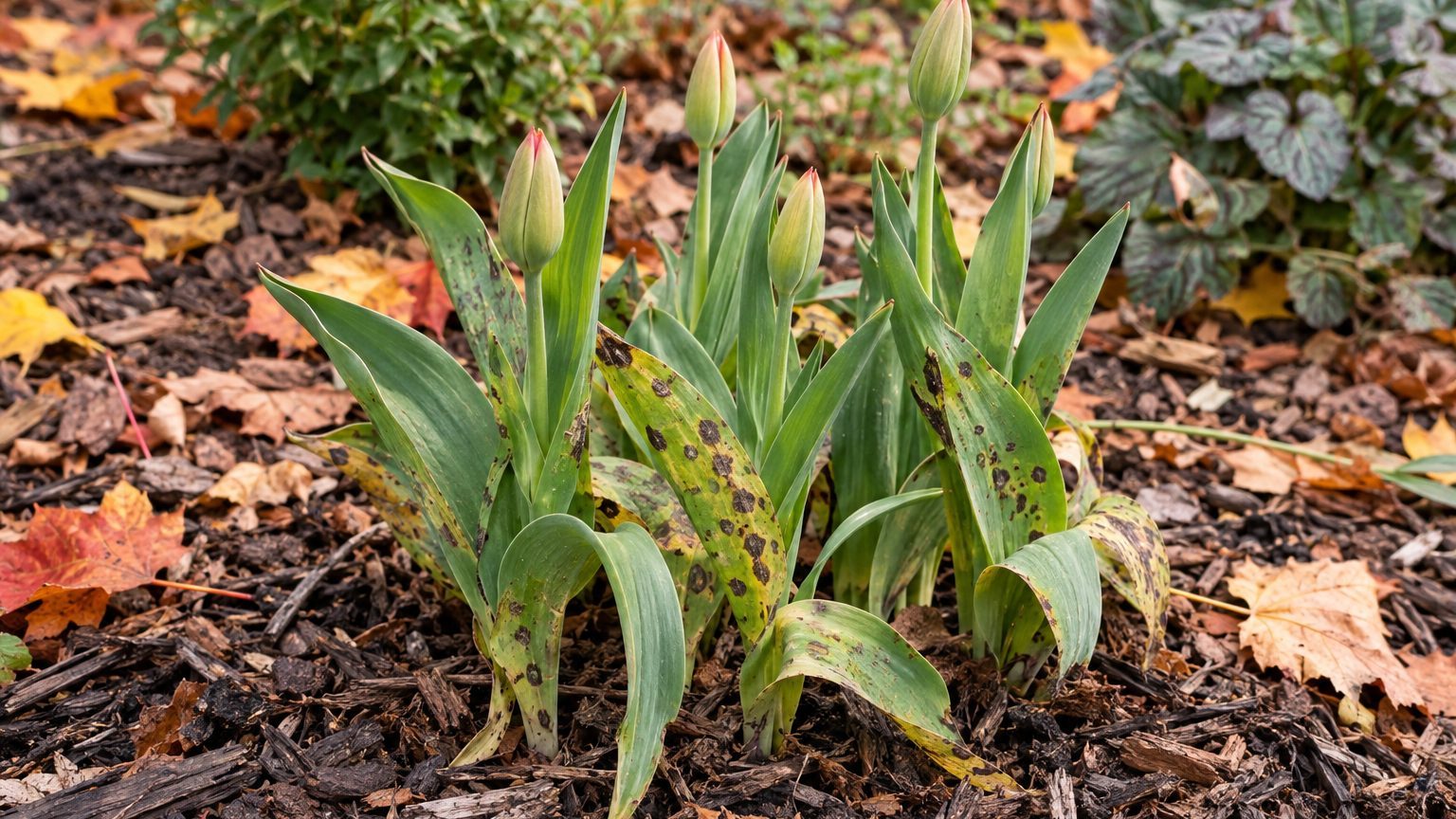
Green tips pushing through the soil in October look like a head start, but they are a warning. A spring bulb that sprouts in autumn has started growing before winter, and young leaves are tender. The cause is nearly always warmth, either in the ground or in storage, and the fix depends on whether the bulbs are planted or still waiting.
Bulbs Sprouting in Fall: What You See
The clearest sign is growth that arrives in the wrong season, and the rest follow from there.
- Green shoots or leaf tips break the soil surface in autumn, long before any spring bulb should be showing.
- Bulbs held in a garage, basement or paper bag grow pale shoots from the top, often stretched and floppy.
- Stored sprouts that stay in the dark come out pale, while any that reach a little light turn green.
- Leaves that look yellow or sickly are a sign the plant is struggling and needs a change of conditions.
- Frost-bitten shoots show up later as limp, darkened or collapsed leaf tips on bulbs that came up too soon.
Shoots in the ground and shoots in storage call for different responses, so note which one you have before doing anything.
From the almanac
Bulbs in your state
The dates on this page depend on where you live. Your state's page carries its frost dates, its USDA zones and the year laid out month by month.
Northeast
Southeast
- Alabama
- Arkansas
- Delaware
- Florida
- Georgia
- Kentucky
- Louisiana
- Maryland
- Mississippi
- North Carolina
- South Carolina
- Tennessee
- Virginia
- West Virginia
Midwest
Southwest
West
Pacific Northwest
Canada
Bulbs Sprouting in Fall or Something Else?
Not every green blade in a bed or lawn in autumn is a bulb. Several weeds and ordinary grass tufts look close enough to cause a false alarm, and digging up a healthy bulb to check would do more harm than good.
| Looks like | How to tell them apart |
|---|---|
| Wild onion or wild garlic | Thin, round, hollow leaves that smell of onion when crushed, growing in clumps in lawn or beds rather than where you planted bulbs |
| Grass tufts in a bed | Narrow blades with a fine midrib that pull away from the roots easily, while a true bulb shoot is thick and sits over a firm bulb when you probe gently |
Shoots that appear exactly where you planted bulbs, in a pattern matching the planting, are the bulbs themselves. Foliage in odd spots with no bulb below is something else.
What Causes Bulbs Sprouting in Fall, and Where It Is Worst
Warmth wakes a bulb. A bulb planted into warm soil, or kept somewhere that never gets cold enough, reads the conditions as spring and starts to grow. Even bulbs stored cold and dark can sprout early, so a careful gardener can still see it happen.
Planting too early is the common route in the ground. In Indiana, the suggested window is late September through mid-October, and planting ahead of it may send up growth that winter weather kills back. Bulbs are set in fall so roots can establish before top growth begins in spring, which is why roots, not leaves, should be the autumn goal.
No single region owns this problem. It follows any warm stretch of autumn, from the Gulf Coast to the Upper Midwest, and it gets worse wherever soil stays warm late. Local planting dates differ, so the safe move is to match your own state’s window.
How to Treat Bulbs Sprouting in Fall
The aim is to slow growth down while keeping the plants healthy, and the steps change a little depending on where the bulbs are.
- Check where the bulbs are, so that you treat stored bulbs and planted bulbs differently.
- Move stored bulbs to the coolest place you have, above freezing but not far from it, so that growth slows or the bulbs settle back toward dormancy.
- Watch the shoots, and if the leaves turn yellow or sickly, or keep growing larger, shift the bulbs into low to moderate light at cool to moderate temperatures, so that the plants stay healthy.
- Plant any bulb still unplanted as soon as the ground can be dug, so that roots get going before winter.
- Leave shoots already in the ground alone and never cut or tie green leaves, so that they keep feeding the bulb for next year.
- Ask your state’s extension service about local timing, so that your next planting lands in the right window.
Shoots that get nipped by frost are usually a cosmetic loss. Healthy bulbs underground can still do their work when spring returns, but nothing can be promised about the flowers.
How to Prevent Bulbs Sprouting in Fall Coming Back
Prevention is mostly about timing the planting and the storage.
- In late summer, keep unplanted bulbs somewhere cool and dark, so that they do not start to wake before the ground is ready.
- In late September through mid-October in Indiana, plant bulbs rather than sooner, so that roots form without a burst of top growth.
- After planting, check the bed during warm spells in autumn, so that early shoots are noticed before frost reaches them.
- In late fall, once the soil has cooled, add a layer of mulch, so that the ground stays steadier through winter swings.
- In spring, let the leaves yellow naturally before tidying, so that the bulb refills for the following year.
Outside Indiana, use the planting window your own state recommends, since warm and cold regions differ.
Where This Comes From
These notes draw on university extension guidance, including advice written for Indiana gardeners. Planting windows differ from state to state, so confirm yours with your state’s extension service.
Common Questions
Can You Still Plant Bulbs That Have Already Sprouted?
Yes. Set them in the ground as soon as it can be dug and handle the shoots gently so they do not snap.
Should You Remove Early Shoots from Planted Bulbs?
No. Green leaves feed the bulb, so leave them even if frost bites the tips.
Will Sprouted Bulbs Bloom in Spring?
Some may, but nothing is guaranteed. Healthy leaves and cool conditions give the bulb the best chance to recover.