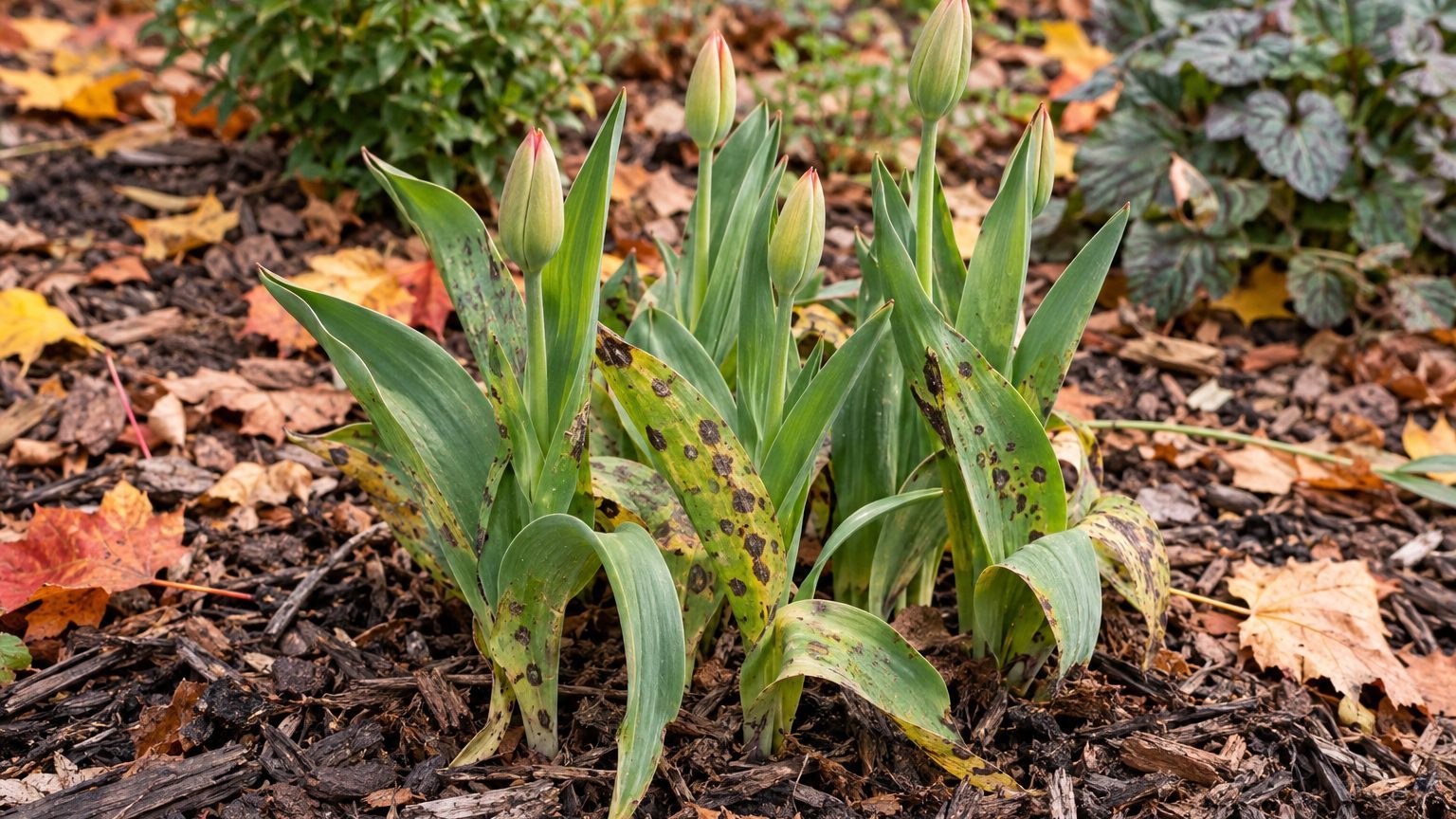
You see green daffodil leaves push up in early spring, thick and healthy, and then no flowers follow. It happens in yards everywhere, and the bulb is rarely dead. A bulb that skips blooming has usually run short on stored food, and the reasons trace back to light, leaf care, crowding, drainage, or the bulb itself.
Daffodils Not Blooming: What You See
The clearest sign is a clump that leafs out normally but never sends up flower stalks, though a few variations point to different trouble.
- Green leaves come up on schedule, but no flower stalks rise from the center of the clump.
- Buds do form, then turn brown and papery before they open.
- Flowers still appear, but they are smaller than in earlier years, and the clump looks packed with leaves.
- Only a few blooms show on a patch that once put on a full display.
- Newly planted bulbs produce leaves and nothing else in their first spring.
Where the clump sits matters as much as the symptom, so notice whether it grows in shade, in a wet spot, or among turf and other plants.
From the almanac
Bulbs in your state
The dates on this page depend on where you live. Your state's page carries its frost dates, its USDA zones and the year laid out month by month.
Northeast
Southeast
- Alabama
- Arkansas
- Delaware
- Florida
- Georgia
- Kentucky
- Louisiana
- Maryland
- Mississippi
- North Carolina
- South Carolina
- Tennessee
- Virginia
- West Virginia
Midwest
Southwest
West
Pacific Northwest
Canada
Daffodils Not Blooming or Something Else?
Some problems look like a bloom failure but have a different cause. Browned buds and a rotting bulb both end the season without open flowers, yet they call for different fixes than a bulb that is simply underfed.
| Looks like | How to tell them apart |
|---|---|
| Disease on the buds | Buds formed but turned brown, often after a stretch of rough weather, instead of never forming at all. |
| Bulb rot from wet soil | Clumps in poorly drained ground weaken fast and stop flowering after the first year, and the bulbs feel soft when dug. |
Young bulbs are a third look-alike. Some suppliers sell bulbs a year or more away from their best flowering, so a skipped first spring from a fresh purchase may only mean the bulb needs time in the ground.
What Causes Daffodils Not Blooming, and Where It Is Worst
A daffodil blooms only if it stored enough food in the bulb the year before. Anything that limits that storage can cost you flowers: too little sun, leaves removed too early, crowding, poor drainage, too little fertilizer, or too much nitrogen. Virus and competition with other plants can add to it.
Light is a common culprit under trees and beside buildings. Daffodils tolerate fair amounts of shade, but in Missouri the guidance is at least five hours of sunlight a day for the bulb to build up and flower year after year. Turf and groundcover that crowd the clump compete for the same food and water.
Weather and soil change the picture by region. In Washington, early extreme heat in spring can stress the plants, and in South Carolina bulbs may rot where soil stays wet for long stretches. Cold winters are rarely the issue when bulbs went in deep enough, and planting too shallowly is itself a cause of sparse flowers.
How to Treat Daffodils Not Blooming
Work through the likely causes in the order that gives the quickest payoff for next spring.
- Note how much sun the clump gets, so that you know whether shade is the real problem and whether the bulbs should move to a brighter spot.
- Leave the leaves alone after flowering until they are withered, dried, and brown, so that they keep feeding the bulb for next year’s growth.
- Dig and divide clumps once the foliage has died back and the flowers have shrunk, so that each bulb has room and a share of the soil’s nutrients.
- Replant at a good depth in well-drained soil, since bulbs set too shallowly bloom sparsely and bulbs in wet ground rot.
- Feed the bed modestly if it has gone without fertilizer, and avoid heavy nitrogen, which pushes leaves at the expense of flowers.
Recovery takes patience. Bulbs that were stored without enough winter chilling will likely flower normally the following spring if they stay in the ground to establish, and their leaves should still be left to wither on their own. For fertilizer type and rates that suit your soil, your state’s cooperative extension service can advise.
How to Prevent Daffodils Not Blooming Coming Back
A few habits tied to the seasons keep bulbs fed and flowering.
- In spring after the flowers fade, leave the foliage standing. In Iowa, daffodil leaves typically last four to six weeks after bloom while they make food, and in Missouri they should stay on for about eight weeks.
- Through late spring, mow around the clump and keep the blade off the leaves until they turn brown, especially where daffodils grow in or beside turf.
- When the leaves have withered completely, tidy them away and mark clumps that bloomed poorly so you can divide them.
- In fall, plant any bulbs you buy that same season, setting them deep enough in a sunny, well-drained spot.
- Each year in early spring, check that nearby plants are not shading or crowding the bed.
Buying from a reliable supplier also helps, since younger bulbs take longer to hit their stride.
Where This Comes From
These recommendations come from university extension guidance on spring bulbs, with place-specific notes kept to the states where they were written.
Timing and soil advice vary, so check with your state’s cooperative extension service for what suits your yard.
Common Questions
Will Daffodils Bloom the First Spring After Planting?
Not always. Bulbs stored somewhere without enough winter chilling often skip flowers, which is typical, and younger bulbs may be a year or more from their best. Leave them in the ground and they will likely flower normally next spring.
Can a Cold Winter Keep Daffodils from Blooming?
Cold alone should not be the problem if the bulbs were planted deep enough. Daffodils also need winter chilling to flower, so a hard winter is not what to blame when buds fail.
Why Did the Buds Turn Brown Before Opening?
Browned buds can come from disease that was made worse by weather. Look at drainage and crowding too, and clear away spent growth once the leaves have died back naturally.