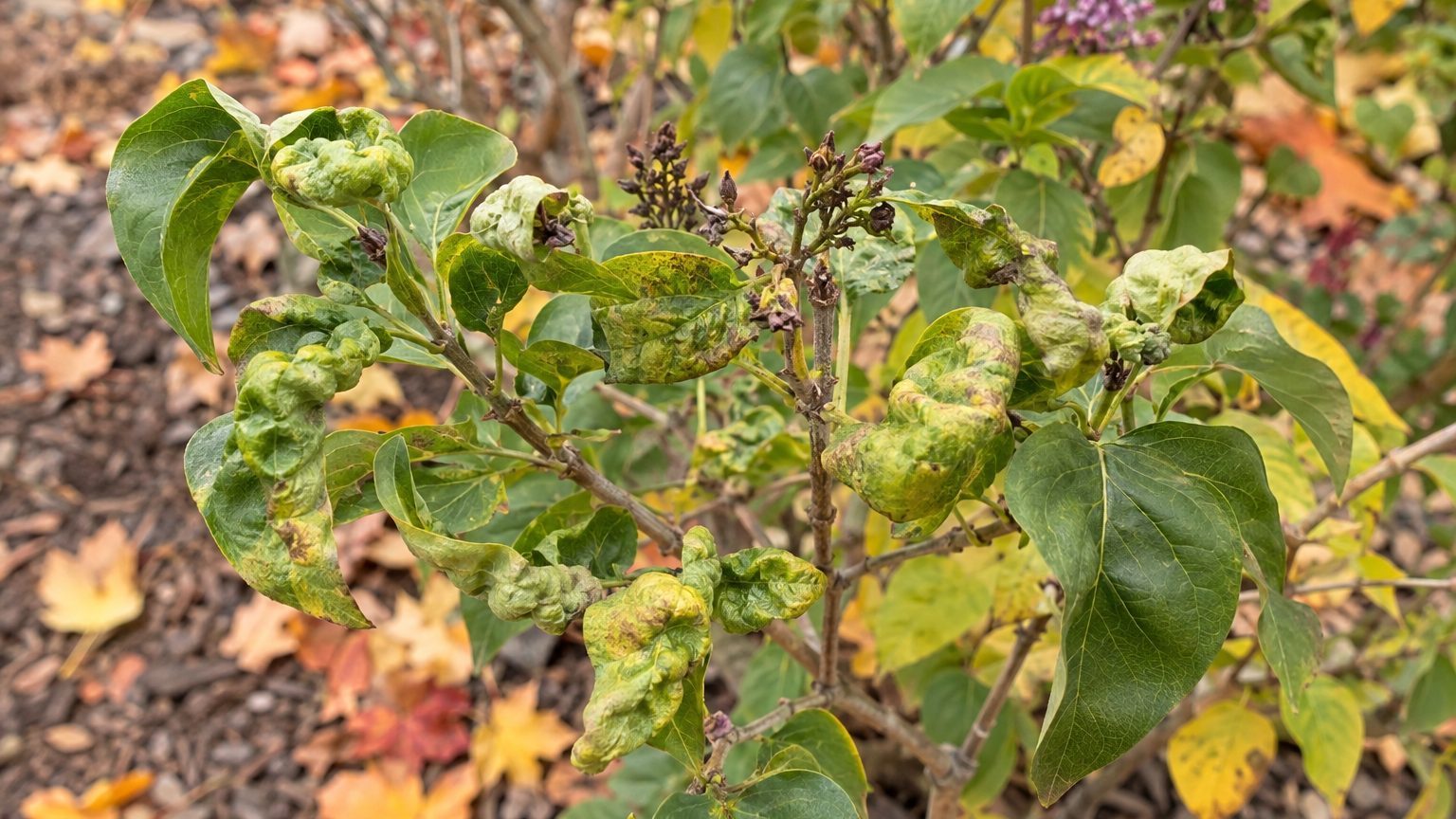
Lilac leaves that twist and fold as they open or sag into brown, curled edges can point to disease, especially when spotting appears before curling. Bacterial blight and fungal leaf blight are the usual culprits, and the pattern of spotting on the leaf tells you which one you are dealing with.
Lilac Leaves Curling: What You See

Look at the whole shrub, because the curl is rarely the first sign and where it starts says a lot.
- Leaves twist and curl while they are still opening, often after dark brown dead spots ringed in yellow appeared on them before they fully expanded.
- Small, water-soaked lesions appear on leaves and may spread into larger brown patches.
- Brown spots begin at the leaf edges, join together, and curl the leaf before it drops.
- Dark streaks run along young shoots, which wilt and blacken along with their leaves and flower clusters.
- In Maryland, foliage can look beat-up by late summer, with crispy edges and bare stems where leaves fell early.
Spotting followed by curling is consistent with an infection.
From the almanac
Lilacs in your state
The dates on this page depend on where you live. Your state's page carries its frost dates, its USDA zones and the year laid out month by month.
Northeast
Southeast
- Alabama
- Arkansas
- Delaware
- Florida
- Georgia
- Kentucky
- Louisiana
- Maryland
- Mississippi
- North Carolina
- South Carolina
- Tennessee
- Virginia
- West Virginia
Midwest
Southwest
West
Pacific Northwest
Canada
Lilac Leaves Curling or Something Else?
Several lilac troubles brown the leaves, and only some of them curl them. Matching the spot pattern to the time of year keeps you from treating the wrong thing.
Curling that follows spotting is the pattern to trust. Brown leaves with no spots at all lean toward something other than these diseases.
| Looks like | How to tell them apart |
|---|---|
| Leaf spot on a Japanese tree lilac | Spots start small and stop at the veins, then run together into dead patches, usually in humid weather |
| Summer heat stress in Maryland | Summer heat stress in Maryland can leave foliage looking rough, with crispy edges and bare stems from early leaf drop |
| Spring shoot blight | Young shoots blacken and show dark streaks, while the leaves above them wilt |
Bacterial blight and fungal blight can look alike at first glance. The yellow halo around a dark spot and the black streaking on twigs point to the bacterial kind, while spots that begin at the leaf edge point to the fungal kind.
What Causes Lilac Leaves Curling, and Where It Is Worst
Bacterial blight is caused by a bacterium that survives in cankers on diseased stems, in plant debris, and in the soil around the shrub. It can also overwinter on neighboring plants, so a lilac can be reinfected each spring. Fungal leaf blight, by contrast, is favored by rainy or humid weather.
One leaf-spot fungus on Japanese tree lilac seems to enjoy high humidity and moderate temperatures, around 76 °F. In Iowa, infection often happens in those periods, yet symptoms may not show for 7 or more days afterward, so the spotting you see began earlier. The fungus can also survive 2 years in plant debris left on the ground.
They follow wet, humid spells and crowded, still air, so a lilac in a damp corner of any yard is more exposed. In Maryland, late summer heat adds stress and leaves foliage looking rough; in Vermont, several years of defoliation can weaken the shrub.
How to Treat Lilac Leaves Curling
Treatment focuses on cleanup and pruning, because no fungicide will reverse symptoms once they appear.
- Rake up fallen leaves and dispose of them, so that fewer spores and bacteria stay near the roots, though this is not a foolproof way to remove the source.
- Cut out blackened shoots and tips with clean tools, so that the infection does not keep moving down the branch.
- In Vermont, thin the shrub during winter so that air moves through the branches and leaves dry faster after rain.
- Skip watering from above, so that the foliage stays dry during the humid spells these diseases favor.
- No fungicide will reverse existing symptoms, so ask your state extension service whether a preventive spray is approved where you live.
If a lilac stays a hassle year after year, some gardeners simply grow something else. In Maryland, that can be simpler than repeating preventive sprays well into summer, starting before bud-break.
How to Prevent Lilac Leaves Curling Coming Back
Prevention follows the calendar, since the bacteria and fungi wait out the cold in debris, twigs, and soil.
- In winter, thin crowded stems, so that air circulates freely around the branches in the next wet season.
- Check with your extension office before bud-break about preventive options, since timing matters if any spray is used at all.
- In Montana, watch young leaves in spring as they unfold and remove any spotted or blackened shoot promptly.
- In humid weather, keep water off the leaves, because the fungi that curl them thrive in damp conditions.
- In Vermont, rake and destroy infected leaves in fall to reduce infection next year.
Plant debris left on the ground can keep a leaf-spot fungus alive for 2 years, so the fall cleanup carries more weight than it seems.
Where This Comes From
The details here come from university extension guidance written for Wisconsin, Maryland, Montana, Vermont, and Iowa. Local weather changes the timing, so check with your state’s extension service for advice that fits your yard.
Common Questions
Can a Lilac Recover from Bacterial Blight?
Many lilacs live on after a mild case. In its most severe form, though, the disease can kill branch tips, leaves, and blossoms, so removing affected shoots early matters.
Why Do Lilac Leaves Turn Brown and Crispy in Late Summer?
Leaf-spotting fungi and bacteria, plus heat stress, often leave lilac foliage looking worn by late summer. Brown spots, crispy edges, and bare stems from early leaf drop are all typical in Maryland.
Does Raking Up Fallen Lilac Leaves Help?
It helps reduce the source of spores and bacteria near the shrub. It is not foolproof, so pair it with winter thinning for better air flow.