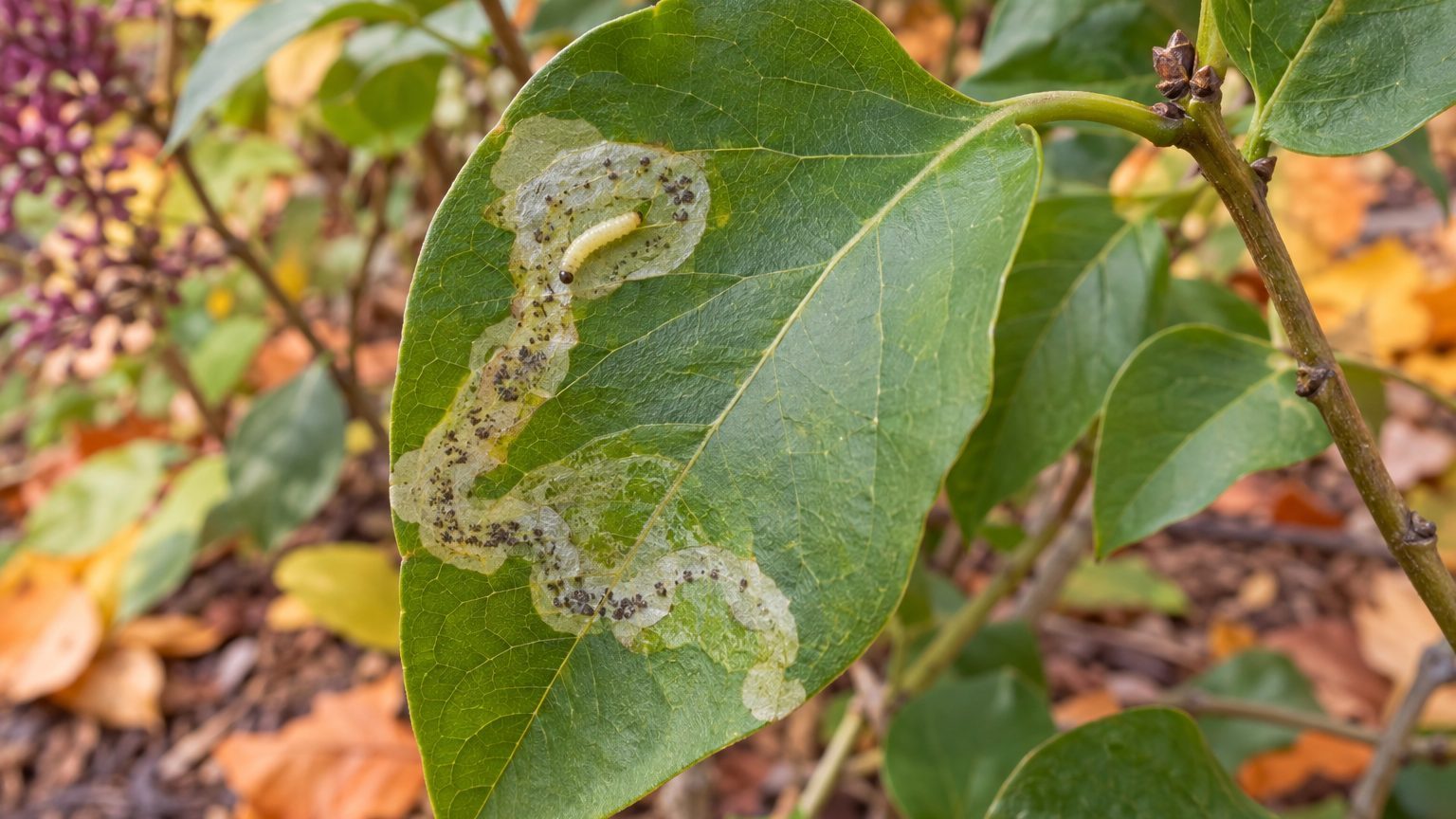
Lilac leaves that curl in at the edge, with brown, papery patches nearby, are the telltale sign of the lilac leafminer. The culprit is a small moth whose larvae feed inside the leaf. Pinching or picking and destroying infested leaves kills the larvae inside.
Lilac Leafminer: What You See

The damage shows up on the leaves long before you ever see the insect itself.
- The edge of a leaf is folded over on itself, and this fold is the sign that separates leafminer from most other lilac troubles.
- Before the fold, a pale blotch appears on the leaf surface, a patch where the larva has eaten out the green tissue between the top and bottom skin.
- The blotch turns brown and dry over time, so older damage looks like scorched, papery spots.
- The adult is a small brown moth, easy to miss and seldom noticed on the shrub.
Privet hedges can carry the same damage, so a nearby privet with folded leaves is another clue.
From the almanac
Lilacs in your state
The dates on this page depend on where you live. Your state's page carries its frost dates, its USDA zones and the year laid out month by month.
Northeast
Southeast
- Alabama
- Arkansas
- Delaware
- Florida
- Georgia
- Kentucky
- Louisiana
- Maryland
- Mississippi
- North Carolina
- South Carolina
- Tennessee
- Virginia
- West Virginia
Midwest
Southwest
West
Pacific Northwest
Canada
Lilac Leafminer or Something Else?
Brown leaves on a lilac have plenty of causes, and many have nothing to do with insects. Sorting them out takes a look at the pattern on the plant and a quick test with your fingers.
Gently unroll a folded leaf. A larva, silk or tunneled tissue inside points to the leafminer.
| Looks like | How to tell them apart |
|---|---|
| Leaf scorch | Browning runs along the margins after hot, dry spells, and the leaf stays flat with nothing inside it. |
| Powdery mildew | A white, dusty film coats the leaf surface and rubs off on a finger. |
| Bacterial blight | Dark spots with a yellow edge may appear in cool, wet weather, and young shoots may blacken. |
Folding is the clue that sets the leafminer apart. If leaves are spotted or coated but never folded, look to disease or weather stress first.
What Causes Lilac Leafminer, and Where It Is Worst
The cause is a small moth native to Europe, known as Gracillaria syringella (also listed as Caloptilia syringella). Its larvae first mine a blotch in the leaf and then fold the leaf edge. Lilac and privet are both hosts.
Nothing in the soil or lawn drives it. The pest follows its host plants, so any yard with lilac, or with privet close by, can see it. Privet can be infested too, which makes a neighboring hedge worth a look.
In Washington, natural predators may help hold populations down. A yard with a mix of plants gives those helpers a chance to work.
How to Treat Lilac Leafminer
Hand removal starts with finding and destroying infested leaves.
- Look over the shrub for folded leaves and remove those that are infested.
- Pinch folded leaves right through the fold, which kills the larvae inside.
- Pick off badly blotched leaves and destroy them.
- Destroy removed leaves rather than leaving them on the ground.
- Check any privet close by and treat it the same way.
- Go back over the lilac regularly.
If damage is heavy and hand removal is not keeping up, your state’s extension service can tell you which products are approved where you live and how to use them. Stick with their advice rather than guessing at a spray.
How to Prevent Lilac Leafminer Coming Back
Prevention follows the same calendar as the pest, so it comes down to looking at the right time and cleaning up behind yourself.
- Check leaves for folded edges and pinch infested leaves to kill the larvae inside.
- Check the shrub regularly for newly folded leaves.
- Check any privet growing near the lilac and remove infested leaves there as well.
- Natural predators may help control populations.
Regular checks can catch newly folded leaves.
Where This Comes From
The details here come from university extension guidance, including advice written for Washington. Pest timing and approved treatments differ by state, so check with your state’s extension service before settling on a plan.
Common Questions
Can You Compost Leaves Damaged by Lilac Leafminer?
Destroy infested leaves if you find live larvae inside.
Should You Spray Every Lilac That Has Folded Leaves?
Often not. Pinching or picking and destroying infested leaves kills the larvae inside. For heavier infestations, ask your extension office what is approved in your state.
Can Privet Hedges Bring Leafminer to Your Lilac?
They can, since privet is also a host. Inspect the hedge and destroy infested leaves there as well.