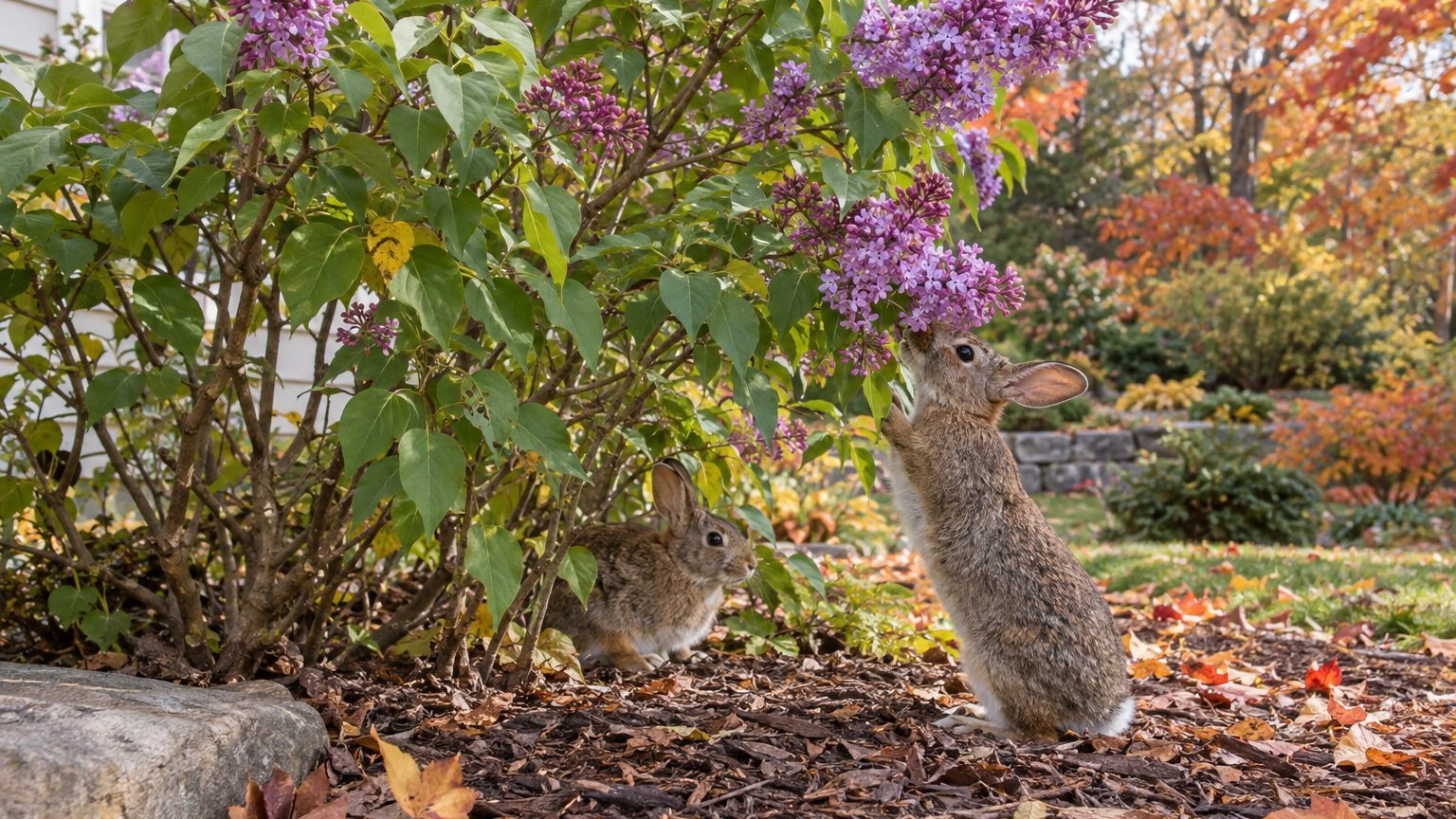
Bark peeled off a lilac stem, with pale wood showing and snapped branches, is the mark rabbits leave behind. The damage can be easy to miss because the shrub may leaf out normally in spring.
Rabbits: What You See

The clearest sign is on the stems, so start there and then look at the shape of the whole shrub.
- Bark may be stripped from stems about a foot to 2 feet off the ground.
- The wood underneath looks pale and bare where the cambium is exposed.
- Plenty of branches are broken or snapped, often before you notice anything is wrong.
- In spring the shrub may leaf out just fine, which hides the harm.
- As summer drought and heat set in, the shrub begins to die back.
A lilac that looks healthy in spring can decline during summer stress, so trust the stripped bark as your clue.
From the almanac
Lilacs in your state
The dates on this page depend on where you live. Your state's page carries its frost dates, its USDA zones and the year laid out month by month.
Northeast
Southeast
- Alabama
- Arkansas
- Delaware
- Florida
- Georgia
- Kentucky
- Louisiana
- Maryland
- Mississippi
- North Carolina
- South Carolina
- Tennessee
- Virginia
- West Virginia
Midwest
Southwest
West
Pacific Northwest
Canada
Rabbits or Something Else?
Several other problems leave a lilac looking chewed or declining. Pairing what you see with where it sits on the shrub keeps you from blaming the wrong culprit.
Rabbit damage can include stripped bark and broken branches on the lower stems. Damage outside that pattern deserves a closer look before you rule rabbits in or out.
| Looks like | How to tell them apart |
|---|---|
| Deer browsing | Bark and twig ends look ragged and torn, and the damage reaches well above the height a rabbit can reach. |
| Voles | Gnawing sits right at the base of the stem, and you may find small runways in the mulch or grass around it. |
| Drought and heat stress | Branches die back in summer, but the bark on the lower stems is still whole and unmarked. |
Drought stress and rabbit damage can also happen together, since stripped stems struggle most when summer turns hot and dry.
What Causes Rabbits, and Where It Is Worst
Rabbits gnaw bark to feed, and a lilac stem within easy reach makes a convenient meal. When bark is stripped and the cambium is exposed, the shrub’s response is uncertain, and damaged stems may die back under summer stress.
Where rabbits browse lilacs, exposed stems may be at risk. Brush, woodpiles and thick hedges can provide nearby cover for rabbits.
The slow part is how the harm shows up. The shrub leafs out normally in spring, then suffers once summer drought and heat arrive, and the dieback follows.
How to Treat Rabbits
Once the bark is gone, there is no fix to apply. Care means giving the shrub time and removing only what is clearly dead.
- Inspect the stems and note where the cambium is exposed, so that you know how much of the shrub is at risk.
- Wait and see how the shrub responds, because stripped bark cannot be repaired and the outcome is not clear at first.
- Hold off on pruning until late spring, so that you can tell which stems are truly dead from those that leaf out.
- Cut out dead branches once the surviving parts have leafed out, so that the shrub puts its energy into healthy growth.
- Keep an eye on the shrub through summer drought and heat, since that is when a damaged lilac tends to give out.
If rabbits keep returning, ask your state’s extension service what control options are allowed where you live. Rules differ from place to place.
How to Prevent Rabbits Coming Back
Protection is simpler than recovery, and it follows the calendar.
- In fall, put wire fencing around the shrubs, as advised in Iowa, so that the stems are shielded before rabbits start browsing.
- In fall, walk around the fence and look for gaps or bent sections, because a small opening is enough for a rabbit to get through.
- In late spring, take a close look at the stems and remove any dead wood, so that you can see new damage clearly.
- In summer, check the shrub during drought and heat, since earlier bark damage can show up as dieback then.
Putting the fence up before the damage happens matters most, because a stripped stem cannot be undone.
Where This Comes From
The details here come from university extension guidance on rabbit damage to lilacs, including the fall fencing advice written for Iowa. Check with your state’s extension service for timing and options that fit your own yard.
Common Questions
Can You Tell in Spring Whether a Damaged Lilac Will Live?
Not reliably. New leaves can appear on a shrub that is already compromised, so the real test comes later, when summer stress shows whether the stems can keep supporting the foliage.
Is Wire Fencing Enough to Protect Lilacs?
Fencing around the shrubs is the protection recommended for Iowa, and it works by keeping rabbits away from the bark. It only helps while it is intact, so it is worth checking for gaps.
Who Can Say What Rabbit Control Is Allowed Near You?
Your state’s extension service is the place to ask. It can explain what is permitted locally, and no product advice is given here for that reason.