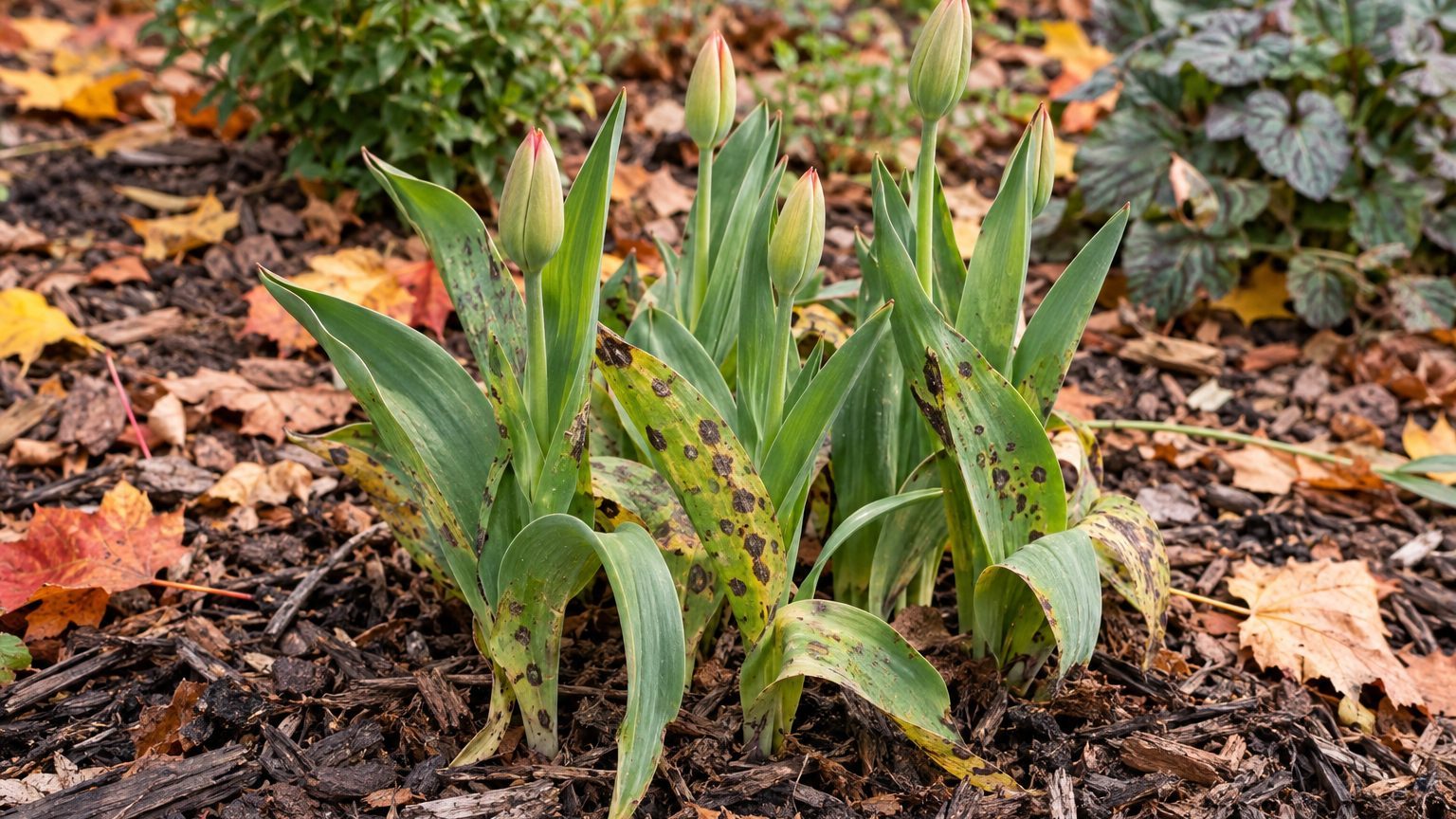
Tulip leaves push up green and healthy in spring, then the flower stalks never show. The usual reason is a bulb that has run out of stored food, or one that never got enough winter cold, though a few other causes can look similar. Where the problem started tells you what to change.
Tulips Not Blooming: What You See

The clearest sign is a clump of leaves with no flower bud at all, and the other signs help you sort out why.
- Leaves come up large and floppy, but no flower stalk rises from the center, which points to a weak bulb.
- In Indiana, foliage can remain leaf-only when a bulb misses its required winter chill of 8-16 weeks.
- Leaves look short and weak, then turn brown early, often after a dry winter and spring.
- The planting shrinks over time, with fewer blooms than in its original display.
- Bulbs dug from the soil show signs of decay, which suggests a fungus living in the bed.
A bed that flowered well before and now gives only leaves is a common version of this problem.
From the almanac
Bulbs in your state
The dates on this page depend on where you live. Your state's page carries its frost dates, its USDA zones and the year laid out month by month.
Northeast
Southeast
- Alabama
- Arkansas
- Delaware
- Florida
- Georgia
- Kentucky
- Louisiana
- Maryland
- Mississippi
- North Carolina
- South Carolina
- Tennessee
- Virginia
- West Virginia
Midwest
Southwest
West
Pacific Northwest
Canada
Tulips Not Blooming or Something Else?
Leaf-only tulips are not always a bulb problem. Drought stress and a fungus in the soil can produce brown, stunted foliage that seems like a bulb that failed to bloom, so check what else in the yard looks unhappy.
Looking at the leaves and then digging a bulb helps separate the likely causes.
| Looks like | How to tell them apart |
|---|---|
| Drought stress | Short, weak leaves turn brown, and other plants nearby, such as groundcover and shrubs, show the same stress after a dry winter and spring. |
| Bulb fungus in the soil | Foliage is poor and flowers are missing, and the dug bulb is decayed rather than firm, which a penicillium-type fungus causes. |
| Tulip blight | A single infectious disease is unlikely when several different plants in the yard share the symptoms and the damage follows dry weather rather than staying confined to the tulips. |
If the leaves are large and floppy rather than brown, a weak bulb is more likely. That pattern points back to a weak bulb or missed chilling.
What Causes Tulips Not Blooming, and Where It Is Worst
The cause often begins with the bulb itself. Tulips that flower use up so much energy that little is left in the original bulb, and modern cultivars tend to bloom well for 3 to 5 years before they decline in vigor. Weak bulbs make big leaves and no flowers.
Cold is the other main cause. In Indiana, spring bulbs including tulips need 8-16 weeks of chilling to form flower buds inside the bulb. Without it they sprout and grow only foliage. Mild winters and bulbs kept in a warm place before planting both cut that chilling short.
Other causes depend on the site. Poor drainage, shade, and a soil fungus that survives in the ground for years can all hold flowers back. In Iowa, tulips last longest in a spot with at least 6 hours of direct sun a day and well-drained soil. The fungus can arrive on new bulbs, in soil amendments, or on infected tools.
How to Treat Tulips Not Blooming
Once the leaves are up, there is little you can do to make that year’s bulbs flower, so the work is about saving next year’s display.
- Leave the leaves in place until they turn yellow, so that they keep feeding the bulb for next year.
- Snip off spent flowers soon after bloom, because seed pods take food that the bulb needs.
- Feed the bed after flowering, so that the bulb can rebuild what the bloom used.
- Dig up bulbs that are no longer blooming and discard them, so that weak or diseased bulbs do not keep taking space.
- Clean tools after digging, so that a soil fungus does not travel to other beds.
- Replant with good-size bulbs in loose, well-drained soil, set deeply, because larger bulbs hold more stored energy.
If a bed has decayed bulbs, check which treatment is approved in your state. Do not replant tulips in the same spot until you know the soil is sound.
How to Prevent Tulips Not Blooming Coming Back
Timing through the year keeps bulbs strong enough to flower again.
- In fall, plant good-size bulbs deeply in loose, well-drained soil so that roots settle and the winter chill can do its work.
- If bulbs are still unplanted, put them in the ground as soon as it can be dug.
- In spring, remove spent flowers promptly so that no energy goes into seed pods.
- After bloom, feed the bed while the foliage is still green.
- Through early summer, let the leaves die back naturally before you remove them, because tulips that cannot store enough food in the bulb cannot flower.
- Where winters stay mild, pot unplanted bulbs about 3-4 months before you want bloom, moisten the soil, and store them between 35 and 45 F.
Species tulips tend to be more long-lived, which makes them a steadier choice for a bed you want to leave alone.
Where This Comes From
These details connect leaf and bulb symptoms with the changes that can help future flowers. For rules and timing, use advice suited to your area.
Common Questions
Should You Replace Tulips Every Year?
Park districts and public gardens often treat tulips as annuals, because it is rare for a whole planting to come back with the same display. At home, you can keep them if they still bloom, and dig and discard those that no longer do.
Can You Make Tulips Bloom After the Leaves Have Come Up?
Not much can be done once the leaves have emerged without flower buds. Focus on feeding and leaving the foliage alone so the bulb recovers for the following year.
Do Tulips Need Full Sun to Bloom?
In Iowa, planting sites with at least six hours of direct sun a day help tulips bloom for more years, as long as the soil also drains well.