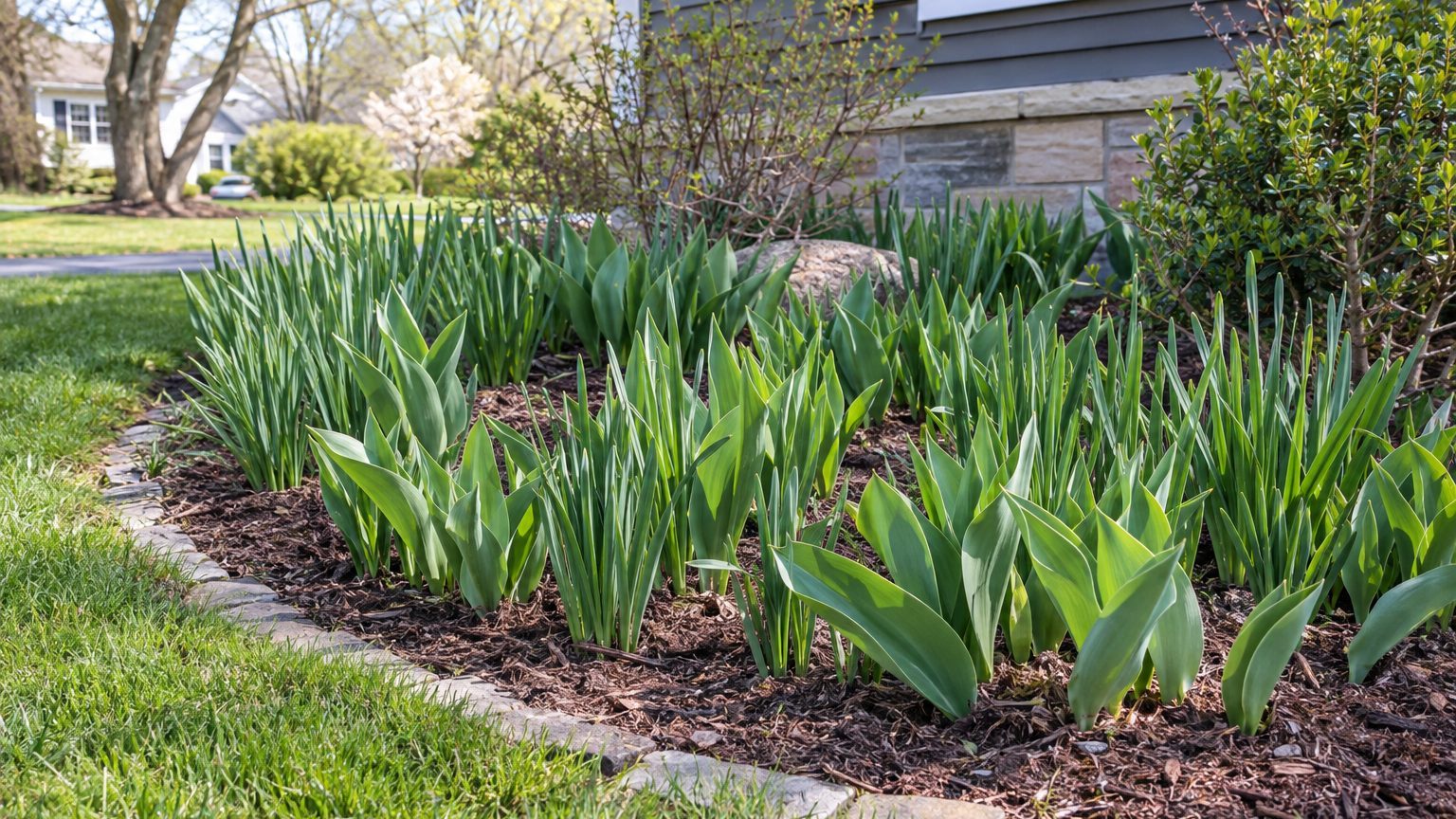
A daffodil clump that comes up thick with leaves and no flowers is a common spring disappointment, and it usually has a fixable cause. Bulbs build next year’s bloom inside themselves from stored food and winter cold. Anything that interrupts that cycle, from shade to crowding to a mild winter, can leave you with green leaves and bare stems.
Why Are Your Bulbs Not Blooming?
Bulbs skip their flowers when something breaks the yearly cycle of storing food, chilling through winter and forming a bloom inside the bulb. The usual causes are leaves removed too soon, heavy shade, crowding, wet soil, pests and a winter too mild. Which one matters most depends on the bulb type and your climate.
Winter cold is part of the recipe. It is needed for flower stalks and well-formed blooms, so mild-winter yards struggle. In Texas, bulbs usually don’t come back because they miss enough chilling hours, especially the farther south they are planted.
Cold climates have the opposite risk. In Colorado, flower buds that start growing early may be damaged if temperatures drop below 26°F. The state selector just below this section leads to the page for your state.
From the almanac
Bulbs in your state
The dates on this page depend on where you live. Your state's page carries its frost dates, its USDA zones and the year laid out month by month.
Northeast
Southeast
- Alabama
- Arkansas
- Delaware
- Florida
- Georgia
- Kentucky
- Louisiana
- Maryland
- Mississippi
- North Carolina
- South Carolina
- Tennessee
- Virginia
- West Virginia
Midwest
Southwest
West
Pacific Northwest
Canada
How to Get Bulbs to Bloom Again

Start with what you can change in the yard, then move on to the bulbs themselves.
- Leave the leaves standing until they turn yellow, so that they keep feeding the bulb for next year’s flower.
- Check the light and move bulbs out of heavy shade, because shade brings thin, spindly growth and poor flowering.
- Lift and divide clumps once the blooms turn small and sparse, so each bulb has room again. In Colorado, bulbs may begin to crowd after the second year and lose much of their vigor.
- Spread leaf litter over the bed each year, since in Georgia at least two inches keeps the soil from warming fast and waking bulbs too early.
- Dig up and discard bulbs that never emerge or that come up and wilt soon after, so you stop waiting on bulbs that are rotted or infested.
- Replant tulips with fresh bulbs in fall, because in Florida they bloom once and typically don’t bloom again.
Daffodils not blooming is most often a light, crowding or leaf problem, which the first three gestures cover. Rot and pests are less common, but they are worth ruling out when the leaves look weak or never open fully.
Blooming Habits by Bulb Type
Bulb types do not fail in the same way. Daffodils tend to decline slowly as clumps get crowded, while tulips often give one good show and then fade.
Hyacinths have their own symptom, which is flowers that never really rise.
| Bulb Type | What changes | Why it matters |
|---|---|---|
| Daffodils | Blooms turn small and sparse, or bulbs fail to flower if infested (Florida) | Dividing crowded clumps restores flowering, while infested bulbs need to be removed |
| Tulips | Bulbs bloom once and typically don’t bloom again (Florida) | Plan on fresh bulbs each fall instead of waiting for a return show |
| Hyacinths | Flowers may never get taller than an inch or so (Arkansas) | Tiny flower stalks signal a bulb that is not performing, so check chilling and drainage |
For you, this means treating each bulb type differently. Daffodils reward patience and a shovel, since a clump can be divided and replanted. Tulips are better treated as a seasonal planting in warm places. Hyacinths with stunted flowers deserve a look at winter cold and soil moisture before you give up on them.
Bulb Blooming Mistakes to Avoid
Planting Too Shallow

Bulbs set too close to the surface may heave out of the ground during freezing and thawing, and you can lose them entirely. This is a common mistake in beds where soil was loosened only lightly. Plant at the depth recommended for the bulb type, and cover the hole fully so nothing sits near the top.
Planting in Soggy Soil

Bulbs may rot in soil that stays wet for a long time. In Connecticut, bulbs that fail to emerge properly or that emerge and wilt soon after are treated as suspect, and the advice is to pull them up and throw them away. If the bed also stays soggy after rain, choose a better-drained spot or loosen and amend the soil before replanting.
Planting in Spring
Spring-planted bulbs usually don’t grow well in Iowa because they lack well-developed root systems. They also miss the winter cold that produces the flower. A bulb that is still unplanted should go in as soon as the ground can be dug, and any bulbs that already struggled this way can be replaced in fall.
When Bulbs Bloom in Your State
Timing varies from the Gulf Coast to the Upper Midwest, but one sign is the same everywhere. Leaves that have gone yellow mean the bulb has finished refilling and it is time to divide or move it.
- The page for your state gives the months for planting and flowering where you live, so go there before you dig.
- Check it in fall, then lift crowded clumps once their leaves have yellowed and replant them promptly.
Common Questions
Can Warm Spells Cost You Flowers?
Yes. In Georgia, soil that warms too quickly can make bulbs think it is time to grow, and in South Dakota early growth may drain the bulb’s energy reserves and lead to weak or missing blooms. Shoots up in a mild stretch of winter, followed by a cold snap, are the pair of signs to watch for.
Do Insects Keep Bulbs from Flowering?
They can. In South Carolina, pests that feed on flower buds may cause flowers to die without opening, and heavily infested leaves may not open at all. Buds that shrivel before opening and distorted leaves on the same plant point toward insects instead of shade.
Why Are Hyacinth Flowers So Small?
In Arkansas, hyacinths left long enough will sprout, but the flowers may never grow beyond an inch or so. Cold is needed for flower stalks to develop, so a mild winter is a likely suspect when the stunted blooms appear on bulbs in a well-drained, sunny bed.