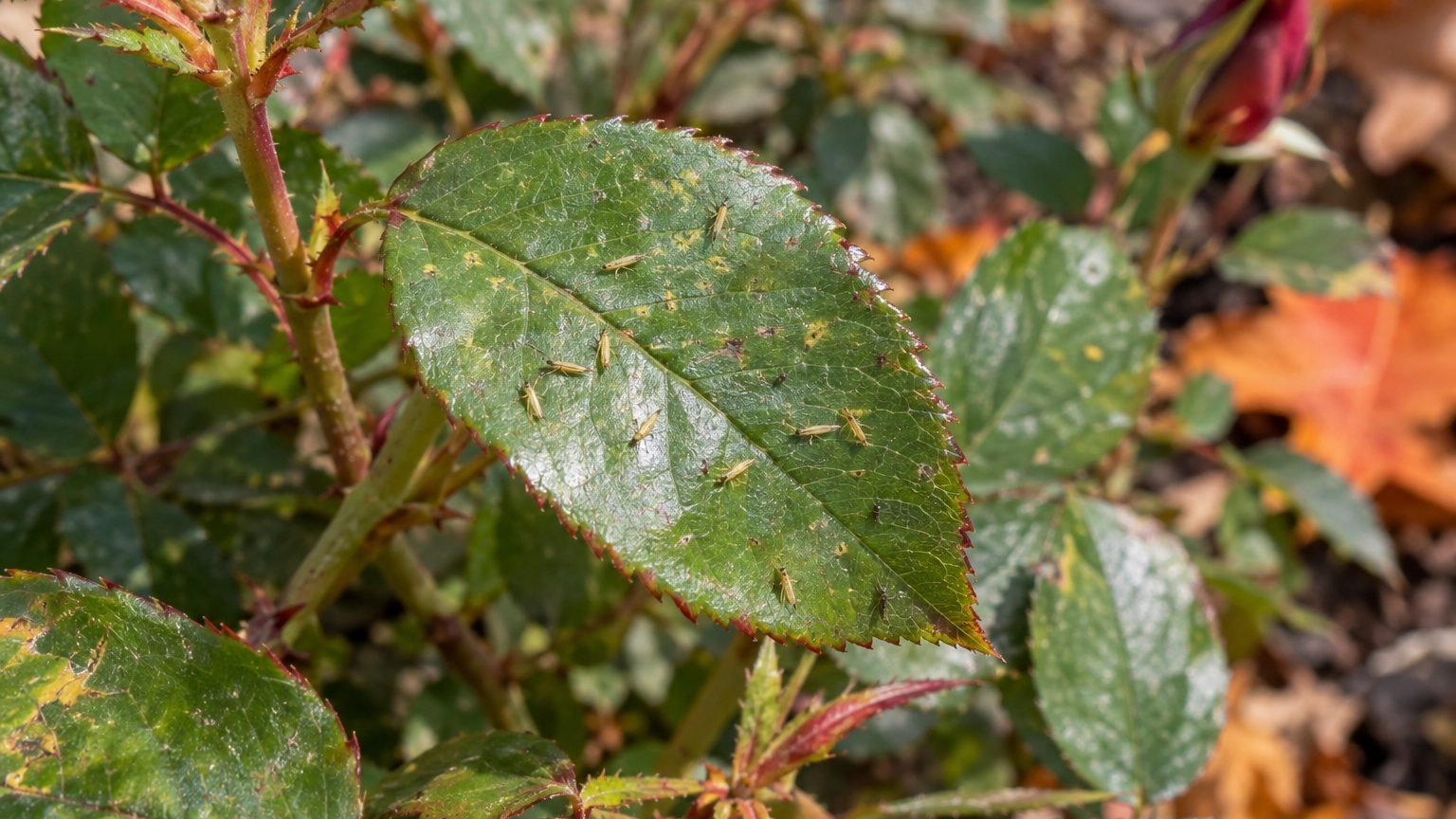
A rosebud that swells, colors up, and then refuses to open is the classic sign that thrips have been feeding inside it. These slender insects work out of sight in the folds of the petals, which is why the damage often shows up before the pest does. The good news is that the harm is mostly to looks.
Thrips: What You See

Thrips are hard to catch in the act, so you read the bloom and the bud for clues, starting with the one that gives them away.
- A bud that stays closed and never opens is the sign gardeners notice first, and heavily infested buds in particular may fail to open.
- The outer petals carry brown edges, and the petal itself is often malformed, because the insect chews and sucks the juices.
- Brown spots dot the petals of flowers that do open, and they show up best on lighter colored blooms.
- Tiny brownish-yellow insects with fringed, feathery wings sit at the base of the petals, at less than 1/16 inch long.
- Leaves can look distorted too, since thrips also feed in leaf buds.
In North Carolina, roses are most susceptible in June, so that is when to look closely.
From the almanac
Roses in your state
The dates on this page depend on where you live. Your state's page carries its frost dates, its USDA zones and the year laid out month by month.
Northeast
Southeast
- Alabama
- Arkansas
- Delaware
- Florida
- Georgia
- Kentucky
- Louisiana
- Maryland
- Mississippi
- North Carolina
- South Carolina
- Tennessee
- Virginia
- West Virginia
Midwest
Southwest
West
Pacific Northwest
Canada
Thrips or Something Else?
Petal browning and stalled buds have other causes, so a single clue is not enough to name thrips. Pair what you see with where it is happening, and add a quick test before you reach for any treatment.
Peel back the outer layer of petals on a healthy blossom and look at the base. Blowing lightly into a bloom makes thrips move, which makes them easier to spot.
| Looks like | How to tell them apart |
|---|---|
| Browned petal edges from a stressed or damaged bloom | No tiny insects appear at the petal base when you peel back the first layer, and a light puff of breath produces no insect movement. |
| Distorted new leaves from sap feeders such as aphids | Aphids cluster visibly on tips and buds, while thrips hide inside the bud and the petal base. |
Unopened buds can also come from weather or watering stress, so check inside the bud for the narrow, fast-moving insects before you decide.
What Causes Thrips, and Where It Is Worst
Thrips are tiny flying insects, and the wind carries them into your garden on warm, sunny days. They arrive on their own, so a clean yard can still get them. Roses are one of several hosts, along with strawberries, bell pepper, and white clover.
Warm weather speeds them up. In North Carolina they reproduce through the year, with most of their 12 to 15 generations falling in the warmer months, and in summer the adult stage arrives in about 11 days. Populations can build quickly once the weather turns warm.
Other species feed on roses too. Chilli thrips are a nuisance to rose growers because their feeding damages both foliage and flowers. Various thrips species feed on roses, so do not rule them out without checking the buds.
How to Treat Thrips
Because the damage is cosmetic and will not harm the bush, start with the gentlest steps and decide how far to go based on what you see.
- Check a few buds as they start to form, so that you catch thrips before the blooms are ruined.
- Pick one healthy blossom and peel back the first layer of petals, looking at the base for tiny brown-to-orange insects.
- If thrips are present, decide whether the cosmetic damage warrants treatment.
- Leave beneficial insects alone, since some gardeners report thrips are eaten by the same insects that consume aphids.
- Decide whether a spray is worth it for you, because in Arizona gardeners growing show-quality blooms may spray buds before they open with an insecticide labeled for thrips on roses.
If you consider spraying, check which products are approved for roses where you live. Buying predatory mites is not a reliable fix, since they typically do not establish well on roses. Smooth rose leaves lack the protective structures underneath that the mites need for shelter. Interestingly, when pepper plants were added as a home for the mites, thrips damage to the roses decreased significantly.
How to Prevent Thrips Coming Back
Thrips arrive by wind, so you cannot keep them out, but timing your checks and cleanup shrinks the damage.
- As flower buds begin to form, start looking inside a few of them regularly, because that is when thrips move in.
- Keep checking buds through the warmer months, when most thrips generations occur.
- In June in North Carolina, when roses are most susceptible, check lighter colored blooms first because browning shows there.
Where This Comes From
Local timing and approved treatments vary.
Common Questions
Will Thrips Kill a Rose Bush?
No. The damage is cosmetic and will not harm the bush, though it can spoil the look of the blooms.
Why Do Rosebuds Turn Brown and Not Open?
Thrips chewing and sucking the petals cause brown edges and malformed petals, and heavily infested buds may fail to open. Check inside the bud for tiny insects to confirm.
How Big Are Thrips on Roses?
They measure less than 1/16 inch and are barely visible without a magnifying glass. Blowing lightly into a bloom makes them move so you can spot them.