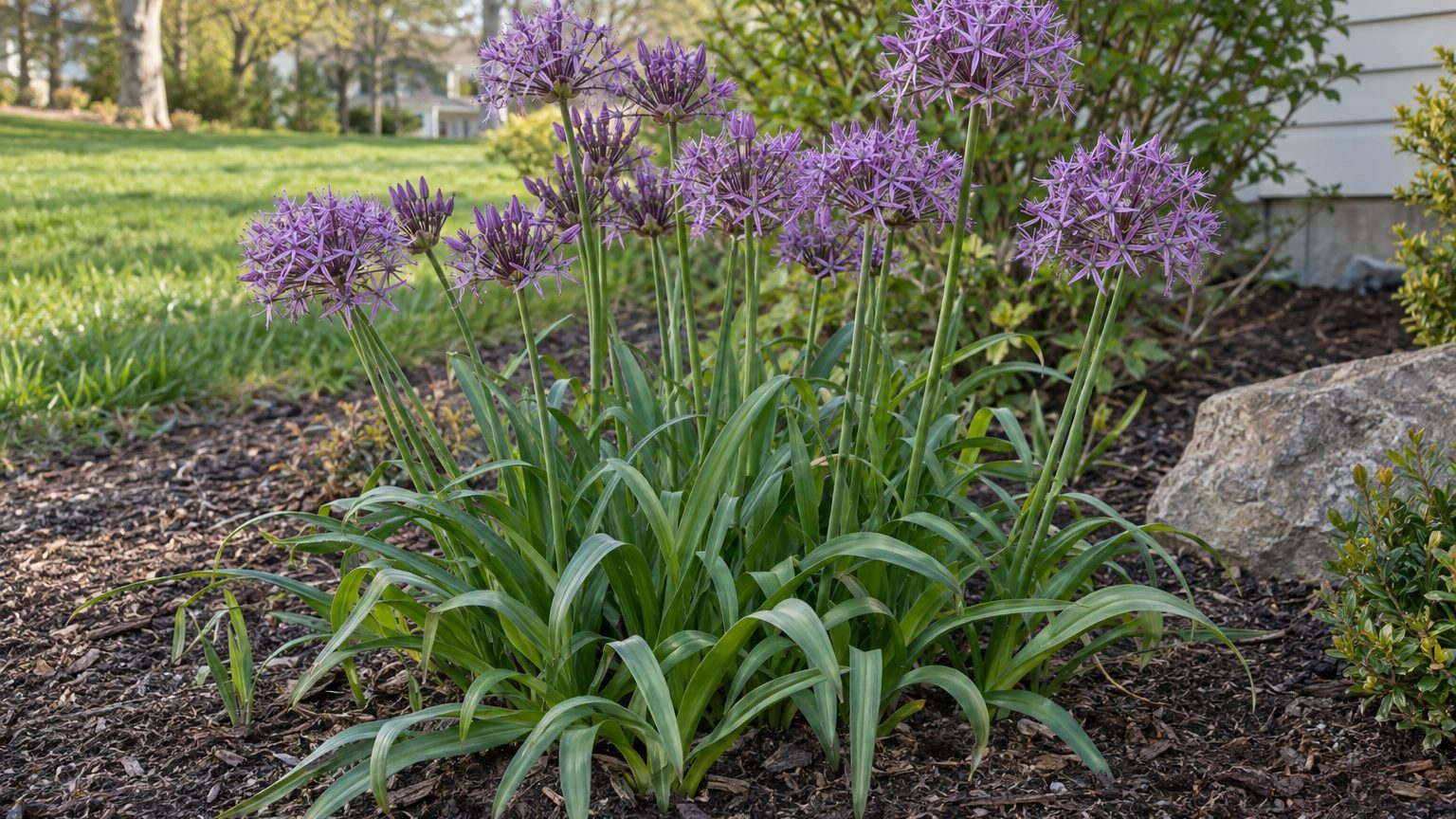
Those big silvery-lavender globes that float above the garden in late spring belong to Star of Persia allium, an ornamental onion planted as a bulb in fall. It grows 1-2 feet tall, blooms in late spring to early summer, and is hardy in USDA zones 4a through 8b.
What Is the Star of Persia Allium?
Star of Persia is an ornamental onion, a spring-flowering bulb grown for its flower head rather than for the kitchen. The plant reaches 1-2 feet tall and forms dense clumps over time, so a few bulbs become a solid patch.
The flowers are pale lavender, packed into a large cluster at the top of a bare stem. That cluster is 8-12 inches wide, the largest of all the ornamental onions.
The strap-like, leathery leaves come up first in early spring and begin to wither as the flower stems rise in late spring. The blooms last well enough to be cut for fresh arrangements or dried for the vase.
From the almanac
Bulbs in your state
The dates on this page depend on where you live. Your state's page carries its frost dates, its USDA zones and the year laid out month by month.
Northeast
Southeast
- Alabama
- Arkansas
- Delaware
- Florida
- Georgia
- Kentucky
- Louisiana
- Maryland
- Mississippi
- North Carolina
- South Carolina
- Tennessee
- Virginia
- West Virginia
Midwest
Southwest
West
Pacific Northwest
Canada
Where Does the Star of Persia Allium Grow Best?
Star of Persia is hardy in USDA zones 4a, 4b, 5a, 5b, 6a, 6b, 7a, 7b, 8a and 8b. Check your zone on the USDA map, then look at your state page for the months that suit your own yard.
Light matters less than drainage. The bulbs do well in full sun to partial shade, which makes them easy to tuck into beds that are bright for part of the day.
Well-drained soil is the real requirement. Bulb rot can occur in wet soils, so a spot where water lingers after rain is the wrong place for them. According to Iowa State University Extension, alliums also need the cold of winter to bloom.
How to Plant and Care for the Star of Persia Allium Through the Year
Fall
Plant the bulbs in fall for spring blooms, once the soil has cooled below about 60°F. That timing lets roots form before the ground freezes without pushing leaves up too early.
Set each bulb 5 inches deep and space them 12 inches apart. The spacing looks generous at first, but it gives the clumps room to thicken. A bulb still in the bag goes in as soon as the ground can be dug.
Winter
Winter asks very little of you. The bulbs rest underground, and well-drained soil is what carries them through, since wet ground is where rot begins. Leave the bed alone and resist the urge to water it.
Spring Bloom
The leathery leaves appear first in early spring, then start to wither just as the flower stems climb in late spring. Seeing ragged leaves at bloom time is normal for this plant, not a sign of trouble.
The flower heads open from late spring to early summer. Cut a few for a vase, or let them dry on the stem and bring them indoors.
After Bloom
Once the flowers fade, remove only the spent blooms. Leave the leaves on the plant until they turn brown, because they feed the bulb for next year’s flowers.
Since the foliage thins out early, plant it among leafier perennials that will fill the gap it leaves behind.
Summer
Summer is the quiet season for Star of Persia. The plant tolerates drought, so you can skip the extra watering and keep the soil on the dry side. Wet soil is the greater risk, particularly where sprinklers soak the bed.
Star of Persia Allium Weak Points: Animals, Diseases and Staying Power
Star of Persia has few troubles. It is normally not susceptible to animals, which sets it apart from tulips and crocus, favorites of voles, squirrels, rabbits and deer.
Disease is rarely a worry, with no significant problems listed beyond rot in soggy ground. Bulb mites are the one insect to watch for. Over the years the plant forms dense clumps, which is a sign it settles in where drainage is good.
| Issue | How the Star of Persia Allium handles it |
|---|---|
| Animals | Normally not susceptible |
| Drought | Particularly resistant |
| Wet soil | Bulb rot can occur |
| Insects | Bulb mites are a common problem |
| Staying power | Forms dense clumps over time |
Drainage decides most outcomes here. Fix a wet bed before planting, and the bulbs should keep coming back and thickening year after year, unlike tulips, which are often short-lived.
Is the Star of Persia Allium Right for Your Yard?
It suits a sunny or partly shaded bed with soil that drains well, and anyone who wants a big, airy globe at the end of the spring bulb season. It is a poor fit for low spots that stay wet.
- Plant it in fall among perennials that will cover the fading leaves, and expect the lavender globes in late spring to early summer.
- Skip it for soggy beds, or raise the soil first so bulb rot has no chance to start.
- Open your state page to find the planting months for your yard, then set the bulbs 5 inches deep.
Common Questions
Can You Use Star of Persia Allium as a Cut or Dried Flower?
Yes. The large lavender clusters work in fresh arrangements, and they dry well when left to age on the stem or hung indoors.
Do Deer and Rabbits Eat Star of Persia Allium?
Normally not. The plant is not susceptible to animals, so it can fill a bed where tulips would be nibbled.
Does Star of Persia Allium Need a Cold Period in Warm Zones?
Yes. Alliums need the cold of winter to bloom, so there is no pre-chilling step in zones up to 8b.