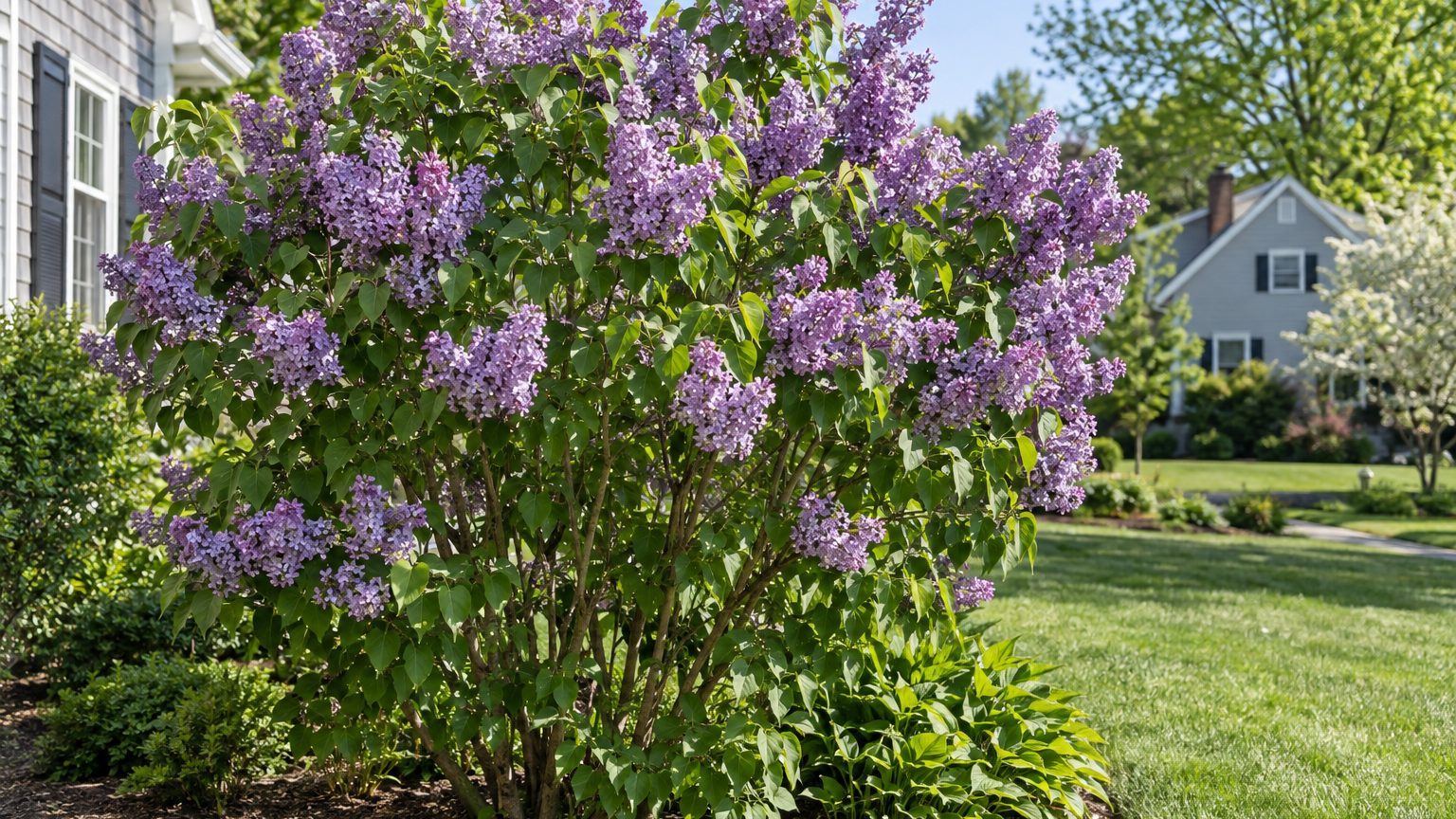
Lilac blooms are the scent of a Rhode Island spring, carried on a warm afternoon from a hedge, an old farmhouse corner or a neighbor’s fence. The timing of that bloom, and the pruning that protects it, decides whether the shrub flowers again the following year.
When Do Lilacs Bloom in Rhode Island?

Lilacs bloom in Rhode Island in April and May, and later species can carry flowers into June. Around that bloom, the shrub’s year follows a steady rhythm.
- In late winter, March and April, an overgrown lilac can be cut back hard while it is still dormant.
- In April and May, the flower clusters open, with later species stretching the show into June.
- Right after the flowers fade, in May or June, the shrub is ready for its yearly pruning.
- Through summer, next spring’s flower buds form on the shrub, so it needs sun and a quiet hand.
- In fall and winter, the lilac rests in the cold, and that rest is what ripens the buds for spring.
At the reference station, the last spring freeze falls between April 7 and April 17, and yards inland or away from the city tend to see it later, so check your own county. The first fall freeze arrives between October 24 and November 3, again a little sooner in many suburban and rural yards. Rhode Island sits in USDA zones 6a to 7b, cold enough for lilacs.
Rhode Island — the year and the numbers
- State
- Rhode Island
- USDA zones
- 6a-7b
- Last spring frost
- April 7 to April 17
- First fall frost
- October 24 to November 3
- Annual rain
- 48 in
- Lawn zone
- cool-season
- Source
- NOAA NCEI U.S. Climate Normals 1991-2020, 32F freeze probabilities · Providence
Which Lilacs Grow Best in Rhode Island?
Lilacs belong here. Their flower buds need a cold winter rest to mature, and Rhode Island winters supply it. Hot, humid summers are the weak point, so placement matters more than the particular shrub you choose.
Sun and moving air keep a lilac healthy, while crowded, still corners work against it.
| Lilac type | How it does in Rhode Island | Why |
|---|---|---|
| Lilacs in a sunny, open spot | Thrive | Sun and good air circulation suit the shrub |
| Lilacs through a cold winter | Flower well | Winter chill is what matures the buds |
| Later-blooming species | Carry flowers into June | They open after the main April and May show |
| Lilacs in hot, humid summer spots | Struggle | The shrub prefers cold-winter climates over steamy summers |
Lilacs belong to the olive family and favor cold climates over mild ones. If you want bloom to last longer in your yard, planting a later species beside an earlier one stretches the season.
When to Plant, Prune and Feed Lilacs in Rhode Island
Pruning is the task with the most riding on its timing. A lilac blooms on last year’s wood and sets next year’s flower buds in summer, soon after it flowers. Cutting right after the flowers fade keeps those buds intact.
A hard cut is a different job, with a different cost. An overgrown lilac can be cut back hard in late winter, but it will not flower for a few years afterward.
| Task | Best timing in Rhode Island | Why then |
|---|---|---|
| Yearly pruning | May, June, right after the flowers fade | New buds for next spring have not formed yet |
| Hard renovation cut of an overgrown lilac | March, April, in late winter | The shrub is dormant, though it costs the next flowers |
| Pruning to avoid | Late summer, fall, winter | The cut removes next spring’s flower buds |
The page on when to prune lilacs in Rhode Island goes deeper on cuts and technique. For planting and feeding, ask the local extension service about timing in your yard and use a soil test before adding nutrients.
How Lilac Bloom Time Changes Across Rhode Island
Rhode Island is small, but the shore and the hills do not warm at the same pace, and bloom follows that difference.
- Newport and the South County shore: Water moderates temperature swings, so follow the flowers in your own yard rather than assuming an inland schedule.
- Northwest Rhode Island (Burrillville, Foster and Glocester): Higher, colder ground holds frost longer in spring, so flowers open later and may reach into June.
- Providence and the Blackstone Valley: Built-up areas hold a bit of warmth, though suburban lots outside the city may still see frost later than the city.
Your own yard matters too. A low pocket where cold air settles opens later than a nearby sunny slope.
Where to Get Lilac Advice in Rhode Island
When a lilac fails to bloom or the leaves look off, local help sorts it out faster than guessing. The University of Rhode Island Cooperative Extension answers garden questions for residents and can point you to soil testing.
- Bring a clear photo of the shrub and a leaf sample to the extension’s local staff when a problem shows up, ideally while the symptoms are fresh.
- Send a soil sample to the extension whenever the ground is workable, before you add fertilizer or lime.
- Mark the day the flowers fade on your calendar, because that is your pruning day.
Common Questions
Why Isn’t Your Lilac Blooming?
Look at these factors together. A shrub in shade with plenty of leaves and few flowers is usually short on sun. A shrub that was cut in late summer, fall or winter, with healthy leaves but bare stems come spring, lost its buds to the pruners.
How Do You Know a Lilac Is Overgrown Enough for a Hard Cut?
Check the stems and the flowers. Thick, woody stems with sparse new growth at the base suggest that the shrub is overgrown. Flowers confined to the top, out of reach, reinforce that diagnosis. When those traits appear together, a late-winter renovation is worth considering.
Is It Too Late to Prune a Lilac in July?
Yes. By then the shrub has already set its buds for next spring, so a cut would remove flowers. Wait until the next bloom fades and prune then.