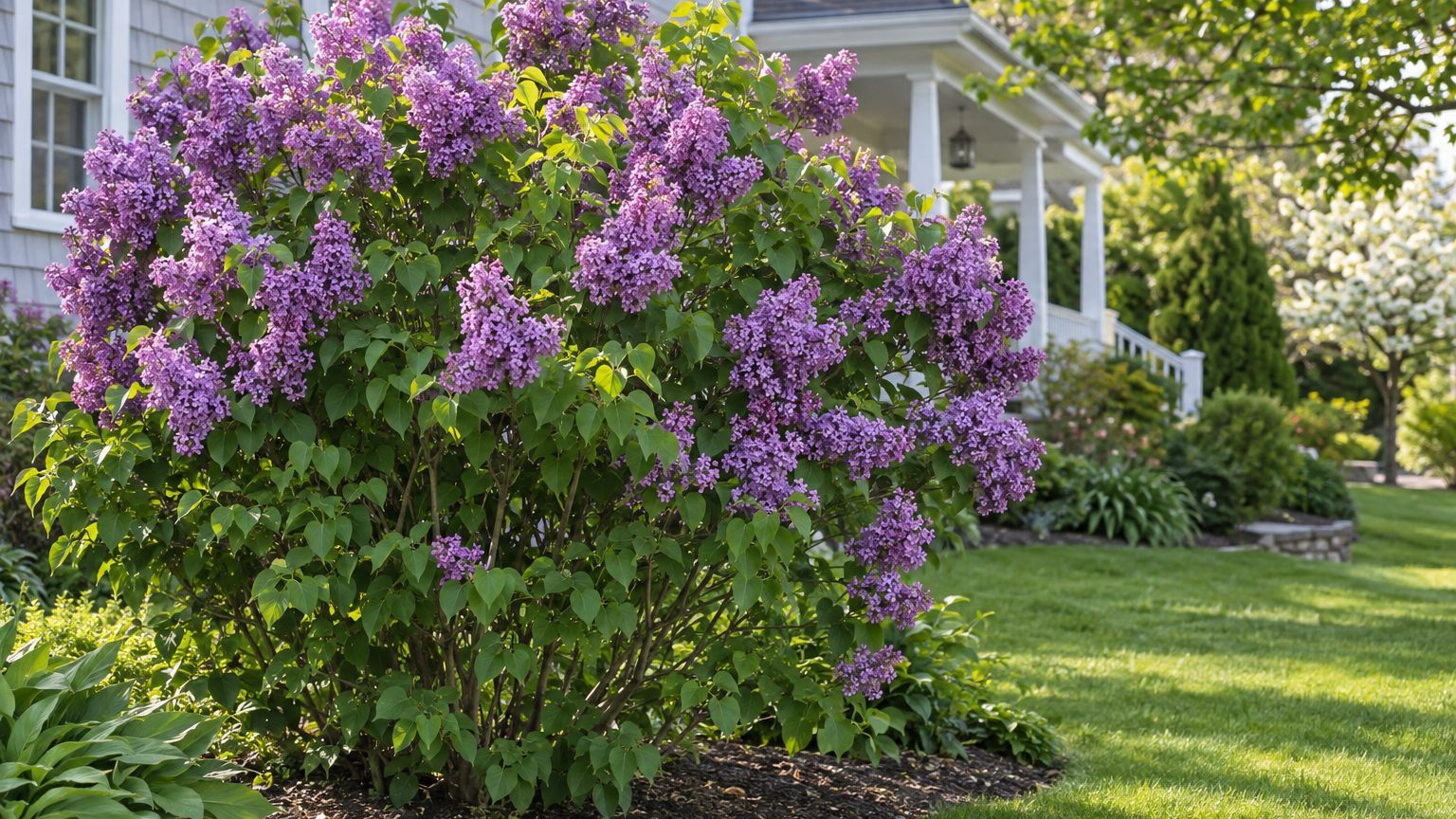
Lilac buds swell on bare branches in April, and by May the scent drifts over fences and front steps across Nova Scotia. That brief show is the rhythm of lilacs in Nova Scotia, and the jobs on either side of it decide whether the shrub repeats it next year.
When Do Lilacs Bloom in Nova Scotia?

Lilacs in Nova Scotia flower from late April into May, and later species carry the show into June. The rest of the year is a steady cycle of cutting, resting and bud-building, and each stage has its own season.
- In late winter, March and April, an overgrown lilac can be cut back hard while it is still dormant. The shrub will not flower for a few years afterward, so keep this for plants that have truly outgrown their spot.
- From April into May, the flowers open and the scent fills the yard. Common lilacs lead, and later species keep going into June.
- Right after the flowers fade, in May and often into June, is the time for ordinary pruning. Shaping the shrub now leaves the buds for next spring untouched.
- Through summer, the shrub sets next year’s flower buds on the new growth. Leave the branches alone and keep the plant healthy so those buds form well.
- In winter, the shrub rests in the cold. Winter cold provides the rest lilacs need to mature their flower buds.
Spring frost at Halifax falls on average around May 7, which is the middle of a window, so a frost after that date is still possible. The first fall frost arrives on average around October 18. Halifax sits in zone 6b on the Canadian hardiness system, which is not a USDA zone.
Nova Scotia — the year and the numbers
- State
- Nova Scotia
- Hardiness zones
- 6b
- Last spring frost
- May 7
- First fall frost
- October 18
- Annual rain
- 55 in
- Lawn zone
- cool-season
- Source
- Environment and Climate Change Canada — Canadian Climate Normals 1981-2010, station HALIFAX STANFIELD INT'L A · Halifax
Which Lilacs Grow Best in Nova Scotia?
Lilacs belong in Nova Scotia. They are cold-climate shrubs, and the winter chill is what ripens their flower buds, so the province’s long cold season works in their favor.
Hot, humid summers are where lilacs struggle. In Nova Scotia, focus on a sunny spot with good air circulation as well as the type you plant.
| Lilac type | How it does in Nova Scotia | Why |
|---|---|---|
| Lilacs that open in late April and May | A good fit in sunny, open sites | Cold winters mature the flower buds |
| Later species that flower into June | Stretch the season past the usual peak | They open after earlier lilacs have faded |
| Any lilac in full sun with good air circulation | Thrives | Sun feeds bud set and moving air suits a shrub that dislikes damp, close summers |
A lilac crowded by other shrubs may bloom less well because it gets less sun and air circulation. Give it open space and sun to support flowering and air circulation.
When to Plant, Prune and Feed Lilacs in Nova Scotia
Lilacs bloom on last year’s wood, so the timing of any cut decides next spring’s flowers. Routine pruning and the occasional drastic renewal of an old shrub have different timing.
| Task | Best timing in Nova Scotia | Why then |
|---|---|---|
| Routine pruning | May into June, right after the flowers fade | Next year’s buds form soon after bloom, so prune as soon as the flowers fade |
| Hard renovation of an overgrown shrub | March and April, in late winter | The plant is dormant, though flowering will be lost for a few years |
| Pruning a healthy shrub | Not in late summer, fall or winter | The buds are already on the branches and would be cut off |
For planting and feeding, ask a local garden centre or garden society what suits your site. The page called When to Prune Lilacs in Nova Scotia goes deeper into cuts and technique.
How Lilac Bloom Time Changes Across Nova Scotia
Nova Scotia is a long province with water on nearly every side, so a lilac in one district can open noticeably later than one in another. Here is how the main regions tend to differ.
- Annapolis Valley: The sheltered inland valley tends to warm early in spring, so lilacs here often open ahead of the coast. Orchards and farmland share the same advantage.
- South Shore and Halifax coast: Cold Atlantic water slows the spring warm-up, and fog can hold buds back. Blooms usually arrive a little later than in the valley.
- Cape Breton Highlands: Upland and northern districts run later than Halifax, and lilacs there often reach their peak well into the bloom window or even into June.
Nova Scotia has no local extension page for lilac timing, so these dates follow the nearest comparable climate. Confirm local timing with a garden centre, a garden society or a provincial gardening group.
Where to Get Lilac Advice in Nova Scotia
Canada has no county extension offices, but the province has plenty of help close to home. Questions about a struggling shrub or a soil test usually have a quick local answer.
- The Nova Scotia Department of Agriculture offers provincial guidance on plants and soil, and its pages are worth a look before you buy or plant.
- A local master gardener group or garden society can look at photos of a shrub that is not flowering, and spring meetings are a good time to ask.
- A neighborhood garden centre can suggest where to get local soil or plant-health advice.
Common Questions
Why Didn’t Your Lilac Bloom This Spring?
Look at when the shrub was last cut and how much sun it gets. A lilac with healthy leaves that was pruned in late summer, fall or winter has likely lost its buds. A shrub in deep shade tends to leaf out well but flower sparsely, and moving it or clearing neighbors can help.
Can a Late Frost Damage Lilac Flowers?
Open flowers can brown if frost arrives after the buds break, and the average last frost date is only the middle of a window. When a cold night is forecast during bloom, a light cover over the shrub overnight offers some protection. The shrub itself recovers and sets buds again for the following year.
Where Should You Plant a Lilac in Your Yard?
Choose a sunny site with good air circulation, away from walls and crowded beds. Sun and moving air suit a shrub that struggles in hot, humid conditions, while winter cold provides the rest its buds need.