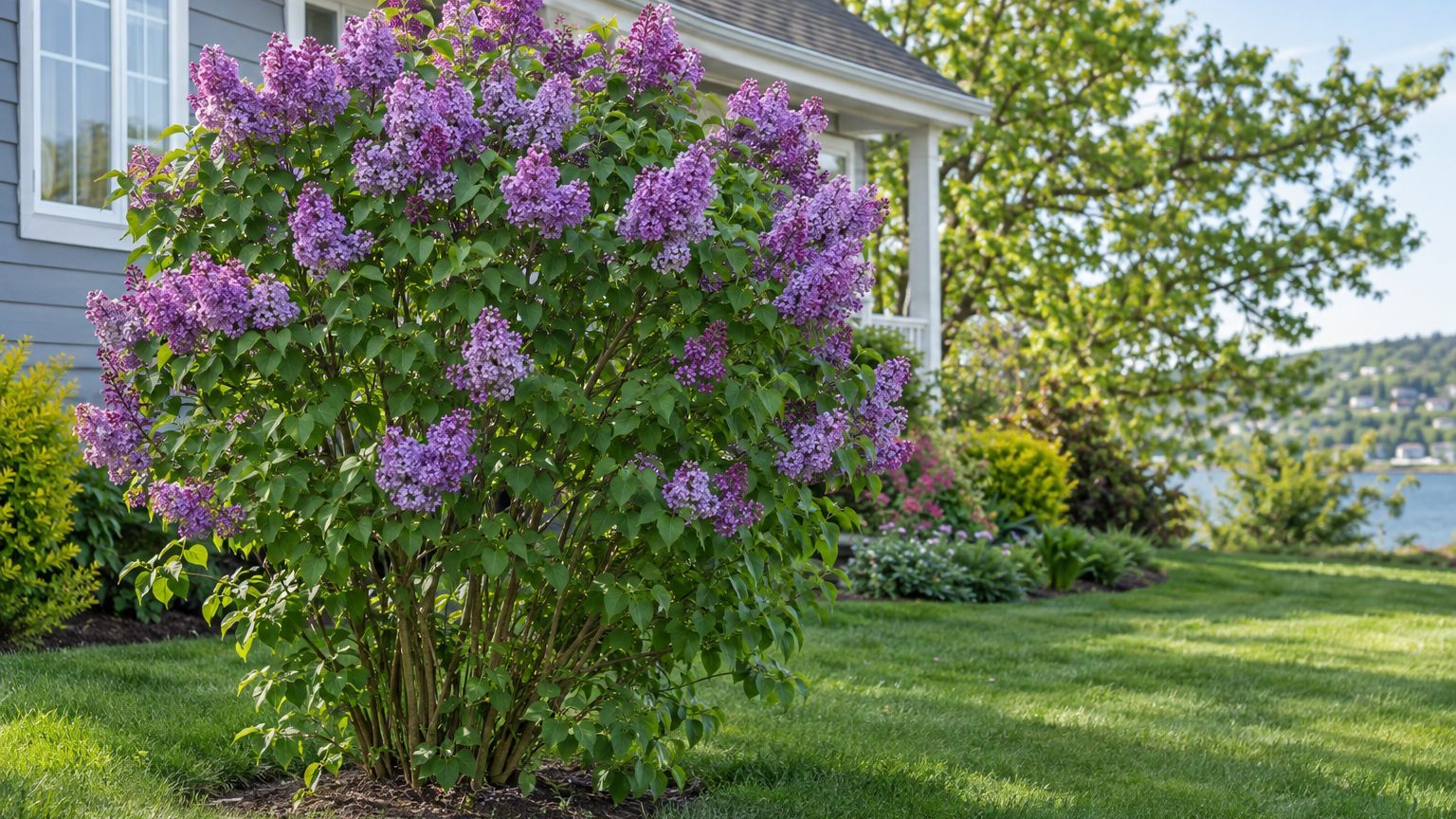
A lilac in full flower, heavy with cone-shaped clusters, is a sure sign that spring has settled in. In Newfoundland and Labrador the shrubs do well because the winters give them the long chill they need, and every job through the year takes its cue from the bloom.
When Do Lilacs Bloom in Newfoundland and Labrador?

Lilacs here bloom in April and May, and later species carry flowers into June. The dates in this guide follow the nearest comparable climate, since no local lilac calendar exists for the province. Confirm timing with a local garden centre, a garden society or one of the provincial gardening groups. The rest of the year follows the flowers:
- In April and May, the clusters open, and the shrub earns its place by the front walk. Cut a few stems for a vase while the scent is strong.
- Right after the flowers fade, usually in May and into June, is the time for any shaping, because the shrub starts setting next year’s buds soon afterward.
- Through summer, the flower buds for next spring form quietly on this year’s new growth, so the shrub needs sun, airflow and no heavy cutting.
- In the cold months, the plant rests, and that chill is what ripens those buds for the following spring.
- In March and April, an overgrown lilac can be cut back hard while it is still dormant, at the price of the flowers for a few years afterward.
At St. John’s, the last spring frost falls on average on May 30, so frost comes later than that in one year out of two and can catch opening buds. The first fall frost arrives on average on October 17, and the same rule applies. St. John’s is in Canadian hardiness zone 6a, which is not a USDA zone; its frost dates do not describe colder or upland districts.
Newfoundland and Labrador — the year and the numbers
- State
- Newfoundland and Labrador
- Hardiness zones
- 6a
- Last spring frost
- May 30
- First fall frost
- October 17
- Annual rain
- 60 in
- Lawn zone
- cool-season
- Source
- Environment and Climate Change Canada — Canadian Climate Normals 1981-2010, station ST JOHN'S A · St. John's
Which Lilacs Grow Best in Newfoundland and Labrador?
Lilacs belong in this province. They are members of the olive family and suited to cold climates, and the winter chill is what develops and ripens their flower buds. They struggle in hot, humid summers, which is not the problem here.
Sun and moving air matter as much as cold. A lilac in a sunny, open spot flowers better than one crowded against a wall.
| Lilac type | How it does in Newfoundland and Labrador | Why |
|---|---|---|
| Common lilac (Syringa vulgaris) | Reliable, flowering in April and May | Needs a cold winter rest to ripen its buds |
| Later-blooming species | Flowers can reach into June | Opens after the common lilac has finished |
Planting common and later-blooming lilacs gives a longer season of scent, because the later species opens as the common lilac fades.
When to Plant, Prune and Feed Lilacs in Newfoundland and Labrador
The year’s work is short. A lilac asks for very little feeding, and its pruning has to follow the flowers, not the calendar alone.
| Task | Best timing in Newfoundland and Labrador | Why then |
|---|---|---|
| Planting | As soon as the ground has thawed and can be worked in spring | Roots settle in cool, moist soil before summer |
| Pruning after bloom | May, into June, right after the flowers fade | Next year’s buds form soon afterward |
| Hard renovation cut | March and April, while the shrub is dormant | Frees an overgrown plant, but costs the next flowers |
A lilac blooms on last year’s wood and sets next year’s buds in summer, soon after it flowers. Pruning in late summer, fall or winter cuts off the next spring’s flowers. A hard cut-back renews an overgrown shrub, though it will not flower for a few years afterward. The page called When to Prune Lilacs in Newfoundland and Labrador goes deeper on pruning.
How Lilac Bloom Time Changes Across Newfoundland and Labrador
The province is large, and the sea sets the pace of spring more than the map does.
- St. John’s and the Avalon Peninsula: Cold water and fog hold spring back along the shore, so lilacs bloom later than the calendar suggests. An inland garden often blooms before one on an exposed headland.
- Corner Brook and the west coast: Sheltered spots warm faster than open shoreline, so bloom can come earlier in a protected yard than on a windy point nearby.
- Happy Valley-Goose Bay and Labrador: Spring arrives later than on the island, so flowers open later there as well.
Use the dates here as a guide and watch your own shrub, because a warm wall or a windy exposure can shift the flowers.
Where to Get Lilac Advice in Newfoundland and Labrador
Canada has no county extension office, so help comes from the province and from local growers. The Newfoundland and Labrador Department of Fisheries, Forestry and Agriculture is the provincial starting point.
- The provincial department can point you to gardening resources and, for a sick shrub, to someone who can diagnose it. Contact them in spring when leaves open.
- A local garden centre or garden society knows which lilacs have thrived in your own district, and members often swap cuttings. Visit in the weeks around bloom.
- Soil testing is sold through garden centres and provincial services, and results guide any feeding. Take a sample before you add anything.
Common Questions
Why Is a Lilac Not Flowering?
Look at these signs together. Plenty of leafy growth but few buds, in a spot that stays shaded for much of the day, points to too little sun. A shrub that was cut in late summer, fall or winter and flowers thinly the next spring has lost its buds to the pruners. If shade and late pruning are to blame, move the cutting to just after bloom and trim back whatever shades the shrub.
How Much Sun Does a Lilac Need?
A lilac does best in a sunny site with good air circulation. Full sun builds the flower buds, and moving air keeps the leaves dry after fog or rain. A sunny, open site gives the shrub the light and air movement it needs.
Can a Foggy, Cool Summer Hurt a Lilac?
Cool summers are not the issue, because lilacs struggle with hot, humid summers rather than cool ones. Damp, still air around crowded stems is the real worry. Give the shrub room, and thin crowding branches right after the flowers fade so air can move through it.