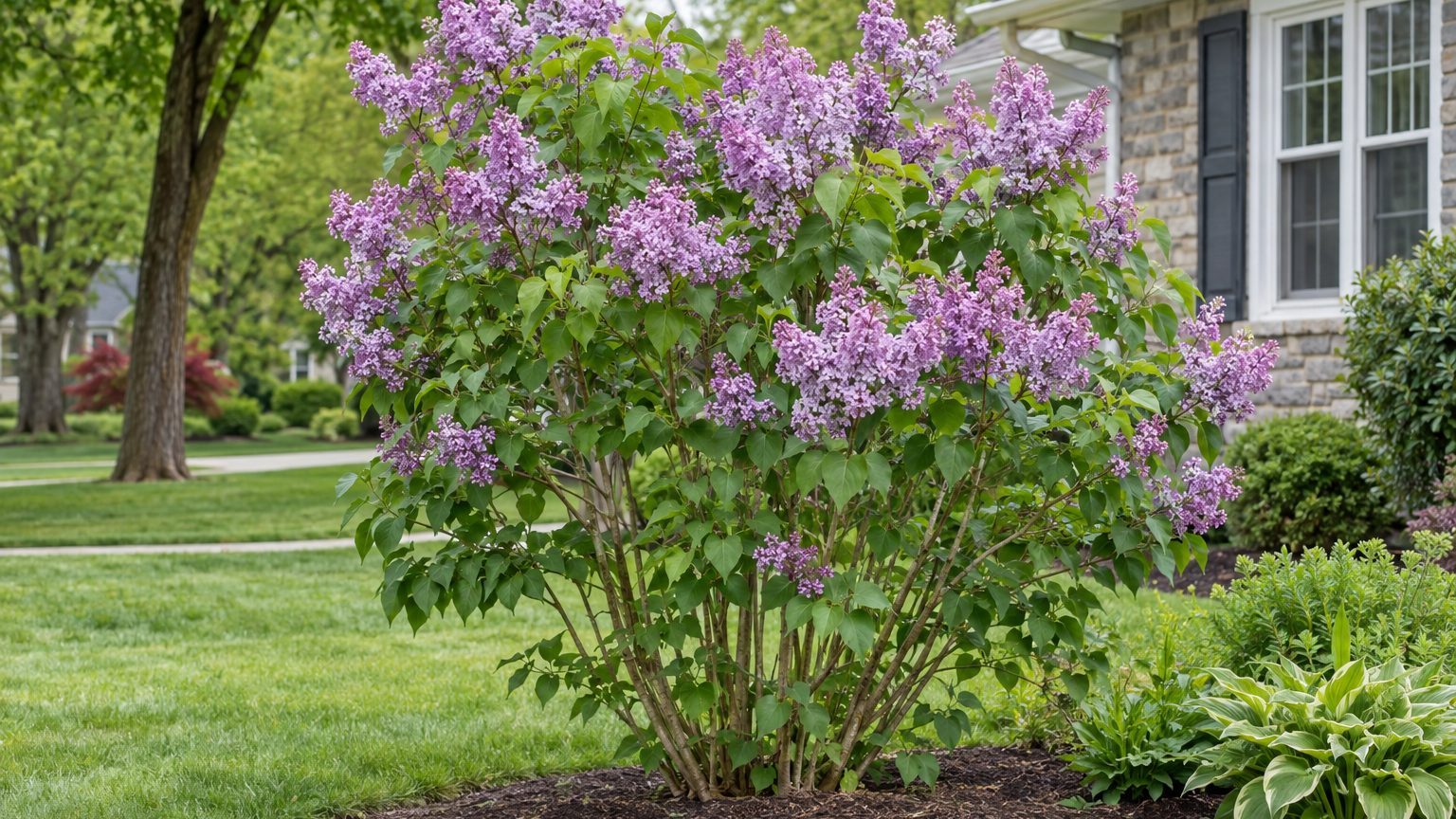
A lilac in full bloom announces itself from the sidewalk, long before you see the flowers, and in Pennsylvania that scent arrives with a fresh wave of spring color. Across Pennsylvania, lilacs bloom at different times, and their care should follow the local season.
When Do Lilacs Bloom in Pennsylvania?

Lilacs in Pennsylvania bloom from April through May, with later species and cultivars carrying flowers into June.
- In April and May, the flowers open, with the early hybrids first and the common types following soon after.
- In May and June, right after the flowers fade, is the time to prune, because the shrub starts setting next year’s buds soon after it blooms.
- Through summer, the buds for next spring form on the new growth, so a late-summer haircut removes them.
- In fall and winter, the shrub rests and needs that cold stretch to mature its buds.
- In March and April, an overgrown lilac can take a hard cut-back while it is still dormant, though it gives up the next flowers.
Frost dates frame all of this. At the Philadelphia reference point, the last spring frost falls between March 29 and April 6, and the first fall frost between November 5 and November 16. Pennsylvania spans USDA hardiness zones 5a to 7b, so other parts of the state differ from Philadelphia.
Pennsylvania — the year and the numbers
- State
- Pennsylvania
- USDA zones
- 5a-7b
- Last spring frost
- March 29 to April 6
- First fall frost
- November 5 to November 16
- Annual rain
- 44 in
- Lawn zone
- transition-season
- Source
- NOAA NCEI U.S. Climate Normals 1991-2020, 32F freeze probabilities · Philadelphia
Which Lilacs Grow Best in Pennsylvania?
Lilacs do well here. They are shrubs of cold-winter country, and most of Pennsylvania delivers the winter rest they need to mature their flower buds. Lilacs are better suited to the colder parts of Pennsylvania’s USDA hardiness range.
Warmth and humidity are the limits. Lilacs struggle in hot, humid summers, so the milder southeastern corner asks for a sunny spot with good air circulation, which also helps the shrub shrug off damp-weather trouble.
| Lilac type | How it does in Pennsylvania | Why |
|---|---|---|
| Common lilac (Syringa vulgaris) | More reliable in the colder parts of the state | Needs cold winters to set buds |
| Hybrids of S. oblata and S. vulgaris | Good, with earlier flowers | Well suited to cold climates, blooming in mid to late April |
| Later species and cultivars | Good, extending bloom into June | Open after the early types finish |
Planting a mix of early and late types stretches the show across the season rather than concentrating it in a brief burst. Give any of them full sun, since shade leads to leafy shrubs with few flowers.
When to Plant, Prune and Feed Lilacs in Pennsylvania
A lilac sets next year’s flower buds in summer, soon after it flowers, which makes the timing of every task matter. Prune right after the flowers fade, because pruning in late summer, fall or winter cuts off the next spring’s flowers.
| Task | Best timing in Pennsylvania | Why then |
|---|---|---|
| Enjoy the bloom | April and May, later types into June | Species and cultivars open at different times |
| Routine pruning | May and June, right after the flowers fade | The shrub blooms on last year’s wood and has not yet set new buds |
| Hard renovation cut | March and April, while dormant | The whole plant can be cut back close to the ground, at the price of the next flowers |
| Planting | When the soil is workable and the shrub can settle before extremes | Roots establish in mild weather |
| Feeding | Feed only if a soil test shows the shrub needs it | Heavy nitrogen favors leaves over flowers |
An overgrown lilac can be cut back hard in late winter, but it will not flower for a few years afterward. If the shrub is blocking a window rather than failing to bloom, thin the oldest stems after flowering instead. The page on when to prune lilacs in Pennsylvania covers the cuts in detail.
How Lilac Bloom Time Changes Across Pennsylvania
Bloom follows the local spring, so it shifts across the state with elevation and latitude. Warmer spots open earlier, cooler ones follow, and local examples show the pattern.
- Philadelphia and the southeast: Spring arrives here ahead of the rest of the state, so lilacs open earlier than in the north.
- The Alleghenies: Higher ground stays cold longer in spring, with frost running two to four weeks later than in Philadelphia, so flowers open later and often reach June.
- The northern tier: Cool springs delay growth, and bloom comes later than in the south, which can make a late-blooming cultivar a good fit.
Because of these differences, watch your own shrub’s buds swell rather than trusting a statewide date.
Where to Get Lilac Advice in Pennsylvania
Penn State Extension offers plant diagnosis and soil testing through its county offices, which is useful when a lilac leafs out well but refuses to flower.
- Your county extension office can look at a leaf or stem sample if the shrub shows spots, wilting or dieback, so bring a fresh sample when you visit.
- A soil test through the same office tells you whether the soil needs adjusting before you plant or feed.
Common Questions
Why Is My Lilac Not Blooming?
Look for the signs together. If the shrub is leafy and healthy but sits in shade, light is the likely cause. If it was pruned in late summer, fall or winter, the flower buds were probably cut off. Heavy nitrogen feeding can also push leaves at the expense of flowers.
Can You Grow Lilacs in Southeastern Pennsylvania?
Yes. The area is mild, and lilacs struggle in hot, humid summers, so choose a sunny site with good air circulation and avoid crowding. Spacing the shrubs helps air move through the leaves and lowers the chance of damp-weather problems.
Can You Move an Overgrown Lilac?
An overgrown lilac can be cut back hard in March or April while dormant, which makes it easier to handle. Expect no flowers for a few years afterward. You can move it, but ask your county extension office about the right timing for your site.