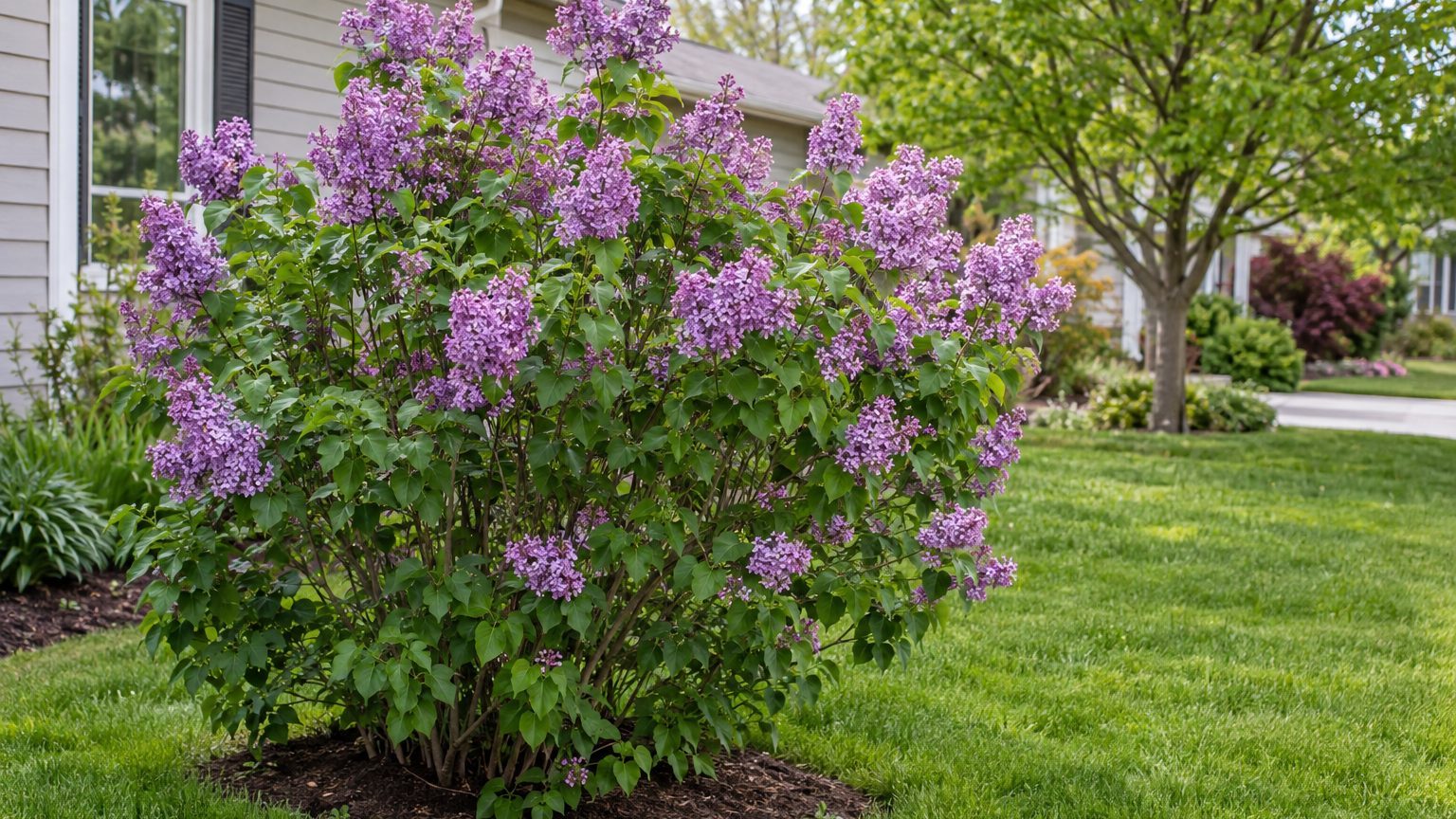
A lilac that looks like a bundle of bare twigs in April can be heavy with scent not long after. In Manitoba the show comes late in spring and runs into June, and nearly every gesture in the shrub’s year hangs on those flowers. Planting, pruning and winter rest all follow from when they open.
When Do Lilacs Bloom in Manitoba?

Lilacs in Manitoba bloom from May into June, with the common lilac opening first and the late and tree lilacs following in June.
- In late winter, in March or April, an old overgrown lilac can be cut back hard while it is still dormant, though the shrub will skip its flowers for a few years afterward.
- In May, the common lilac opens. In Winnipeg, the last spring frost falls on average around May 23, a midpoint rather than a safe date, so a frost after it is common and can nip open flowers.
- In June, the late lilacs and tree lilacs take over, and the common lilac finishes. Right after its flowers fade is the time to prune.
- Through summer, the shrub sets next year’s flower buds on the new growth, which is why a late cut removes them.
- In Winnipeg, the first autumn frost arrives on average around September 22, and the shrub settles into the cold rest that matures its buds.
Winnipeg sits in zone 3b on the Canadian hardiness system, which does not convert to a USDA zone. Manitoba has no local extension page for lilac timing, so these months follow the nearest comparable climate; confirm them with a local garden centre, a garden society or a provincial gardening group.
Manitoba — the year and the numbers
- State
- Manitoba
- Hardiness zones
- 3b
- Last spring frost
- May 23
- First fall frost
- September 22
- Annual rain
- 21 in
- Lawn zone
- cool-season
- Source
- Environment and Climate Change Canada — Canadian Climate Normals 1981-2010, station WINNIPEG RICHARDSON INT'L A · Winnipeg
Which Lilacs Grow Best in Manitoba?
Lilacs suit Manitoba well. They need a cold winter rest to mature their flower buds, and a prairie winter delivers it. They struggle in hot, humid summers, which is a problem for warmer climates and rarely one here.
Pick a sunny site with good air circulation, then choose by how early the type blooms, since that decides how exposed the flowers are to a late frost.
| Lilac type | How it does in Manitoba | Why |
|---|---|---|
| Common lilac (Syringa vulgaris) | Reliable, blooms first, in May | Suits cold winters and opens as spring settles in |
| Late lilacs | Bloom in June, after the common lilac | Later flowers miss most spring frost |
| Japanese tree lilac | Blooms in June and closes the season | A tree-form lilac that opens last |
| Hybrids of S. oblata and S. vulgaris | Good choice, bloom early | Well suited to cold climates |
| Hyacinthiflora hybrids | Hardy and vigorous, but risky in frost pockets | They bloom earlier than French hybrids |
French hybrids, the familiar large-flowered lilacs, bloom later than the hyacinthifloras, so they are the safer pick for an exposed corner. Plant the early bloomers where May frosts are less frequent, such as against a house wall with some shelter.
When to Plant, Prune and Feed Lilacs in Manitoba
Lilacs bloom on last year’s wood, so the timing of the pruners matters more than any other gesture. Right after the flowers fade is the moment, because the next buds form soon after.
Pruning in late summer, fall or winter cuts off the next spring’s flowers.
| Task | Best timing in Manitoba | Why then |
|---|---|---|
| Enjoy the bloom | May into June | Common lilac first, late and tree lilacs after |
| Routine pruning | June, right after the flowers fade | Next year’s buds have not yet formed |
| Pruning while dormant | March or April | Easy to see the shape, but it costs that spring’s flowers |
| Hard renovation of an overgrown lilac | March or April | The shrub regrows from the base while dormant and skips flowers for a few years |
For planting, choose a sunny site and set the shrub in when the ground is workable and the plant is dormant or just leafing out. Lilacs ask for little feeding. Heavy nitrogen pushes leaves at the expense of flowers, so avoid overfeeding.
How Lilac Bloom Time Changes Across Manitoba
Bloom follows how quickly spring warms a district, so the same lilac opens at different times across the province.
- Red River Valley: Winnipeg and the flat farmland around it warm early in spring, so lilacs here tend to bloom ahead of other parts of the province. Frost risk in May is still real.
- Westman: around Brandon the ground is higher and more exposed to the wind, so spring arrives a little later and the bloom follows.
- Interlake: close to Lake Manitoba and Lake Winnipeg, cool water holds spring back, and lilacs near the shore open later than those inland.
- Northern Manitoba: around Thompson and The Pas, spring is well behind the south and lilacs bloom later, nearer to June, with hardy types doing best.
A garden in a sheltered city lot will often bloom earlier than the same shrub on an open farm site.
Where to Get Lilac Advice in Manitoba
Advice comes from the provincial ministry and local growers. Manitoba Agriculture is the provincial starting point for plant health questions.
- A local garden centre or garden society can tell you which lilacs bloom first in your district, and a visit in May shows them in flower.
- A master gardener group can help diagnose a lilac that will not flower, and it is worth asking before the shrub is cut.
Common Questions
Do Lilacs Need Full Sun in Manitoba?
Lilacs flower best in a sunny site with good air circulation. A spot that is shaded or closed in by walls and dense shrubs tends to give more leaves than flowers.
Why Is a Lilac Leafy but Not Flowering?
Look at where it stands and what it has been fed. A shrub in shade with lush green growth after a heavy nitrogen feeding is making leaves at the expense of flowers. Moving the feeding back and giving it more sun usually changes that.
Does a Lilac Need Winter Protection in Manitoba?
A lilac that is established generally does not need wrapping, since the winter cold is part of how it matures its buds. A newly planted shrub, or a hybrid that blooms early, does best in a sheltered spot.