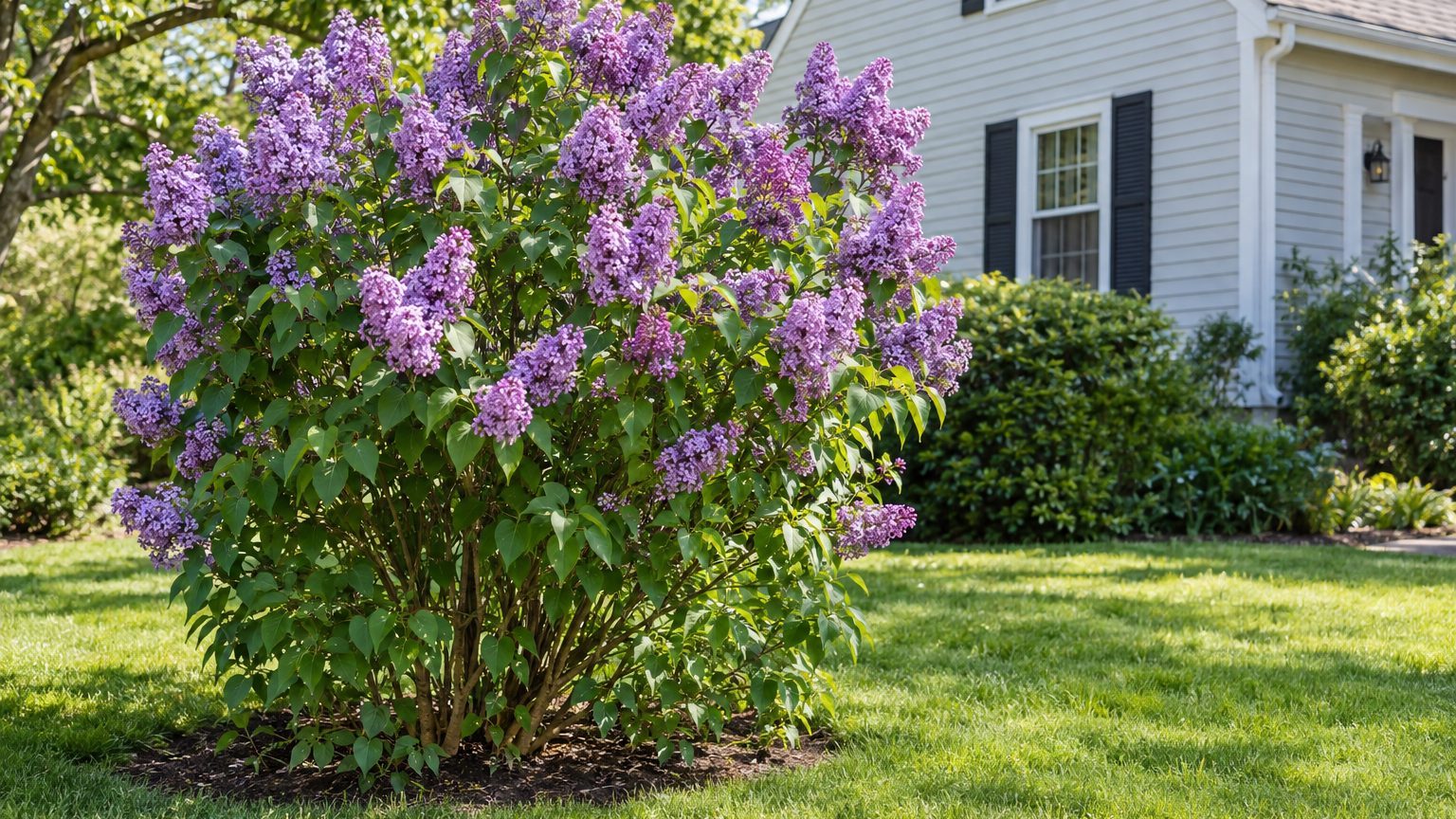
A lilac in full flower in a New Hampshire front yard is a welcome sign that spring has finally settled in. The shrubs bloom here mostly in April and May, and the scent carries across the whole street. That rhythm makes it easier to enjoy the flowers and time each care job without sacrificing next year’s bloom.
When Do Lilacs Bloom in New Hampshire?

Lilacs in New Hampshire flower in April and May, and later species can carry the show into June. The year around that bloom has a clear rhythm:
- In April and May, the flowers open, with the common kinds first and the later species following into June.
- In May and June, right after the flowers fade, is the time to prune, because the shrub starts forming next year’s buds soon after it blooms.
- Through summer, the new flower buds develop on this year’s growth, so the shrub is already preparing next spring’s display.
- In late winter, in March and April, an overgrown lilac can be cut back hard, at the price of the next flowers.
- Through the cold months, the shrub rests, and that winter chill is what matures the buds for spring.
For Manchester, the last spring frost falls between April 16 and April 27. The first fall frost arrives between October 13 and October 26. Yards outside the city usually see spring frost later and fall frost earlier, often by one to two weeks, and more so at elevation, so check your own county. Gardens here span USDA zones 3b to 6a, so local conditions should guide the choice.
New Hampshire — the year and the numbers
- State
- New Hampshire
- USDA zones
- 3b-6a
- Last spring frost
- April 16 to April 27
- First fall frost
- October 13 to October 26
- Annual rain
- 40 in
- Lawn zone
- cool-season
- Source
- NOAA NCEI U.S. Climate Normals 1991-2020, 32F freeze probabilities · Manchester
Which Lilacs Grow Best in New Hampshire?
Lilacs belong here. They are members of the olive family and well suited to cold climates, and the chill of winter is essential to their bud development and maturation. A New Hampshire winter gives them exactly that.
The shrubs struggle in hot, humid summers, so the cool season that defines this state works in their favor. Give them a sunny site with good air circulation.
| Lilac type | How it does in New Hampshire | Why |
|---|---|---|
| Common lilac | Blooms in April and May | Needs a cold winter rest to set its buds |
| Later-blooming species | Carries flowers into June | Opens after the common kinds finish |
| Any lilac in a sunny, open spot | Flowers well | Sun and moving air suit the plant |
| Any lilac in a crowded, shady corner | Flowers poorly | Low light and still air work against it |
Winter cold is essential for bud development in lilacs. Pick a spot with open sky and a breeze, and the choice of type matters less than the siting.
When to Plant, Prune and Feed Lilacs in New Hampshire
Lilacs bloom on last year’s wood, and they set next year’s flower buds in summer, soon after they flower. That single habit decides the timing of nearly every job.
Prune right after the flowers fade. Cutting in late summer, fall or winter removes the next spring’s flowers.
| Task | Best timing in New Hampshire | Why then |
|---|---|---|
| Enjoying the bloom | April and May, into June for later species | Species differ in when they open |
| Routine pruning | May and June, right after the flowers fade | Buds for next year form soon after bloom |
| Hard renovation cut | March and April, in late winter | The plant is dormant, though the cut costs the next flowers |
| Planting and feeding | When the soil is workable and the shrub is not in flower | Roots settle without competing with the bloom |
An overgrown lilac can be cut back hard in late winter, but it will not flower for a few years afterward. Many gardeners choose to renew only some of the oldest stems at a time to keep some bloom going, though a full cut is a fair choice for a shrub past saving. The full pruning method has its own page, When to Prune Lilacs in New Hampshire.
How Lilac Bloom Time Changes Across New Hampshire
The state stretches from the coast to the mountains, and lilacs follow the local spring, opening sooner where warmth arrives sooner.
- Seacoast: the ocean keeps spring cooler at first, but the milder winters and earlier thaw there generally bring flowers sooner than inland hills.
- Merrimack Valley and southern towns: spring warms here ahead of the rest of the state, so flowers open in April and the main show comes in May.
- Lakes Region: the big lakes hold cold into spring, so bloom tends to arrive a little later than in the south.
- White Mountains and the North Country: higher ground and a colder climate delay the bloom, and the later species may flower here into June.
Within a single town, a south-facing slope often flowers ahead of a shaded hollow, so your own yard may run ahead of or behind the neighbors.
Where to Get Lilac Advice in New Hampshire
University of New Hampshire Extension is the state’s source of research-based gardening help, with county offices that know local conditions.
- The county office can help diagnose a lilac that will not flower, so bring a clipping and a few photos of the whole shrub.
- A soil test through the extension tells you what your yard actually needs before you add fertilizer.
- Check in during May and June, when the flowers fade, to confirm your pruning plans before you pick up the shears.
Common Questions
Why Is My Lilac Not Blooming?
Look at the light and the pruning history together. A shrub in heavy shade that has also been cut in late summer, fall or winter has likely lost its flower buds. Give a shaded lilac more light before expecting better bloom.
Can You Cut Lilacs for a Vase?
Yes, cutting a few stems while the flowers are open is a fair way to enjoy them indoors. Take stems as the bloom begins, but wait until flowering ends for routine pruning.
Do Lilacs Survive New Hampshire Winters?
They do, and they depend on the cold to ripen their buds. Hardiness here runs from USDA zone 3b to 6a, so local conditions should guide the choice.