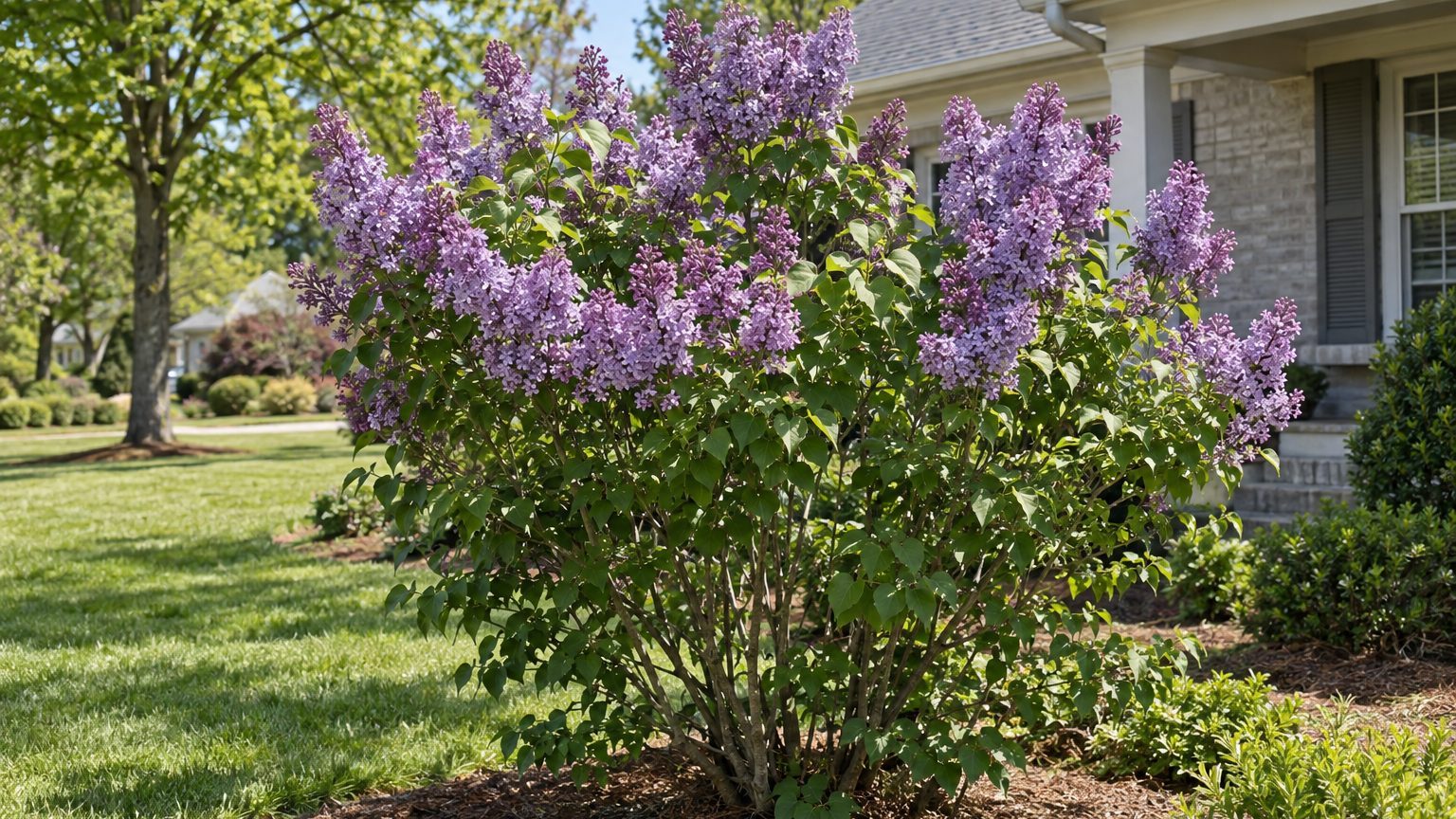
A lilac in full bloom, with its heavy purple clusters and sweet scent, is an uncommon sight in Alabama yards. The common lilac needs a cold winter rest, and the Deep South gives it a hard time.
When Do Lilacs Bloom in Alabama?

Lilacs flower with the local spring, so the display comes when the weather warms in your own county, and in a mild-winter state it may be thin or skipped. Here is how a lilac’s year runs in Alabama.
- In spring, the flower clusters open on last year’s wood, if the shrub got enough winter cold to ripen its buds.
- Right after the last flowers fade, prune off the spent blooms and any shaping cuts, because that is the only safe window.
- Through summer, the shrub sets the buds for next spring, so heat and humidity at this stage shape how well it flowers.
- In fall, leave the branches alone, since the shoots may already carry next year’s buds.
- In winter, the plant rests, and the colder and steadier that rest, the better the flowers.
For the reference city used here, the last spring freeze falls between March 19 and April 3. The first fall freeze arrives between November 2 and November 16. Suburban and rural yards usually freeze later in spring and earlier in fall, and higher ground more so, so check your own county. USDA hardiness zones in Alabama run from 7a to 9a, and lilacs struggle toward the warmer end.
Alabama — the year and the numbers
- State
- Alabama
- USDA zones
- 7a-9a
- Last spring frost
- March 19 to April 3
- First fall frost
- November 2 to November 16
- Annual rain
- 54 in
- Lawn zone
- warm-season
- Source
- NOAA NCEI 1991-2020 Climate Normals, 32F freeze probabilities · Huntsville
Which Lilacs Grow Best in Alabama?
Lilacs can live in Alabama, but the classic common lilac is a gamble. It needs a cold winter rest to mature its flower buds, and it struggles through hot, humid summers.
The better odds belong to lilacs bred for mild winters, often sold as Southern lilacs or lilacs for the South. Expect a pleasant shrub, but a less fragrant one.
| Lilac type | How it does in Alabama | Why |
|---|---|---|
| Common lilac (Syringa vulgaris) | Often struggles and flowers poorly | Needs a pronounced cold winter, and humid heat invites powdery mildew |
| Cultivars sold as heat tolerant | Often do not thrive despite the label | Heat and humidity still stress them, and mildew follows |
| Southern lilacs, or lilacs for the South | Usually grow and bloom | Early-blooming types suited to milder winters, though less fragrant |
| Descanso hybrids | Worth trying | Developed in Southern California and worth trying in a warm climate |
| Low-chill cultivars | Fair odds, not a guarantee | They flower on less cold, but still do best with an extended cold rest |
Among the Descanso hybrids, names to look for are the white Angel White, the blue Blue Boy and the pink California Rose. Even then, a mild winter can leave a healthy shrub with few flowers.
When to Plant, Prune and Feed Lilacs in Alabama
Pruning has a firm rule based on the flowers rather than the calendar. Because a lilac blooms on last year’s wood and sets its next buds in summer, timing decides whether you get flowers at all.
| Task | Best timing in Alabama | Why then |
|---|---|---|
| Prune | Right after the flowers fade | New buds form soon after bloom, so early cuts leave them untouched |
| Avoid pruning | Late summer, fall and winter | Those cuts remove the buds that would open the next spring |
| Leave undisturbed | Through the cold of winter | The buds need that cold rest to mature |
Planting and feeding dates vary with soil and location, and a county extension office can set them for your yard. The full pruning method lives on the page When to Prune Lilacs in Alabama.
How Lilac Bloom Time Changes Across Alabama
Winter cold matters greatly to a lilac, so the shrub does better wherever Alabama winters bite harder and summers ease up.
- The Tennessee Valley and North Alabama: Winters are cooler here than farther south, which gives lilacs a better chance of setting buds.
- The Appalachian foothills and higher ground in the northeast: Cooler nights and more winter chill help, though a late freeze can nip opening buds.
- Birmingham and central Alabama: Spring warms earlier than up north, but humid summers press hard, so Southern lilacs are the safer pick.
- The Gulf Coast around Mobile and Baldwin County: Winters are mild and summers long and humid, so lilacs need a cold winter rest and may flower poorly here.
Wherever you garden, a lilac in a spot that gets a clear winter chill will flower more than one sheltered from every cold snap.
Where to Get Lilac Advice in Alabama
The Alabama Cooperative Extension System, run through Alabama Extension, offers help tuned to local soils and weather. Your county office is the practical starting point.
- County extension offices can test your soil and look at a struggling leaf or branch, so bring a sample when the problem shows.
- Extension plant guides and local master gardeners can tell you which lilac types are doing well in your area, which is worth asking before you buy.
Common Questions
Are Alabama Winters Too Mild for Lilacs?
Cold damage is not the worry, since lilacs are hardy plants. The trouble is the opposite, too little steady chill to ripen the flower buds, so a shrub can grow well and still bloom sparsely.
Why Is a Lilac Not Blooming in Alabama?
Look at the whole picture. Lush green growth with no flower buds after a mild winter points to lack of chill, while a shrub that used to bloom well and then faded may be a common lilac that never suited the climate. A local extension office can confirm which it is.
What Is the White Powder on Lilac Leaves?
Usually powdery mildew. A dusty white film on the leaves, appearing in humid summer weather, points that way, and it is common on common lilacs in Alabama. It rarely kills the shrub, but it is a sign the plant is stressed by the climate.