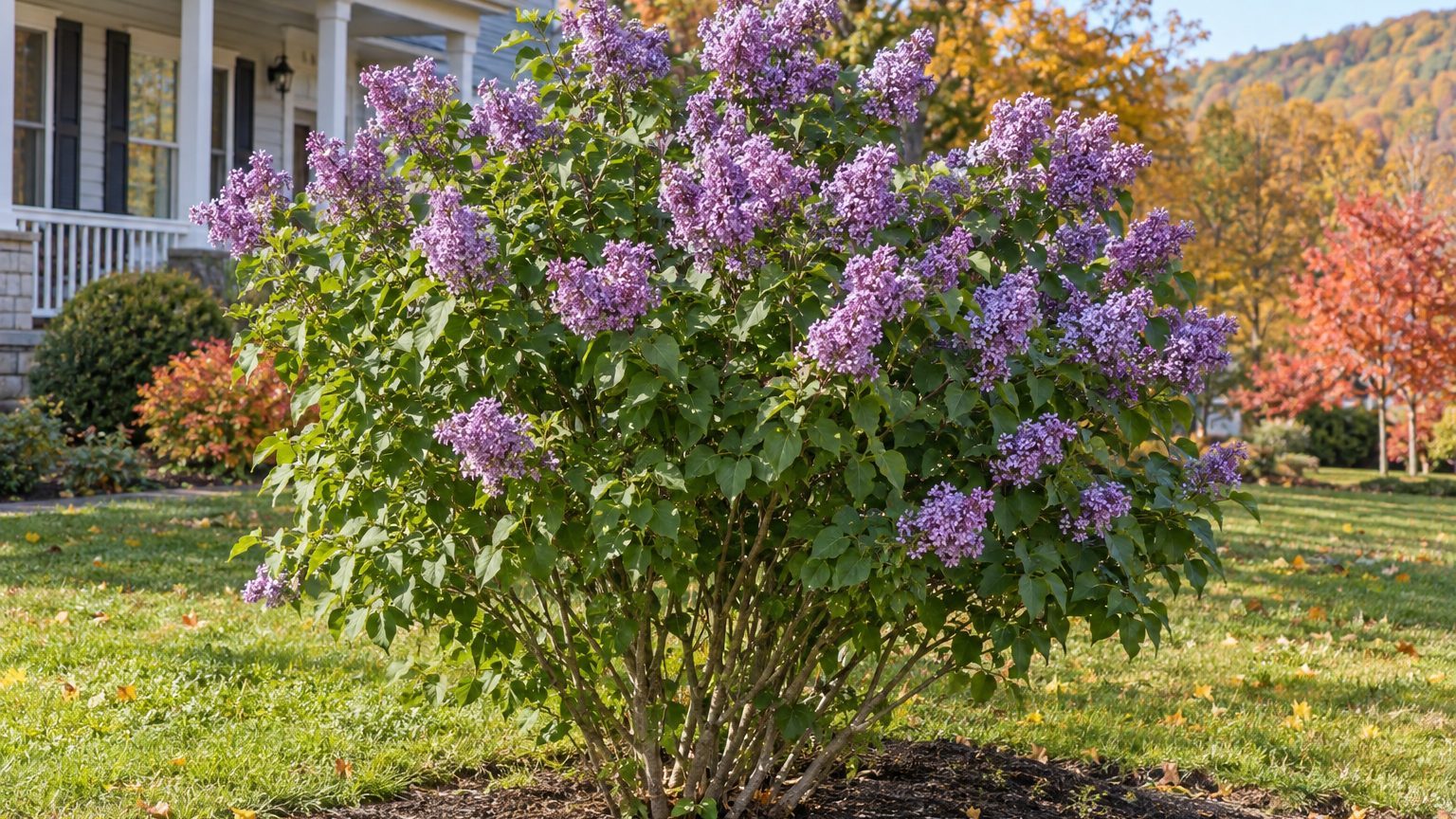
Lilac scent drifts across West Virginia yards in spring. For most homeowners the flowers open in April and May, and the shrub then spends the rest of the year setting next spring’s buds.
When Do Lilacs Bloom in West Virginia?

Lilacs in West Virginia bloom in April and May, and some species carry on into June, so a mix of types can stretch the show across the whole spring.
- In April and May, the flower clusters open, and the earliest types start first while later ones follow into June.
- In May and June, right after the last flowers fade, is the time to prune, because the shrub is already forming the buds for next year.
- Through summer, the plant sets those buds on this season’s new growth, which is why any heavy cutting after midsummer costs you flowers.
- In fall and winter, the shrub rests, and the cold of those months is what ripens the buds for spring.
- In March and April, an overgrown shrub can be cut back hard while it is still dormant, though it will skip flowering for a few years afterward.
At the Charleston reference point, the last spring frost falls between April 9 and April 23, and the first fall frost arrives between October 18 and November 1. Charleston sits in a river valley, so higher ground freezes noticeably earlier in fall. The USDA hardiness zone system runs from 5a to 7a across the state, which means your own zone depends on where you live.
West Virginia — the year and the numbers
- State
- West Virginia
- USDA zones
- 5a-7a
- Last spring frost
- April 9 to April 23
- First fall frost
- October 18 to November 1
- Annual rain
- 46 in
- Lawn zone
- cool-season
- Source
- NOAA NCEI 1991-2020 Climate Normals, 32F freeze probabilities · Charleston
Which Lilacs Grow Best in West Virginia?
Lilacs can grow here, and the cold-winter parts of the state suit them well. They need a real winter rest to mature their flower buds, and they struggle in hot, humid summers, so the warmer, lower spots need more care in choosing and siting.
Common lilac (Syringa vulgaris) needs a period of winter chill to develop and bloom fully.
| Lilac type | How it does in West Virginia | Why |
|---|---|---|
| Common lilac (Syringa vulgaris) | Blooms fully where winters are cold | Flower buds need winter chill to develop |
| Early-flowering species | Open first, in April | Each species has its own flowering time |
| Late-flowering species | Carry bloom into June | Staggered timing extends the season |
Planting lilac species with different flowering times can extend bloom from April through June. In warmer, more humid parts of the state, flowering may be less reliable because lilacs prefer cold winters and struggle in hot, humid summers.
When to Plant, Prune and Feed Lilacs in West Virginia
Lilacs bloom on last year’s wood and set next year’s flower buds in summer, soon after they flower. That makes pruning timing especially important. Pruning in late summer, fall or winter removes the coming spring’s flowers.
| Task | Best timing in West Virginia | Why then |
|---|---|---|
| Enjoying the bloom | April and May, with some species into June | Species flower at different times |
| Routine pruning | May and June, right after the flowers fade | Next year’s buds form soon after bloom |
| Hard renovation cut | March and April, while dormant | Opens up an overgrown shrub, at the price of the next flowers |
For planting and feeding, ask the local extension service about timing for your site. The details of pruning cuts are on the page about when to prune lilacs in West Virginia.
How Lilac Bloom Time Changes Across West Virginia
Elevation can change local conditions across a state of river valleys and high ridges.
- The Allegheny Highlands: Higher ground can freeze earlier in fall, so watch the shrub instead of borrowing Charleston’s timing.
- The Eastern Panhandle: Note when the flowers on your own shrub open rather than extrapolating from Charleston.
If your yard sits on higher ground, remember that Charleston’s frost dates do not describe the whole state.
Where to Get Lilac Advice in West Virginia
For a diagnosis of a lilac that will not bloom, or for a soil test, local help is close at hand through West Virginia University Extension and your county office.
- Ask the county office for advice tailored to your lilac and site.
- Describe your site’s elevation when you ask for local advice.
- Once the flowers fade in May or June, that is the moment to prune, so make the call or the cut then.
Common Questions
Why Is My Lilac Leafy but Not Blooming?
Start by checking when the shrub was last pruned. A cut made in late summer, fall or winter removes the buds for spring. If the timing fits, prune only right after bloom.
Can You Cut an Old Lilac Back to the Ground?
Yes, a hard cut-back works on an overgrown shrub, and March and April are the months for it while the plant is dormant. Expect no flowers the first year after, and often a few years of waiting before bloom returns.
Do Lilacs Like Hot, Humid Summers?
No. Lilacs do best where winters are cold and struggle in hot, humid summers.