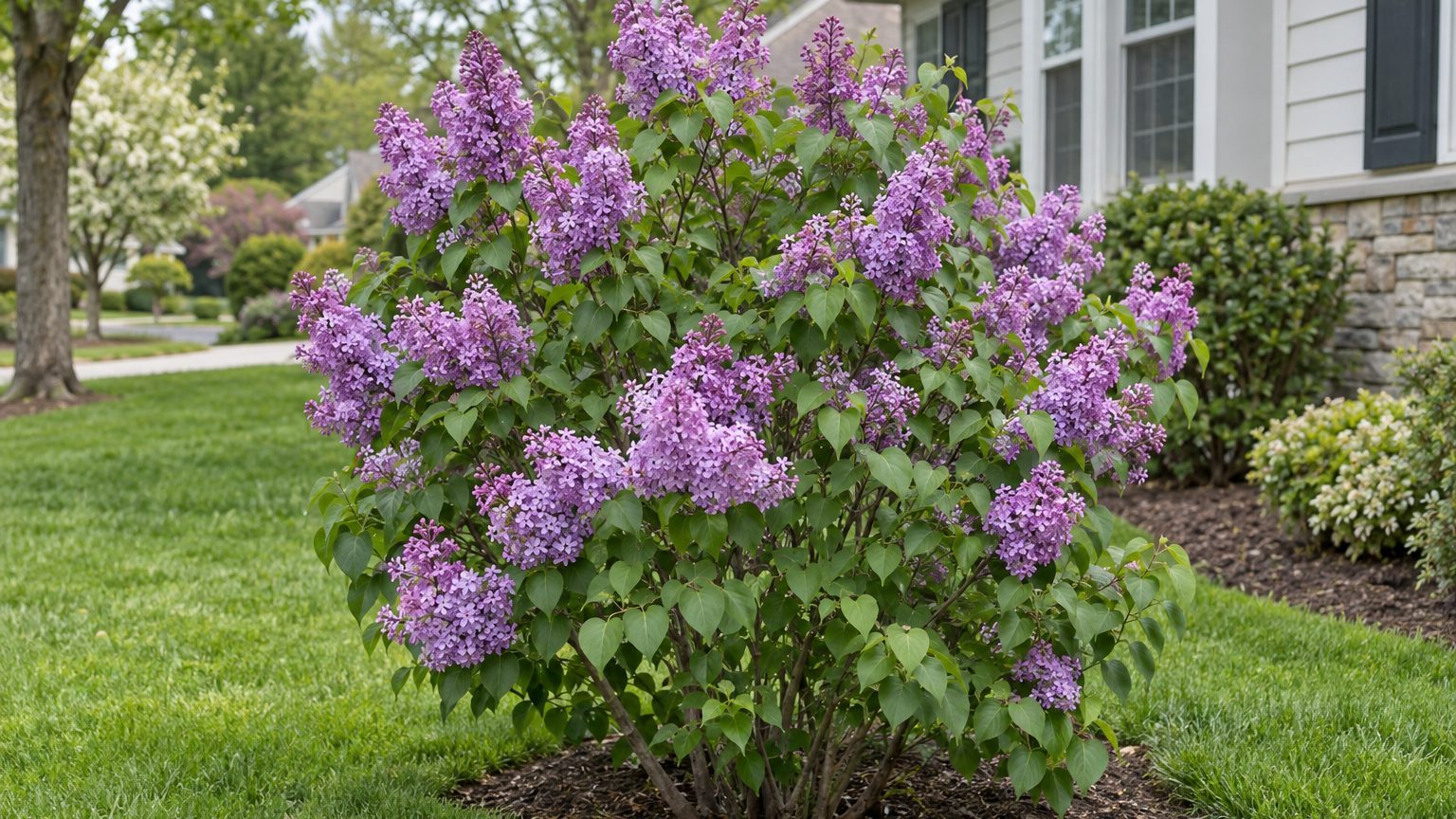
A Florida lilac often leafs out beautifully in spring without setting a flower cluster. The shrub is not sick. It is missing the cold that lilacs count on.
When Do Lilacs Bloom in Florida?

Lilacs in Florida bloom poorly or not at all where winters stay mild, because the flower buds need a cold rest to mature, so any bloom you do get follows the local spring. Here is how the year runs for a lilac that does flower.
- In spring, the bloom arrives with the local warm-up, and it is lighter and shorter than a lilac would give in a cold-winter climate. In Jacksonville, the last spring freeze falls between February 16 and March 7, so an early cluster can still meet a cold snap.
- Right after the last flowers fade, pruning is due, while the shrub is still setting its next round of buds. Waiting past that point trims off next year’s flowers.
- Through summer, the buds for next spring form on the new growth. Heat and humidity make this the hard stretch, and powdery mildew tends to show up on the leaves.
- In fall, the shrub slows down and the leaves tire. In Jacksonville, the first freeze arrives between November 26 and December 13, and in central and south Florida it may never come.
- In winter, the buds need a stretch of real cold to finish maturing. Mild Florida winters often cut that rest short, and that is why flowering falls off.
Those frost dates describe north Florida, using Jacksonville as the reference city, while central and south Florida are effectively frost-free and the growing calendar there runs differently, with winter as the easy season and summer as the hard one. Florida spans USDA hardiness zones 8b-11b, and only the coolest end of that range gives a lilac a fair chance.
Florida — the year and the numbers
- State
- Florida
- USDA zones
- 8b-11b
- Last spring frost
- February 16 to March 7
- First fall frost
- November 26 to December 13
- Annual rain
- 53 in
- Lawn zone
- warm-season
- Source
- NOAA NCEI 1991-2020 Climate Normals, 32F freeze probabilities · Jacksonville
Which Lilacs Grow Best in Florida?
Lilacs struggle in Florida. Common lilacs want a pronounced winter chill and suffer through periods of high heat and humidity, which invites powdery mildew. Even cultivars sold as heat tolerant often fail to thrive in warm, humid regions.
If you want to try one, look for low-chill selections, early-blooming types sold as Southern lilacs, and the Descanso hybrids. They give you a chance, not a promise.
| Lilac type | How it does in Florida | Why |
|---|---|---|
| Common lilac (Syringa vulgaris) | Struggles, flowers poorly or not at all | Needs a cold winter rest and dislikes hot, humid summers |
| Low-chill cultivars | Better odds than common lilac, still not dependable | Bred to bloom with less cold, though they do best with an extended winter rest |
| Southern lilacs (also labeled lilacs for the South) | Usually grow and bloom | Early-blooming types suited to warmer winters |
| Descanso hybrids such as ‘Angel White’ and ‘Blue Boy’ | Worth trying in a warm climate | Some varieties bloom with only a little winter chilling |
Southern lilacs are not as fragrant as the lilacs you may remember from colder places, so expect a softer scent along with the easier bloom. Plant in a spot with good air movement to cut down on mildew.
When to Plant, Prune and Feed Lilacs in Florida
Pruning timing matters because a late cut removes the buds for the following spring. A lilac blooms on last year’s wood and sets next year’s flower buds in summer, soon after it flowers, so the signs in the shrub set the schedule more than the calendar does.
For a full walk-through of the cut itself, see the page on when to prune lilacs in Florida.
| Task | Best timing in Florida | Why then |
|---|---|---|
| Pruning | Right after the last flowers fade | Next year’s buds form soon after bloom, so early cuts leave them intact |
| Cutting back | Hold off in late summer, fall and winter | Those cuts remove the buds that would open the following spring |
| Mildew watch | During hot, humid spells | Heat and humidity bring on powdery mildew, so check the leaves then |
Planting and feeding follow the plant more than a fixed date. Choose a low-chill or Southern type, since common lilacs often struggle in Florida; ask your county extension office about feeding.
How Lilac Bloom Time Changes Across Florida
Bloom depends far more on how much winter cold a spot gets than on the date, and Florida runs from occasional freezes in the north to frost-free yards in the south.
- North Florida and the Panhandle: Colder winters may give lilacs more of the rest their buds need. Bloom follows the local spring, though a late cold snap can still catch open clusters.
- Central Florida: Frost is rare, so buds seldom get the rest they need. Lilacs here often leaf out and skip the flowers, and the hot, humid summer is the hard part of the year.
- South Florida: Winters are warm enough that a lilac gets almost no chilling, and flowering is not something to count on.
Because local conditions differ, check the winter chill in your own yard.
Where to Get Lilac Advice in Florida
A lilac that will not bloom is a local puzzle, and the answer depends on your soil and your microclimate. UF/IFAS Extension runs an office in every county.
- Your county extension office may be able to help identify a problem from a leaf sample or photo.
- A soil test through the county office shows what your yard actually holds before you add anything, and it is worth doing before you plant.
- Staff and master gardeners can suggest which low-chill or Southern lilac suits your part of the state, so ask before you buy.
Common Questions
Do Southern Lilacs Smell Like Regular Lilacs?
They carry a lighter scent. Southern lilacs usually grow and bloom in warm climates, but they are not as fragrant as the common lilacs that do well in cold winters.
Is a Lilac Sold as Heat Tolerant Safe to Buy in Florida?
A heat-tolerance label is no guarantee. Many cultivars sold that way still fail to thrive where summers are hot and humid, so treat the label as a hint and ask your county extension office which selections have worked locally.
What Does Powdery Mildew Look Like on a Lilac?
Powdery mildew can affect lilac leaves during hot, humid weather. Ask your county extension office to identify leaf symptoms rather than assuming they are powdery mildew.