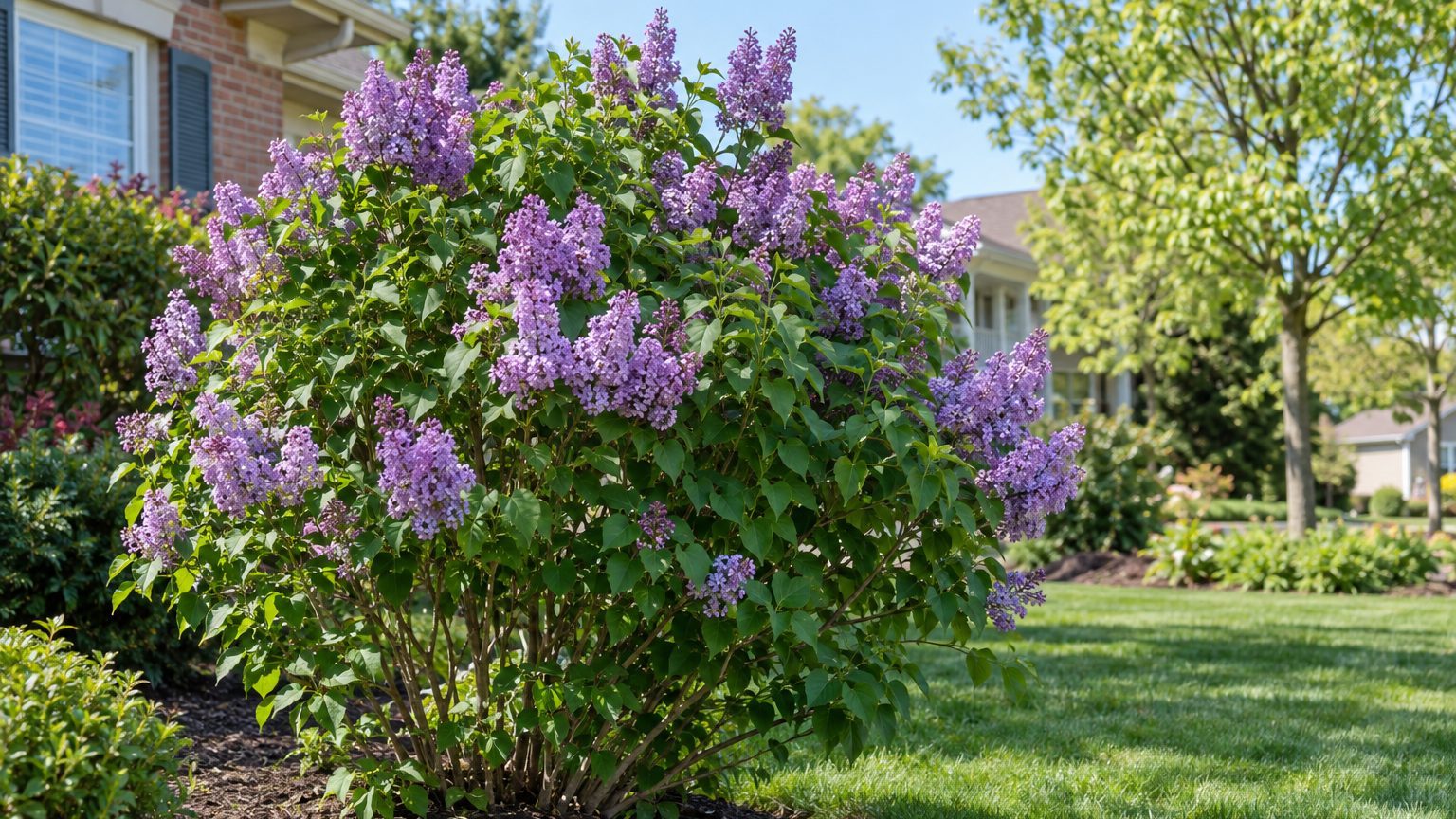
A lilac in full bloom is hard to miss, and in Kansas it happens in spring, with the scent drifting over fences and across front yards. Knowing when lilacs flower in a Kansas yard, which kinds cope with Kansas summers, and which yearly jobs keep the flowers coming back is what lets these shrubs thrive here.
When Do Lilacs Bloom in Kansas?

Lilacs in Kansas bloom in April and May, and later types can carry flowers into June. The shrub’s year follows a steady rhythm.
- In April and May, the flowers open, with the main show usually fading before June, though later species and cultivars keep going.
- In May and June, right after the flowers fade, is the time to prune, because the shrub starts setting next spring’s buds soon after it blooms.
- Through summer, the new buds form on fresh growth, so shears stay in the shed until the following spring bloom is over.
- In fall and winter, the buds rest through the cold, which is what lets them mature and open on schedule.
- In March and April, an overgrown lilac can be cut back hard while it is still dormant, though that cut costs the coming flowers.
Frost dates shape the edges of this year. At the Wichita airport, the last spring freeze usually falls between April 4 and April 18, and gardens in the suburbs and countryside often see it a week or two later. The first fall freeze arrives between October 23 and November 2, again often earlier at your address. Kansas spans USDA hardiness zones 5b to 7a, so check your own county.
Kansas — the year and the numbers
- State
- Kansas
- USDA zones
- 5b-7a
- Last spring frost
- April 4 to April 18
- First fall frost
- October 23 to November 2
- Annual rain
- 34 in
- Lawn zone
- transition-season
- Source
- NOAA NCEI 1991-2020 Climate Normals, 32F freeze probabilities · Wichita
Which Lilacs Grow Best in Kansas?
Lilacs do grow in Kansas, but they sit near the warm edge of what they like. They need a cold winter rest to set flower buds, and they struggle through hot, humid summers.
Sunny spots with good air circulation help the shrub cope with that summer weather.
| Lilac type | How it does in Kansas | Why |
|---|---|---|
| Common lilac (Syringa vulgaris) | Grows and blooms in April and May | Needs a cold winter rest to mature flower buds |
| Hybrids of S. oblata and S. vulgaris | Flower in April and May | Well suited to cold climates |
| Later species and cultivars | Extend the show into June | Open after the main wave has faded |
In warm, humid parts of the state, lilacs may look tired by late summer. Planting in full sun with room between shrubs gives them the best shot at staying healthy.
When to Plant, Prune and Feed Lilacs in Kansas
Pruning timing matters. A lilac blooms on last year’s wood and sets next year’s flower buds in summer, soon after it flowers. Prune right after the flowers fade, because cutting in late summer, fall or winter removes the next spring’s flowers.
| Task | Best timing in Kansas | Why then |
|---|---|---|
| Enjoy the bloom | April and May, with later types into June | Varieties open at different times |
| Routine pruning | May and June, right after the flowers fade | Buds for next year form soon afterward |
| Hard renovation cut | March and April, while dormant | The shrub regrows from the base, though the next flowers are lost |
An overgrown lilac cut back hard will not flower for a few years afterward, so reserve that cut for shrubs that have truly gotten out of hand. For planting, choose a sunny spot with good air circulation; before feeding, check what the soil needs. The full pruning method has its own page, When to Prune Lilacs in Kansas.
How Lilac Bloom Time Changes Across Kansas
Bloom time shifts a little from one part of the state to another, following the local spring.
- Southeast Kansas: Spring warms sooner here, so lilacs tend to open earlier than farther north, and summer heat is harder on them.
- Northwest Kansas: Colder winters and a later spring push bloom a little later, and the winter chill suits lilacs well.
- Kansas City area: Flowering falls in the middle of the state’s April to May window, shifting with how quickly the weather warms.
A cool spell can hold buds closed for a while, and a warm stretch can open them early, so treat any date as a guide.
Where to Get Lilac Advice in Kansas
K-State Research and Extension, part of Kansas State University, offers help to home gardeners through its county offices. A local office can answer lilac questions that depend on your soil and your block.
- The county extension office can look at a leaf or a branch and help you work out why a lilac is not flowering.
- A soil test, usually available through the same office, tells you what your yard needs before you plant a new shrub.
- Visit in spring while the shrub is in bloom or leaf, so the problem is still visible.
Common Questions
Why Is My Lilac Not Blooming?
Look for fat, swelling buds and the first hint of color on the branch tips together. A shrub in shade that grows lush leaves but few buds needs more sun, and a lilac pruned in late summer, fall or winter likely lost its buds with the cut. Mark the spot, and give it full sun and a pruning window right after flowering.
Can You Grow Lilacs in Kansas Heat?
Yes, in sunny spots with good air circulation. Lilacs cope best when air moves through the branches, which helps in humid weather. Plant them with room between shrubs rather than packed against a wall.
How Long Does a Lilac Take to Bloom After a Hard Cut?
An overgrown lilac cut back hard in March or April will not flower for a few years afterward. The shrub spends that time rebuilding the wood it blooms on, so patience is part of the deal.