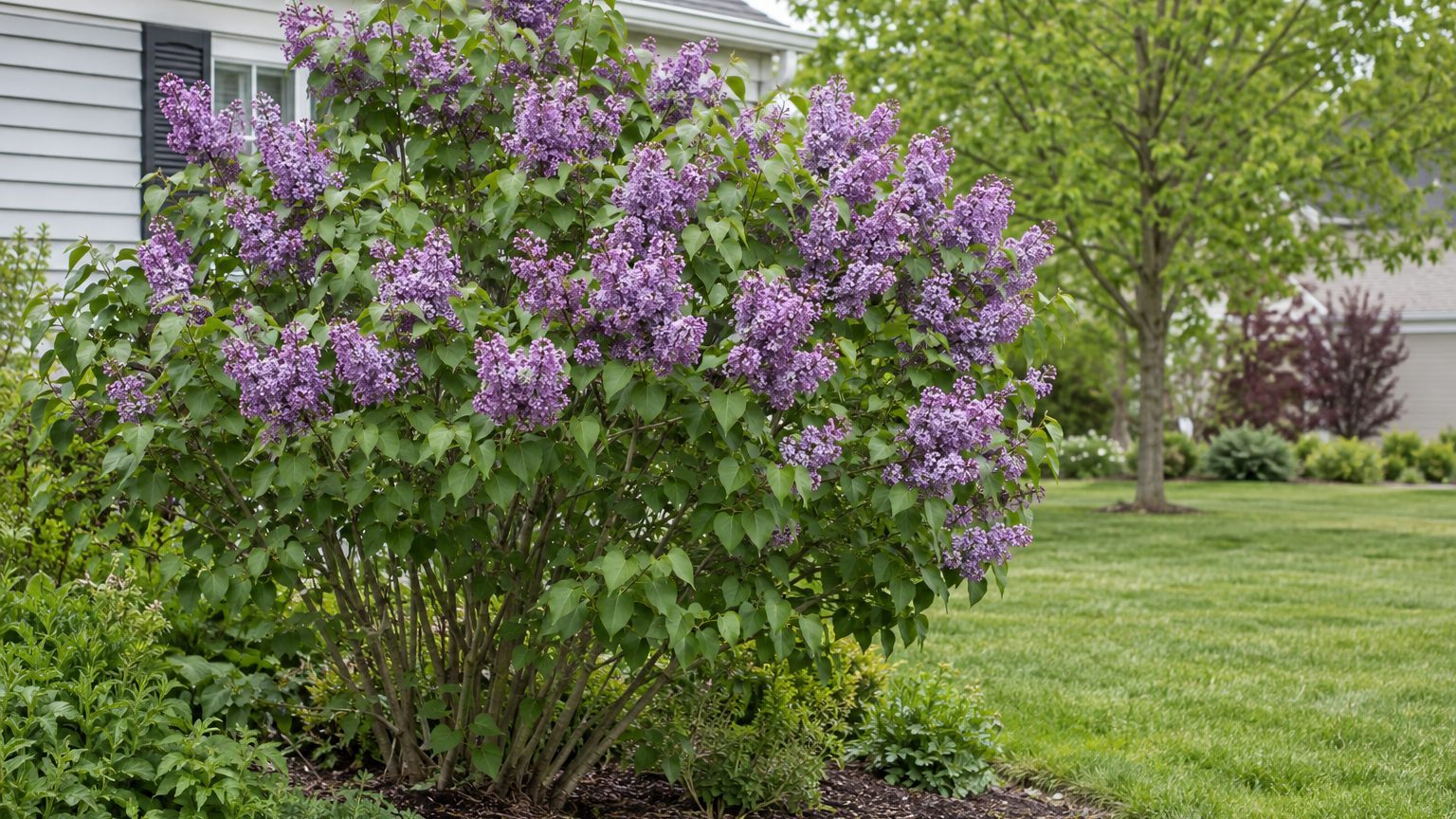
A lilac announces itself by scent before you see it in bloom, usually when the air turns mild enough to open the windows. Lilacs in Wisconsin follow the state’s own late spring, so the bloom comes later than in warmer parts of the country. Here is when the flowers open, which lilacs suit the state, and when each job belongs.
When Do Lilacs Bloom in Wisconsin?

Lilacs in Wisconsin bloom in May and carry on into June, with the common lilac opening first and the late and tree lilacs closing the season. The rest of the year works around that bloom.
- In March and April, the shrub is still dormant. This is the window for a hard renovation cut on an overgrown lilac, and it can also be used for light pruning, at the cost of that spring’s flowers.
- In May, the common lilac flowers, and the scent fills the yard.
- In June, the late lilacs and the Japanese tree lilac take over. Prune as soon as the flowers fade, because the shrub has little time before it starts preparing next year’s blooms.
- Through summer, the plant quietly sets the buds for next spring, so avoid pruning and water during dry spells.
- From fall into winter, the shrub rests. That cold rest is what lets the buds mature for May.
Frost risk shapes the edges of this calendar. At the reference station, the last spring freeze usually falls between April 16 and April 29, which matters most for early-opening types. The first fall freeze comes between October 17 and October 29 at that same station, though inland southern Wisconsin typically freezes in early October and the north much sooner. Wisconsin spans USDA hardiness zones 3b to 6a, so your yard may sit well above or below these dates.
Wisconsin — the year and the numbers
- State
- Wisconsin
- USDA zones
- 3b-6a
- Last spring frost
- April 16 to April 29
- First fall frost
- October 17 to October 29
- Annual rain
- 35 in
- Lawn zone
- cool-season
- Source
- NOAA NCEI 1991-2020 Climate Normals, 32F freeze probabilities · Milwaukee
Which Lilacs Grow Best in Wisconsin?
Lilacs suit Wisconsin well. They need a cold winter rest to mature their flower buds, and most of the state delivers one. They struggle in hot, humid summers, so the warmest corners at the southern edge of the zone range are where they ask the most of you.
Choose a sunny spot with good air circulation, which also helps leaves dry out after humid weather. Within that, the type you pick decides when the flowers open and how much a late frost can hurt.
| Lilac type | How it does in Wisconsin | Why |
|---|---|---|
| Common lilac | Reliable, blooms first in the season | Cold winters mature its buds |
| Late lilacs | Flower in June | Extend the season past the common lilac |
| Japanese tree lilac | Blooms in June | Closes out the lilac season |
| Hybrids of S. oblata and S. vulgaris | Well suited to the state | Bred for cold climates and bloom early |
| Hyacinthiflora lilacs | Very hardy but early to open | Vigorous shrubs, so site them where late frosts are less frequent |
If your yard sits in a frost pocket or near the cooler north, lean on the common and late types. The early hybrids reward you in milder, sheltered spots.
When to Plant, Prune and Feed Lilacs in Wisconsin
A lilac blooms on last year’s wood and sets next year’s flower buds in summer, soon after it flowers. Pruning in late summer, fall or winter therefore cuts off the next spring’s flowers. For most yards, prune right after the blooms fade; this calendar does not set a time for planting or feeding.
| Task | Best timing in Wisconsin | Why then |
|---|---|---|
| Routine pruning | June, right after the flowers fade | Next year’s buds have not formed yet |
| Pruning while dormant | March or early April | The shrub is leafless and easy to shape, but you give up that spring’s flowers |
| Hard renovation cut | March and April | A dormant plant handles a drastic cut best |
An overgrown lilac can be cut back hard in late winter, but it will not flower for a few years afterward. For the fine points of cuts and stems, see the page When to Prune Lilacs in Wisconsin.
How Lilac Bloom Time Changes Across Wisconsin
The bloom does not arrive everywhere at once, because Wisconsin stretches from the Lake Michigan shore to the cold Northwoods. A few places shift the schedule noticeably.
- Lake Michigan shore: Spring warms slowly beside the cold lake, so lilacs open later. The same lake delays the first fall freeze at the lakeshore.
- Southern Wisconsin inland, around Madison: Land warms earlier here, so the common lilac opens ahead of the lakeshore. The first fall freeze also tends to arrive in early October.
- The Northwoods: Winter lingers, so the bloom comes later still, and the first fall freeze arrives far sooner than in the south. Lilacs are very hardy here, but their bloom comes later than in the south.
Watch your own shrub, since a cool spring pushes everything back and a warm one pulls it forward.
Where to Get Lilac Advice in Wisconsin
Local help works best when a lilac looks wrong or refuses to bloom. University of Wisconsin Extension and your county office can both help with questions that a calendar cannot answer.
- The extension website carries cold-climate lilac guidance and is worth a visit before you buy a new shrub.
- Your county extension office can diagnose a problem from a sample of the affected leaves or stems, and it can advise on a soil test.
- Before you add fertilizer to a lilac that will not flower, have the soil tested so you know what the shrub actually needs.
Common Questions
Where Should You Plant a Lilac in Your Wisconsin Yard?
Pick a spot that gets full sun and has room for air to move around the shrub. Avoid crowded corners against a wall, where leaves stay damp longer in humid weather.
Why Does Your Lilac Grow Plenty of Leaves but Never Flower?
Look at how much sun the shrub gets and when it was last cut. A lilac in heavy shade will grow leaves and few buds. A lilac trimmed after it has set new buds may also miss its next spring display, and the answer is usually patience.
Can a Late Spring Freeze Ruin the Lilac Bloom?
A freeze that catches open flowers can brown them, which is why early-opening types carry more risk. The shrub itself is hardy, so a damaged display does not mean the plant is lost.