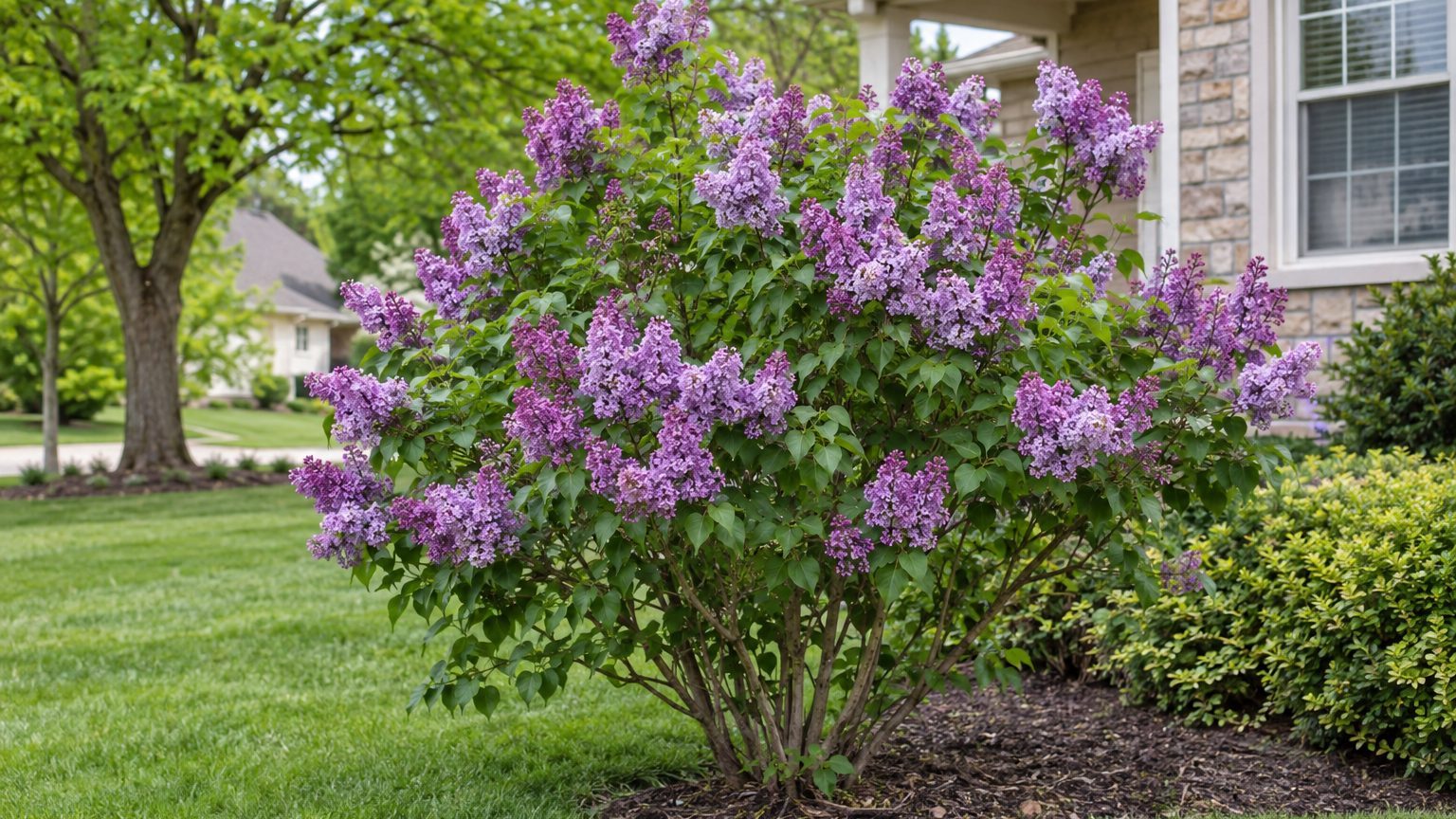
A lilac in full bloom announces itself from the sidewalk, long before you see the shrub. In Oklahoma that show is less certain than it is in colder states, so it helps to know how the year runs for a lilac here and which kinds are worth planting.
When Do Lilacs Bloom in Oklahoma?

Lilacs in Oklahoma bloom with the local spring, opening once the weather settles, so the exact week shifts from yard to yard and from year to year. What stays the same is the order of the year.
- In spring, the flower clusters open on last year’s wood, and a lilac that had a proper cold rest rewards you with a full show.
- Right after the last flowers fade, the shrub is ready for any pruning it needs, because the next flower buds start forming soon afterward.
- Through summer, those buds develop quietly inside the branches, which is why heat and humid stretches matter to next spring’s bloom.
- In fall, the leaves tire and drop, and the shrub heads toward dormancy with its buds already in place.
- In winter, the bare shrub rests in the cold, and that rest is what finishes the buds for spring.
In Oklahoma City, the last spring frost falls between March 28 and April 10. The first fall frost arrives between October 29 and November 8. Suburban and rural yards usually see spring frost later and fall frost earlier than that, so check your own county. The USDA hardiness zone runs from 6a to 8a across the state, which means winters differ a good deal from one yard to the next.
Oklahoma — the year and the numbers
- State
- Oklahoma
- USDA zones
- 6a-8a
- Last spring frost
- March 28 to April 10
- First fall frost
- October 29 to November 8
- Annual rain
- 36 in
- Lawn zone
- transition-season
- Source
- NOAA NCEI U.S. Climate Normals 1991-2020, 32F freeze probabilities · Oklahoma City
Which Lilacs Grow Best in Oklahoma?
Lilacs can grow here, but the common lilac is a cold-climate shrub. It needs a cold winter rest to mature its flower buds, and it struggles through hot, humid summers, so in the warmer parts of the state it may flower poorly.
Types bred for mild winters and warm summers give you better odds. The table sorts out what each group offers.
| Lilac type | How it does in Oklahoma | Why |
|---|---|---|
| Common lilac (Syringa vulgaris) | Best in the colder zones, struggles in hot spells | Needs a cold winter rest, and humidity invites powdery mildew |
| Southern lilacs | Usually grow and bloom | Early-blooming types sold under labels like “lilacs for the South” |
| Descanso hybrids | Worth trying in warm yards | Developed for mild-winter climates |
| Low chill cultivars | Bloom with less winter cold | Bred to flower on little chilling |
Even the heat-tolerant cultivars that nurseries advertise often do not thrive as well as they do in northern climates, and low chill types still perform best after an extended cold winter. Treat them as improved odds, not a guarantee.
When to Plant, Prune and Feed Lilacs in Oklahoma
The lilac year follows the shrub’s rhythm: it sets next spring’s flower buds in summer, soon after it flowers. For planting and feeding, ask your county extension office for advice suited to your soil and cultivar; for pruning, follow the flowers rather than the calendar.
| Task | Best timing in Oklahoma | Why then |
|---|---|---|
| Prune | Right after the flowers fade | The next buds have not formed yet, so nothing is lost |
| Hold back the shears | Late summer, fall and winter | Pruning then cuts off the coming spring’s flowers |
| Leave the shrub alone | During the cold winter rest | The cold finishes maturing the flower buds |
Pruning in detail has its own page, When to Prune Lilacs in Oklahoma, so the choices of how much to cut live there. Here, the point is the timing sign: spent flowers mean it is time, and bare branches in colder months mean the shears stay put.
How Lilac Bloom Time Changes Across Oklahoma
Winter cold is what lilacs want, so the parts of Oklahoma with colder winters suit them better and bloom with more confidence.
- The Panhandle: Winters run colder in the northwest, which gives lilacs the rest they need. Those colder winters favor common lilacs.
- Green Country in the northeast: Winters are milder and summers humid, so mildew on the leaves is a regular worry and bloom can be thinner.
- The Red River country in the south: Mild winters and hot summers make common lilacs a difficult choice here, while Southern types are worth trying.
Within each area, local exposure and terrain can change how much winter chill a yard receives.
Where to Get Lilac Advice in Oklahoma
When a lilac sulks, local help is easy to reach. Oklahoma State University Extension publishes gardening guidance for the state, and each county has an office that knows its own soil and weather.
- Your county extension office can run a soil test, which can reveal nutrient or pH problems before you spend money on a shrub.
- Staff there can identify leaf problems from a sample, so bring a clipped branch with affected leaves in a sealed bag.
- Go once the flowers have faded, when you can ask about pruning and about which cultivar suits your yard.
Common Questions
What Is the White Dust on Lilac Leaves?
A gray-white powdery coat on the leaves, showing up in humid summer weather, points to powdery mildew. Common lilacs are prone to it in hot, humid places. Good airflow around the shrub helps, and a county extension office can confirm the diagnosis from a leaf sample.
Do Southern Lilacs Smell as Sweet?
Not quite. Early-blooming Southern lilacs usually grow and bloom well in warm places, but they are less fragrant than the old-fashioned lilacs many people remember. You trade some perfume for a better chance of flowers.
Are There Lilac Colors Other than Purple for Warm Yards?
Yes. The hybrids include the white ‘Angel White’ and the blue ‘Blue Boy’. They were developed in a mild-winter climate, which makes them worth trying where the common lilac struggles.