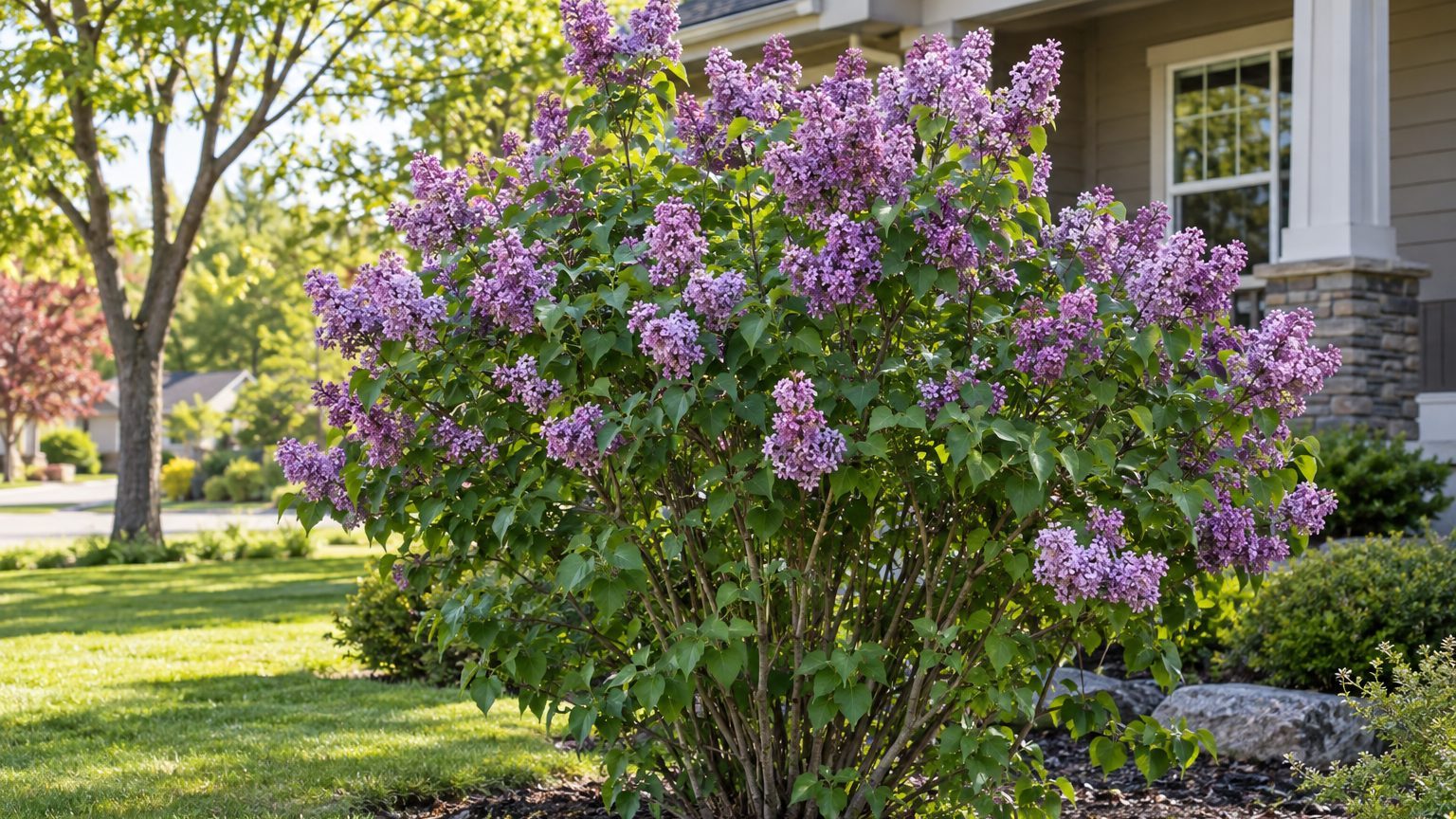
A lilac in full bloom announces itself before you reach it, the scent drifting across the yard on a still late-spring afternoon. In Montana, that show belongs to the end of spring and runs into early summer. Bloom timing and year-round care come down to simple seasonal habits.
When Do Lilacs Bloom in Montana?

Lilacs in Montana bloom in May and June, with late spring carrying the show into June. The rest of the shrub’s year follows from that flowering.
- In May and into June, the clusters open, and late varieties such as the Japanese tree lilac close out the season with June blooms.
- In June, right after the flowers fade, is the time to prune, because the buds for next year’s flowers begin forming then.
- Through June and July, the shrub sets those buds on new growth, so make any routine cut right after the flowers fade.
- In late summer and fall, the plant coasts, hardening its wood and holding the buds it already made.
- Through winter, the shrub rests in the cold, which is exactly what matures those flower buds.
Around Billings, the last spring frost falls between April 29 and May 10, and the first fall frost arrives between October 1 and October 14. Billings is one of the milder valleys, and mountain valleys elsewhere in Montana can frost in any month. Under the USDA hardiness system, Montana runs from zone 3a to 6a, so lilacs have plenty of cold to work with.
Montana — the year and the numbers
- State
- Montana
- USDA zones
- 3a-6a
- Last spring frost
- April 29 to May 10
- First fall frost
- October 1 to October 14
- Annual rain
- 14 in
- Lawn zone
- transition-season
- Source
- NOAA NCEI 1991-2020 Climate Normals, 32F freeze probabilities · Billings
Which Lilacs Grow Best in Montana?
Lilacs suit Montana well. They need a cold winter rest to mature their flower buds and struggle in hot, humid summers.
Sun and good air circulation matter regardless of variety. The main thing to watch is frost at bloom time, which can catch early flowerers.
| Lilac type | How it does in Montana | Why |
|---|---|---|
| Hyacinthiflora hybrids | Very hardy and vigorous, best in frost-light spots | They bloom earlier than French hybrids, so May frosts can nip them |
| French hybrids | Reliable in cold-winter sites | They look similar to Hyacinthifloras but flower later |
| Japanese tree lilac | Closes the season with June blooms | It flowers after other lilacs have finished |
If your yard sits in a mountain valley where May frosts are common, lean toward the later bloomers and keep Hyacinthifloras for warmer, more sheltered corners.
When to Plant, Prune and Feed Lilacs in Montana
Pruning is the job with the tightest timing. Lilacs bloom on last year’s wood and set next year’s buds soon after flowering, so cutting late in the season removes the coming flowers.
| Task | Best timing in Montana | Why then |
|---|---|---|
| Enjoying the bloom | May into June | Late spring carries the flowering |
| Routine pruning | June, right after the flowers fade; July also works | Buds for next year form in June and July |
| Hard renovation cut of an overgrown shrub | March or April, while still dormant | A late-winter cut renews the plant, though it costs the next flowers |
An overgrown lilac can be cut back hard in late winter, but it will not flower for a few years afterward. Pruning in late summer, fall or winter on a normal shrub removes buds, so save big cuts for renovation. Get local advice on planting and feeding, since this calendar does not set a statewide schedule for those jobs. For the full pruning method, see the Montana page on when to prune lilacs.
How Lilac Bloom Time Changes Across Montana
Elevation and valley shape shift the bloom more than distance does, and the direction is simple: colder, higher ground flowers later.
- Billings: This is a milder valley, so bloom can fall toward the early side of the May-to-June window, though early bloomers still face frost risk.
- Mountain valleys elsewhere in Montana: Frost can occur in any month, so local bloom may not follow Billings.
- Bozeman and the Gallatin Valley: Higher and cooler, so bloom shifts later and spring frosts linger.
- Glacier and Flathead area: Mountain-influenced spring weather pushes flowering later.
Within a single yard, a south-facing wall opens flowers sooner than a shaded north side.
Where to Get Lilac Advice in Montana
Local conditions vary so much from valley to valley that nearby help pays off, especially for a stubborn shrub that will not flower.
- Montana State University Extension offers lilac guides written for the state, handy any time you plan a planting.
- Your county extension office can help diagnose a struggling shrub or arrange a soil test, so call before you add fertilizer.
Common Questions
Why Is My Lilac Not Blooming?
A lilac that leafs out well but gives no flowers often has too much shade, or it was pruned in late summer, fall or winter when the buds were already set. Check how much sun the shrub gets and when the last cut was made.
Can a Late Frost Ruin Lilac Blooms?
Yes, especially on earlier bloomers like Hyacinthifloras. A freeze after buds open can brown the clusters. The shrub itself is very hardy and usually blooms again the next spring.
Should You Fertilize Lilacs in Montana?
Lilacs rarely need much. Heavy feeding tends to give leaves at the expense of flowers, so a soil test through your county office tells you whether anything is actually missing before you add it.