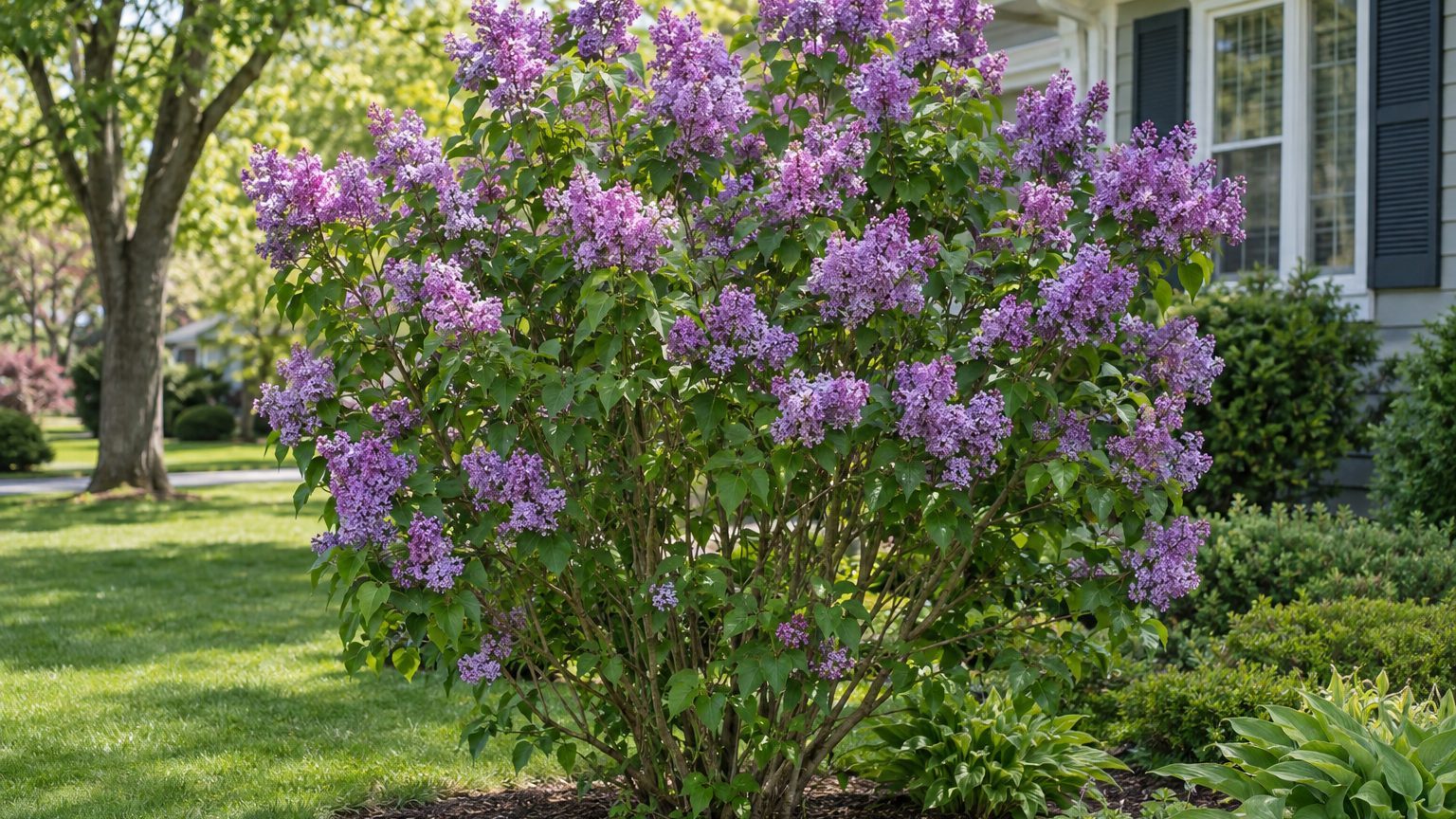
A lilac in full bloom announces itself from the sidewalk, long before you see the flowers, with a scent that drifts across a Connecticut front yard in spring. Lilacs in Connecticut follow the local spring, flowering once the weather has settled, and the care that keeps them blooming is mostly a matter of timing the pruning well and having a little patience.
When Do Lilacs Bloom in Connecticut?

Lilacs bloom in Connecticut from April into May, and later species can carry flowers into June. The rest of the year follows from that bloom, and each stage sets up the next one.
- In April and May, the flower clusters open, usually from late April into early May on common lilacs.
- Right after the flowers fade, often in May and running into June, is the time to prune, because the shrub starts forming next year’s buds soon after it blooms.
- Through summer, those new flower buds form quietly on the fresh growth, so the shrub should be left alone rather than cut.
- In winter, the shrub rests in the cold, and that chill is what matures the buds for spring.
- In March and April, an overgrown lilac can take a hard cut-back while it is still dormant, though it will skip flowers for a few years afterward.
Spring frost usually ends between April 2 and April 12, and fall frost tends to arrive between October 28 and November 10, figures that describe Bridgeport on the Sound. Inland and northwest Connecticut freeze earlier in fall and later in spring. The state spans USDA hardiness zones 6a to 7b, comfortably cold enough for lilacs.
Connecticut — the year and the numbers
- State
- Connecticut
- USDA zones
- 6a-7b
- Last spring frost
- April 2 to April 12
- First fall frost
- October 28 to November 10
- Annual rain
- 44 in
- Lawn zone
- cool-season
- Source
- NOAA NCEI 1991-2020 Climate Normals, 32F freeze probabilities · Bridgeport
Which Lilacs Grow Best in Connecticut?
Lilacs belong here. They are members of the olive family and suit cold climates, and the winter chill is what develops and ripens their flower buds. Connecticut gives them that rest, so a common lilac in a sunny spot is a sound choice.
Sun and good air circulation matter as much as the variety. Lilacs struggle where summers turn hot and humid, so a spot with open air around the shrub helps.
| Lilac type | How it does in Connecticut | Why |
|---|---|---|
| Common lilac | Blooms from late April into early May | Cold winters mature its flower buds |
| Later-flowering species | Carry bloom into June | They open after the common types finish |
| Any lilac in a shady corner | Weak flowering | Lilacs thrive in sunny sites |
| Any lilac in a crowded bed | Struggles in humid summers | Poor air circulation favors trouble |
Choosing between types matters less than choosing the site. Plant for sun and moving air, and the shrub does most of the work on its own.
When to Plant, Prune and Feed Lilacs in Connecticut
The year’s work centers on timing: prune only once the flowers have faded. Lilacs bloom on last year’s wood and set next year’s buds soon after flowering, so a cut in late summer, fall or winter removes the coming spring’s flowers.
The page on when to prune lilacs in Connecticut covers the cuts in more detail.
| Task | Best timing in Connecticut | Why then |
|---|---|---|
| Routine pruning | Right after the flowers fade, May into June | Next year’s buds form soon after bloom |
| Hard renovation of an overgrown shrub | March to April, while dormant | The shrub is dormant, but this cut costs the next flowers |
| Enjoying the bloom | April to May, with later species into June | Flowers open as spring settles in |
A hard cut-back brings a clear price: an overgrown lilac cut low in late winter will not flower for a few years afterward. Many gardeners accept that for a shrub that has grown leggy and bare at the base. For planting and feeding timing, ask your county extension office; choose a sunny site with good air circulation.
How Lilac Bloom Time Changes Across Connecticut
Bloom shifts a little from one corner of the state to another, following how quickly each place warms in spring.
- Fairfield County and the Sound shore: Milder air off Long Island Sound warms these yards sooner, so flowers tend to open ahead of inland towns.
- Litchfield Hills and the Northwest Corner: Higher ground stays cooler into spring, so buds open later here than along the coast.
- Connecticut River Valley: Inland yards between the coast and the hills usually fall between the two, flowering after the shore and before the hills.
A cold snap in spring can set any of these back, so treat the dates as a guide and let the buds in your own yard set the pace.
Where to Get Lilac Advice in Connecticut
When a lilac refuses to flower or the leaves look off, local help narrows the cause quickly. UConn Extension and the county office can look at a sample or test your soil.
- The extension service offers lilac guidance written for Connecticut yards, handy when you wonder why a shrub skipped its flowers.
- Your county office can help with a soil test, best sent in before you change what you feed the shrub.
- Bring a cutting or clear photos when the shrub looks unhealthy, ideally while the leaves are still on the plant.
Common Questions
Why Is My Lilac Not Blooming?
Look at the signs together before you name a cause. If the shrub sits in shade and the stems look long and thin, it likely wants more sun. If it grows well in sun but was cut in summer, fall or winter, the pruning probably removed the flower buds.
Can You Cut Lilacs for a Vase?
Yes, and cutting flowers just as the clusters open is a gentle way to enjoy them. Take them during the bloom, from April into May, and keep the cuts modest so the shrub holds its shape for the following year.
Do Lilacs Need Winter Cold to Flower?
They do. The winter chill matures the flower buds, which is why lilacs suit Connecticut well. Hot, humid summers are harder on them than cold winters, so lilacs here stay healthiest with open air around the stems.