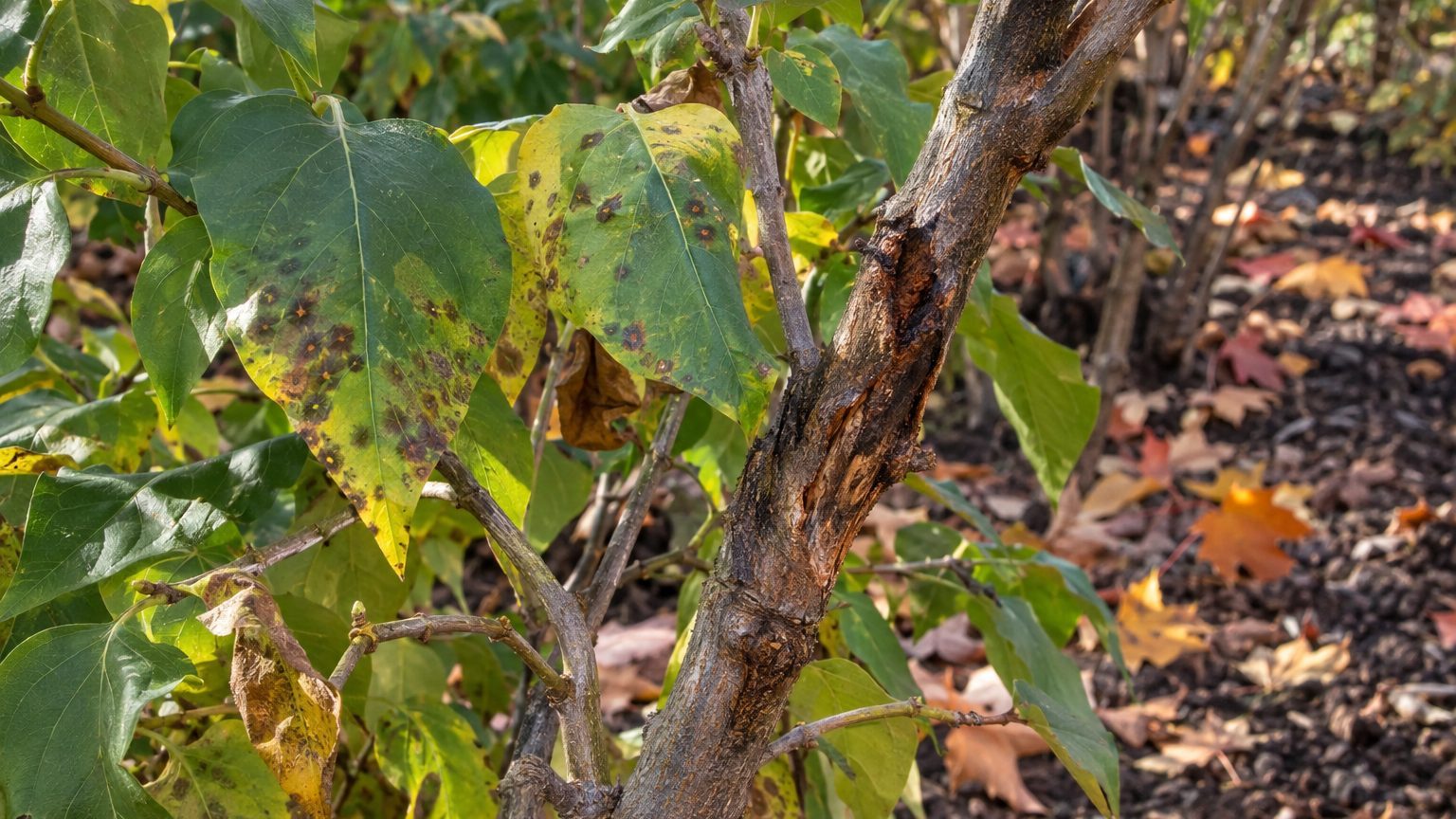
In spring, a lilac that looked fine recently can show leaves that seem singed, flowers gone brown and limp, and young shoots streaked with black. Lilac bacterial blight can cause this damage, along with dead branch tips and cankers on the stems. What you see on the leaves, buds and shoots tells you what you are dealing with.
Canker and Dieback: What You See

Look at the young shoots first, then at the leaves and flower clusters.
- Dark black streaks run down one side of a young shoot, because only part of the shoot is infected.
- Leaves carry brown spots with a yellowish halo, and the spots may merge into dark brown to black blotches.
- Leaves that looked healthy turn suddenly scorched, as if held near an open flame.
- Flowers wilt and turn brown while unopened buds blacken.
- Black lesions form on infected stems, and the shoot is soon girdled and wilts.
In the worst cases the tips of branches, along with their leaves and blossoms, die back.
From the almanac
Lilacs in your state
The dates on this page depend on where you live. Your state's page carries its frost dates, its USDA zones and the year laid out month by month.
Northeast
Southeast
- Alabama
- Arkansas
- Delaware
- Florida
- Georgia
- Kentucky
- Louisiana
- Maryland
- Mississippi
- North Carolina
- South Carolina
- Tennessee
- Virginia
- West Virginia
Midwest
Southwest
West
Pacific Northwest
Canada
Canker and Dieback or Something Else?
Scorched, blackened growth on a lilac is not always bacterial blight. Fungal problems and other blights leave a similar look from a few steps back, so the details up close matter.
Check where the damage sits on the shoot and what is on the dead tissue itself.
| Looks like | How to tell them apart |
|---|---|
| Fungal shoot dieback or leaf spot | Dark gray, pimple-like dots speckle the dead tissue in wet weather, and the base of the dead area is tan to gray and shriveled. |
| Fire blight | Merged spots can give lilac the same scorched look, but lilac blight begins as brown leaf spots with yellowish halos and black streaks on one side of young shoots. |
Spring frost damage seems to predispose shoots to bacterial blight infection. If the dots, halos or streaks do not match what you find, seek a local diagnosis before treating the shrub.
What Causes Canker and Dieback, and Where It Is Worst
The cause is a bacterium, Pseudomonas syringae pv. syringae. It survives in diseased stem tissue (the cankers), in plant debris and in the soil, and it can also winter on neighboring plants. From there it reaches stems through the leaves or directly through the bark, as Illinois growers have documented.
Weather decides how bad a season gets. In Oregon, cool, wet springs favor lilac blight, especially when rain follows a late frost or winter injury. In Maryland, rainy, mild spring weather promotes it, and spring frost damage and late fall or winter pruning seem to predispose shoots to infection.
The disease is not tied to one region, and it can turn up wherever lilacs meet a damp spring. Chinese, Japanese, Persian and common lilacs are the more susceptible, especially the white flowered varieties.
How to Treat Canker and Dieback
Treatment is mostly cleanup, and it is done in dry weather so you do not move the bacterium around on wet stems.
- Inspect the shrub in spring for streaked shoots, blackened buds and limp flowers, so that you know how far the damage reaches before you cut.
- Cut out infected shoots well back into healthy wood, so that the cankers that carry the bacterium through winter come off the plant.
- Clean your pruners between cuts.
- Bag the clippings and fallen leaves and take them away, because dead debris is one of the places the bacterium overwinters.
- Stop overhead watering and water at the base, so that the leaves stay dry and splashing water does not spread the bacteria.
- Seek local advice before buying any spray so you can check what is approved where you live and whether it suits your shrub.
Pruning removes the source of infection, but it will not restore a blackened leaf or bud. Some damage will remain visible after infected shoots are removed.
How to Prevent Canker and Dieback Coming Back
Prevention follows the lilac’s year, and most of it is about keeping foliage dry and giving the bacterium fewer places to hide.
- In Oregon, watch the shrub during cool, wet spring weather, especially when rain follows a late frost.
- Once the leaves open, water at the soil and skip sprinklers that wet the foliage, since overhead irrigation spreads the bacterium.
- Through the growing season, remove any new black-streaked shoots promptly and disinfect your tools after each cut.
- In fall, rake up and discard fallen leaves and twigs, because the bacterium can overwinter in plant debris and in the soil around the plant.
- In late fall and winter, leave the pruning saw in the shed, because in Maryland late fall or winter pruning seems to predispose shoots to infection.
Giving each shrub some air around it helps the leaves dry faster after rain.
Where This Comes From
These notes draw on plant-health guidance about lilac bacterial blight written for several states. Timing and weather details vary by state, so seek local advice before you act.
Common Questions
Why Do Lilac Flowers Turn Brown Before They Open?
Flower buds can be infected before they open, so they blacken while open flowers turn brown and limp. Check nearby shoots for black streaks on one side, another sign associated with bacterial blight.
Do Curled, Twisted Lilac Leaves Mean Blight?
They can. Leaf spots that develop before the leaves are fully expanded are known to cause curling and twisting. Look for dark brown spots with yellow halos on the leaves.
Can Bacterial Blight Kill a Whole Lilac?
In its most severe form the disease kills branch tips, leaves and blossoms. Cutting out infected shoots and cleaning up debris removes infected material from around the shrub.