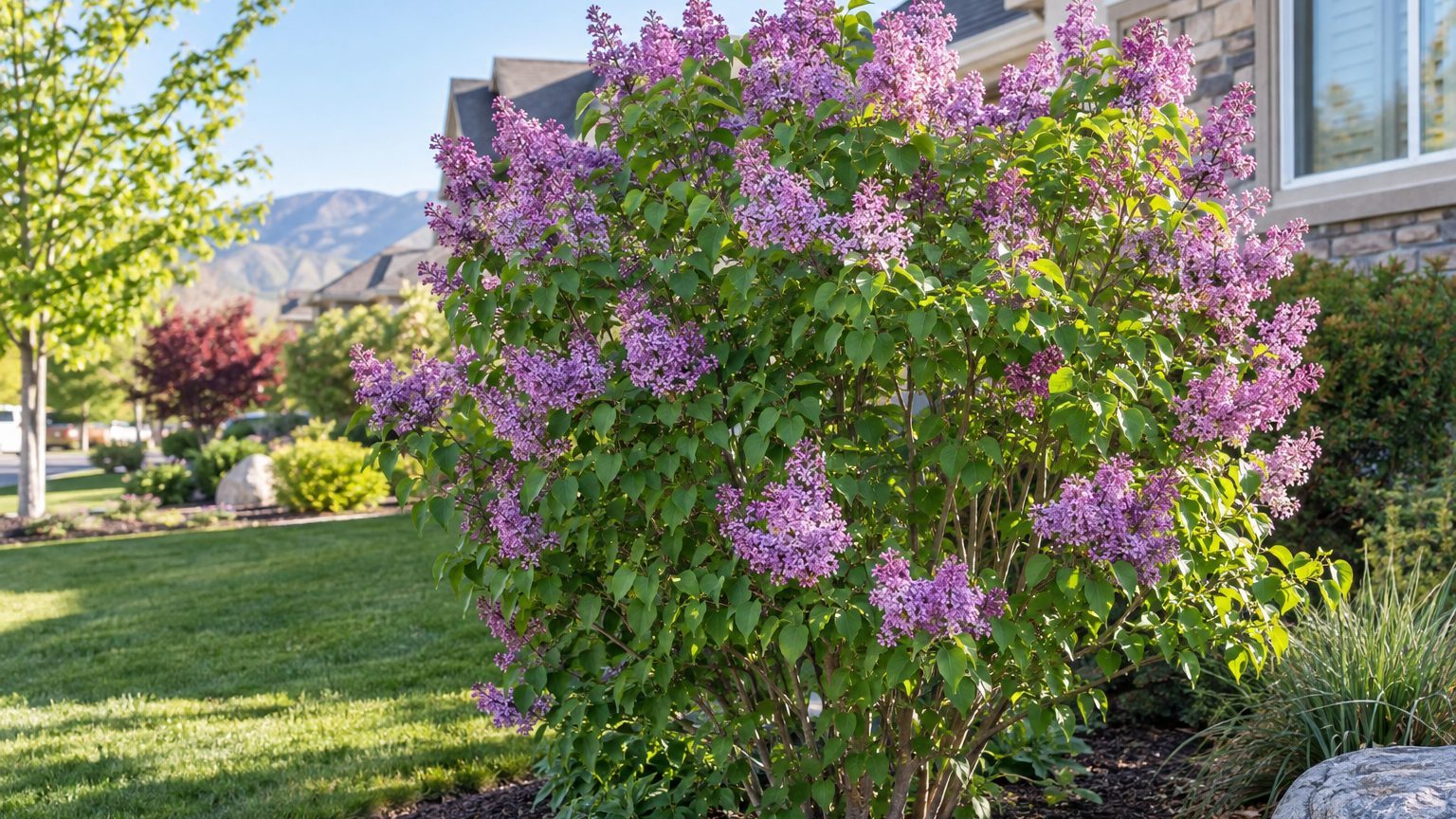
Lilac flowers open on bare-looking stems when spring finally settles in, and in Nevada that moment depends heavily on where the yard sits. A shrub in a high valley and one in the Las Vegas Valley live in very different climates.
When Do Lilacs Bloom in Nevada?

Lilacs bloom with the local spring, so the flowers arrive when your own yard warms up rather than on a fixed Nevada date. The year of a lilac runs like this.
- In spring, once the local weather warms, the clusters of flowers open on last year’s wood.
- Right after the flowers fade, prune, because the shrub is about to start forming next year’s buds.
- Through summer, the plant sets its flower buds for the following spring, so heat stress and heavy cutting at this stage cost you flowers later.
- In fall, the leaves drop and the buds stay on the stems, so leave them alone.
- In winter, the shrub needs a cold rest to mature those buds, which is the part of the year that mild-winter yards struggle to provide.
Frost timing swings widely. In the Las Vegas Valley, the last spring freeze falls between January 7 and February 1, which is a desert city extreme and no guide for the rest of the state. The first fall freeze there comes between December 8 and December 23. Reno, Carson City and anywhere with elevation freeze later in spring and earlier in fall. The USDA hardiness zone system, which rates only the average yearly minimum temperature, runs from 4a to 10a across Nevada, so your zone depends on your town.
Nevada — the year and the numbers
- State
- Nevada
- USDA zones
- 4a-10a
- Last spring frost
- January 7 to February 1
- First fall frost
- December 8 to December 23
- Annual rain
- 4 in
- Lawn zone
- warm-season
- Source
- NOAA NCEI U.S. Climate Normals 1991-2020, 32F freeze probabilities · Las Vegas
Which Lilacs Grow Best in Nevada?
Lilacs do well where winters are properly cold and summers are not brutal. Cold-winter yards at higher elevation suit common lilacs. In hot low desert yards, common lilacs struggle and may flower poorly, so warm-climate types are the better bet.
| Lilac type | How it does in Nevada | Why |
|---|---|---|
| Common lilac (Syringa vulgaris) | Suited to cold-winter yards, weak in the hot low desert | Needs a pronounced cold rest and struggles in prolonged high heat |
| Descanso hybrids | Worth trying in warmer yards | Developed for warm-climate gardens, and include white, blue and pink selections |
| Southern lilacs | Usually grow and bloom in warmer yards | Early-blooming types sold for warm regions, though less fragrant |
| Low-chill cultivars | Bloom with less winter cold | Bred to flower on little chilling, yet they still do better with a long cold rest |
Plant labels sometimes claim strong heat tolerance for common lilacs. Treat that claim cautiously, because heat and humid spells also bring powdery mildew, a gray-white dusting on the leaves. If your yard is warm, look for the early-blooming Southern types or the Descanso hybrids, and expect a lighter scent than the old-fashioned lilac gives.
When to Plant, Prune and Feed Lilacs in Nevada
Lilac timing follows the plant’s own signals more than the calendar. The shrub flowers on last year’s wood and sets its next buds soon after the blooms drop, so the pruning cut has a narrow, easy-to-spot window.
| Task | Best timing in Nevada | Why then |
|---|---|---|
| Pruning | Right after the flowers fade | Next year’s buds form in summer soon after bloom, so you cut before they exist |
| Hands off | Late summer, fall and winter | Cutting then removes the buds that would open the next spring |
| Planting | Ask your county office for your local frost pattern first | Frost arrives at very different times from the desert floor to the high country |
Feeding is a matter for your soil rather than for a Nevada date, so a soil test through your county office is the sensible starting point. The full detail on cuts, tools and how much to remove belongs on the page about when to prune lilacs in Nevada.
How Lilac Bloom Time Changes Across Nevada
Elevation and latitude do most of the shifting in Nevada, and the direction is simple: colder places bloom later and mild places bloom earlier, when they bloom at all.
- Las Vegas Valley: Winters are mild enough that common lilacs may flower poorly, and warm-climate types make more sense here. Where a shrub does bloom, it opens earlier than in colder parts of the state.
- Reno and Carson City: Winters are colder, so common lilacs get the rest they need, and bloom comes later in spring than in the south.
- Higher ground in the mountains, such as the Lake Tahoe area: Cold lingers longest, so flowers open later still, and a late freeze is more likely to catch the buds.
Within a single yard, a south-facing wall can pull bloom a little earlier than an open corner nearby.
Where to Get Lilac Advice in Nevada
Local help matters in a state with this much range. A lilac question in Elko and one in Henderson can have opposite answers.
- University of Nevada, Reno Extension offers plant guidance for Nevada conditions, and it is a good place to start before choosing a variety.
- Your county extension office can run a soil test and help diagnose leaf problems such as mildew, so bring a sample of the affected leaves.
Common Questions
Why Is a Lilac Not Blooming in Nevada?
A shrub with healthy green leaves that never sets flower buds, growing in a low, warm yard, is often short of the cold winter rest it needs. Moving to a low-chill type or a Southern lilac usually fits better than more fertilizer.
Do Las Vegas Frost Dates Apply to Reno?
No. The Las Vegas dates reflect a warm desert city, while Reno and Carson City freeze later in spring and earlier in fall. For your own planting decisions, check with your county extension office.
Why Do Lilac Leaves Look Dusty and White in Summer?
A pale, powdery coating on the leaves, appearing during a stretch of high heat and humidity, points to powdery mildew. Common lilacs are prone to it, and Southern types are a good choice for warm yards.