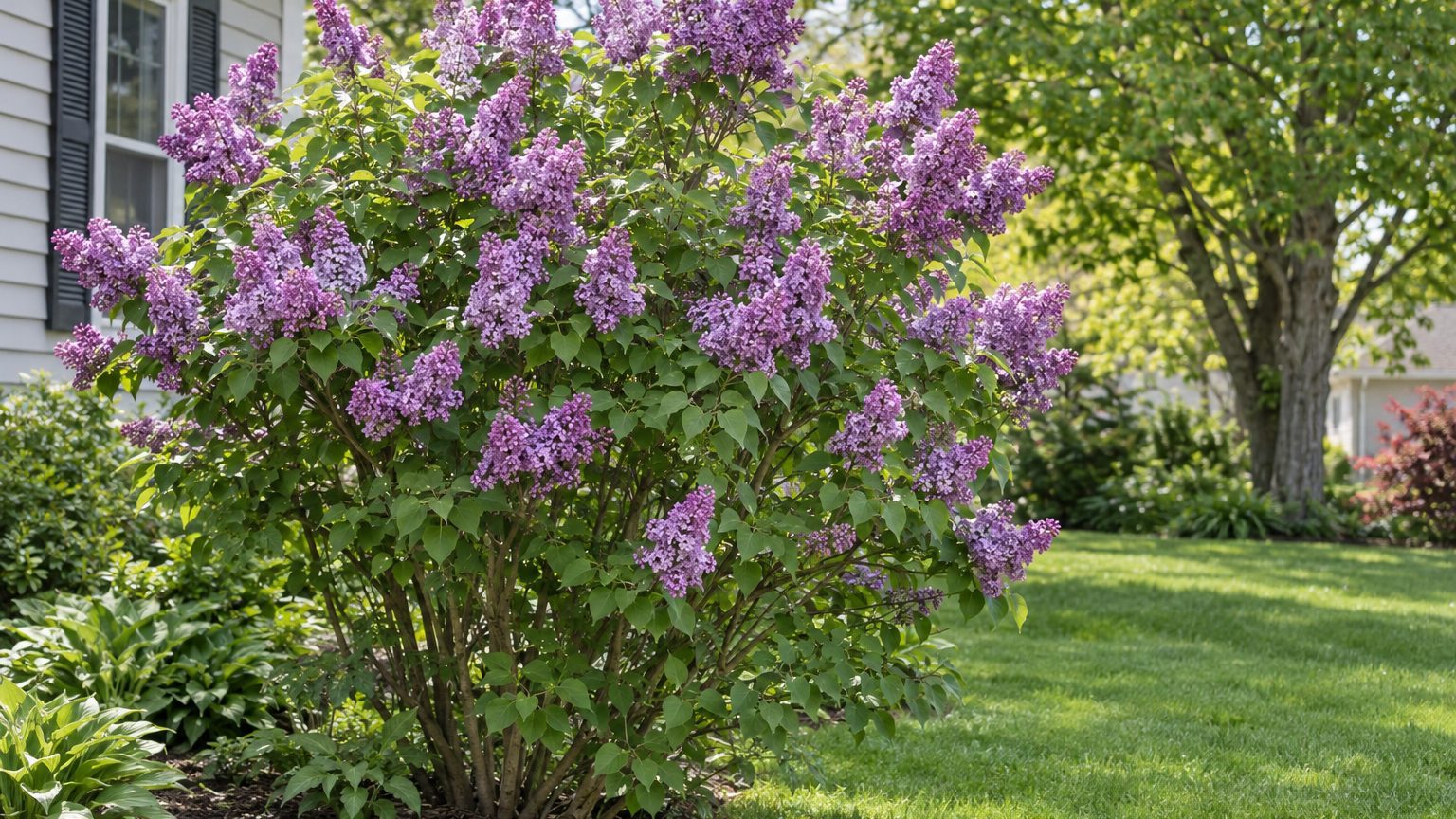
A lilac in full bloom is hard to miss in a Vermont dooryard, and the purple clusters that scent a whole street arrive in spring, usually as the maples finish leafing out. Lilacs in a Vermont yard bloom on a fairly predictable schedule, and the right kinds for the climate, along with a yearly rhythm of care, keep them flowering.
When Do Lilacs Bloom in Vermont?

Lilacs in Vermont bloom in April and May, and later species stretch the show into June. Here is how the year runs for a lilac in your yard.
- In April and May, the common lilacs open, with their flowers and scent filling the yard.
- Right after the flowers fade, usually in May and into June, is the time to prune, because the shrub is already forming next year’s buds.
- Through summer, the plant sets its flower buds for the following spring, so routine pruning can remove next year’s flowers.
- In fall, the shrub winds down and the wood hardens before winter.
- In winter, the cold rest matures those buds, and an overgrown shrub can be cut hard in March or April if you accept losing the next flowers.
For Burlington, on Lake Champlain, the last spring frost falls between April 30 and May 10, and the first fall frost comes between October 3 and October 13. Burlington warms earlier than the Green Mountains and the Northeast Kingdom, so those areas see a shorter season. Vermont spans USDA hardiness zones 3b to 5b, and lilacs sit comfortably in that range.
Vermont — the year and the numbers
- State
- Vermont
- USDA zones
- 3b-5b
- Last spring frost
- April 30 to May 10
- First fall frost
- October 3 to October 13
- Annual rain
- 38 in
- Lawn zone
- cool-season
- Source
- NOAA NCEI 1991-2020 Climate Normals, 32F freeze probabilities · Burlington
Which Lilacs Grow Best in Vermont?
Lilacs suit Vermont well. They belong to the olive family and are made for cold climates, and the chill of winter is what matures their flower buds. Hot, humid summers are what trouble them, and Vermont rarely offers those.
Lilacs are adapted to zones 3, 4 and 5, which covers nearly all of the state. They want a sunny site with good air circulation.
| Lilac type | How it does in Vermont | Why |
|---|---|---|
| Common lilac (Syringa vulgaris) | Thrives, blooming in April and May | Cold winters mature its flower buds |
| Later-blooming species | Does well, with flowers into June | Extends the season past the common lilac |
| Lilacs in sun with open air | Flower freely and stay healthy | Good air circulation suits the plant |
| Lilacs in shade or cramped corners | Flower poorly | They need sun to set buds |
Vermont’s winters are an asset here. A lilac that struggles in warm, humid places usually finds its footing in the Green Mountain State, so choosing among types matters less than choosing a sunny, airy spot.
When to Plant, Prune and Feed Lilacs in Vermont
Pruning is the gesture where timing counts most. A lilac blooms on last year’s wood and sets next year’s buds in summer, soon after it flowers. Cut right after the flowers fade, and you keep the next show.
Pruning in late summer, fall or winter cuts off the next spring’s flowers. For the full pruning method, see the page on when to prune lilacs in Vermont.
| Task | Best timing in Vermont | Why then |
|---|---|---|
| Enjoy and cut bouquets | April and May, into June for later species | The shrub is in bloom |
| Routine pruning | May and June, right after the flowers fade | New buds have not formed yet |
| Hard renovation cut of an overgrown shrub | March and April, in late winter | The plant is dormant, though the next flowers are lost |
A hard cut-back resets a leggy, overgrown lilac, but it will not flower for a few years afterward. Ask for local advice before choosing when to plant or feed; the timing above applies only to pruning.
How Lilac Bloom Time Changes Across Vermont
Bloom follows the local spring, and Vermont’s spring arrives at different speeds depending on elevation and distance from the lake.
- Lake Champlain shore and Burlington: Lilacs open earlier here, since the lake softens the cold and spring arrives sooner than in the hills.
- Green Mountains: Higher ground warms later, so bloom comes later and can run toward the end of the window.
- Northeast Kingdom: Cold lingers longer, which pushes flowering later than in the Champlain Valley.
A lilac in a sheltered, south-facing spot opens before one on an exposed hillside in the same town.
Where to Get Lilac Advice in Vermont
For a diagnosis of poor flowering or a soil test, local help beats guessing. University of Vermont Extension offers plant advice for home gardeners across the state.
- This is a useful place to ask why a shrub leafs out but does not flower.
- Ask your county extension office about soil testing before you plant or amend.
When the flowers fade, prune right away and leave the shrub alone after that.
Common Questions
Why Is My Lilac Not Blooming?
Look at how much sun the shrub gets together with when it was last cut. A lilac in shade, or one pruned in late summer, fall or winter, often leafs out well but skips flowers because its buds were removed or never formed.
Can You Cut Lilacs for Bouquets?
Yes, and cutting stems while the shrub is in bloom doubles as light pruning. Cut just as the flowers open, then do any shaping right after the bloom ends so you do not remove next year’s buds.
Do Lilacs Need Winter Cold to Flower?
They do. The winter chill matures the flower buds, which is why lilacs are at home in Vermont and struggle in hot, humid summers elsewhere.