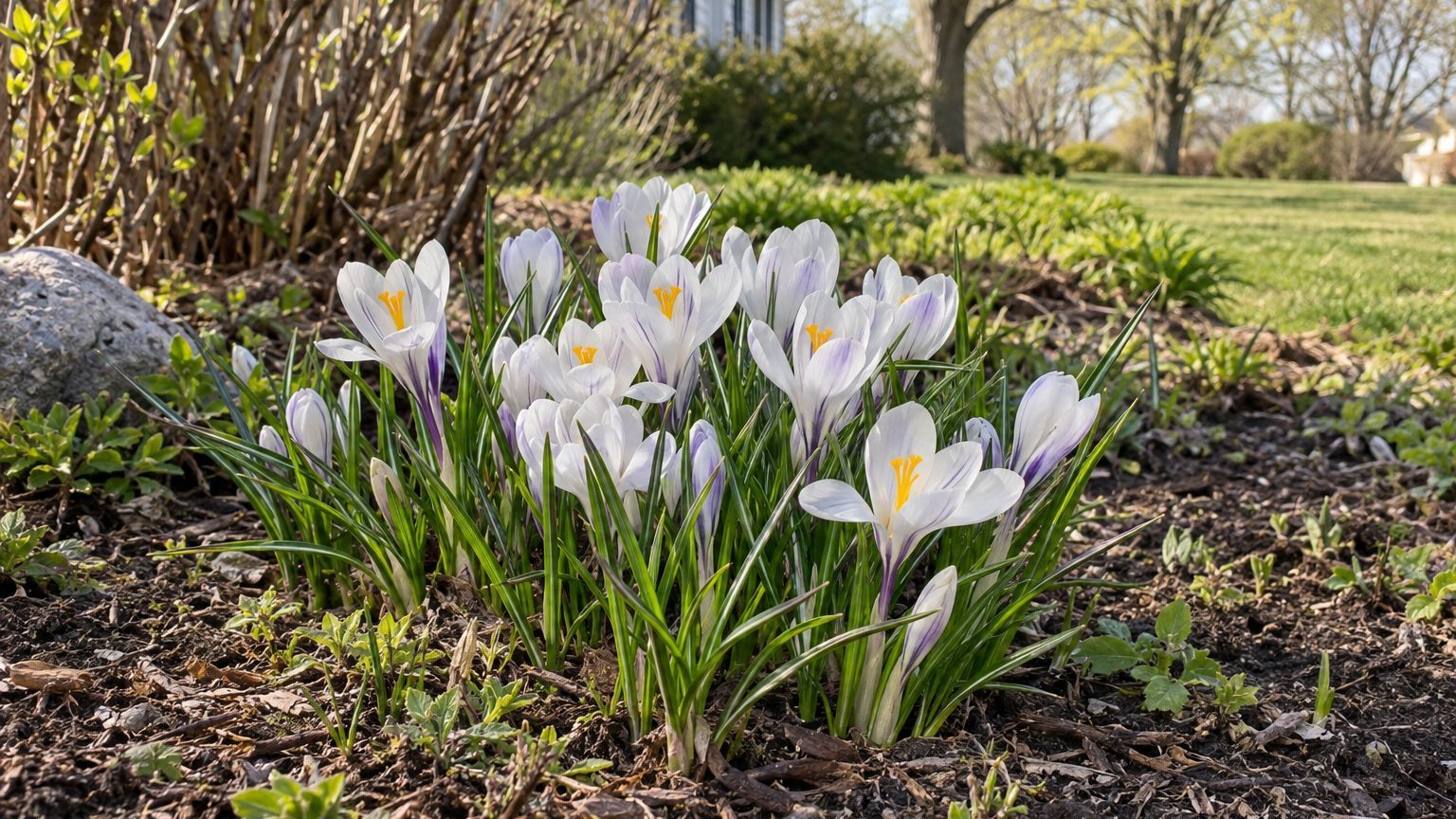
Snow crocus is one of the small spring bulbs that spreads on its own, so a few planted in fall can turn into a patch over the years. The plant goes by Crocus sieberi, and it grows in lawns, beds and borders. What follows covers where it grows, how to plant it, and what to expect from it.
What Is the Snow Crocus?
Snow crocus is Crocus sieberi, a small spring-flowering bulb planted in fall. It belongs with the crocuses that naturalize easily, spreading by self-seeding or by growing vegetatively underground, so a planting thickens instead of staying a fixed number of bulbs.
Plants this small sit close to the ground, so check the plant tag or the bulb package for the mature size and the flower color of the variety you buy. Those details change from one selection to the next.
Snow crocus flowers in spring and is a plant for the front of a bed, the edge of a walk, or open grass where its small blooms show up.
From the almanac
Bulbs in your state
The dates on this page depend on where you live. Your state's page carries its frost dates, its USDA zones and the year laid out month by month.
Northeast
Southeast
- Alabama
- Arkansas
- Delaware
- Florida
- Georgia
- Kentucky
- Louisiana
- Maryland
- Mississippi
- North Carolina
- South Carolina
- Tennessee
- Virginia
- West Virginia
Midwest
Southwest
West
Pacific Northwest
Canada
Where Does the Snow Crocus Grow Best?
Snow crocus has reproduced naturally across much of the United States, spanning USDA Plant Hardiness Zones 3 to 8. If your yard falls in that range, the bulb can settle in and spread without much help from you.
Soil matters more than anything else. The bulbs need well drained ground, so a spot where water pools after rain is a poor home for them. A slight slope or a raised edge of a bed works well.
Light can run from full sun to partial shade. A bed under a deciduous tree is a fair place for them, since the branches are still bare when the plants are growing in spring. Planting months vary depending on where you live.
How to Plant and Care for the Snow Crocus Through the Year
Fall
Plant once the soil has cooled below about 60°F. That is early enough for roots to form before the ground freezes and late enough that the bulbs do not sprout before winter. Choose a well drained spot and set the bulbs in groups so the flowers read as a patch.
Winter
Little needs doing. The bulb is resting underground and building roots, and the cold of winter is what prepares it to flower. Skip heavy mulch on soil that stays wet, because snow crocus dislikes sitting in water more than it dislikes the cold.
Bloom
The flowers open in spring, in sun or light shade. Let them stand. Pick off faded flowers if you like a tidy look, but leave the foliage alone, since the plant is already feeding the bulb for next year.
After Bloom
Leave the leaves on the plant until they turn brown, and remove only the faded flowers. Cutting green foliage starves the bulb. In a lawn, that means holding off the mower over the patch until the leaves have yellowed and browned.
Summer
By summer the foliage has faded and the bulbs rest underground. Keep this ground dry enough to drain well, and avoid planting thirsty annuals that need constant watering right on top of the bulbs. Self-seeded plants and underground offsets are already building next spring’s patch.
Snow Crocus Weak Points: Animals, Diseases and Staying Power
Hungry animals are the most common trouble. Crocus is on the menu for several of them, and a patch can disappear overnight if they find it.
Staying power is where snow crocus earns its place. It is known for naturalizing in lawns and gardens, so a planting tends to return and spread rather than fade.
| Issue | How the Snow Crocus handles it |
|---|---|
| Voles, squirrels, rabbits and deer | They eat crocus, so the bulbs and flowers are at risk where these animals roam |
| Coming back year after year | Spreads by self-seeding or vegetatively underground, in lawns and gardens |
If animals are a problem in your yard, daffodils are left alone by them and make a good neighbor planted around the crocus. Tulips are often short-lived, so snow crocus is the steadier choice for a spot you want to fill in over time.
Is the Snow Crocus Right for Your Yard?
It suits a yard with well drained soil, sun or light shade, and room to let a patch spread. It is a poor match where water stands in spring or where deer and rabbits visit often and nothing protects the bulbs.
- In a lawn or open bed, you will find a patch that thickens over the years, as long as you let the leaves die back before mowing.
- Along a path or at the front of a border, plant in fall and expect the flowers in spring.
- Before you buy, look up your state page for the planting months where you live.
Common Questions
Can You Plant Snow Crocus in a Lawn?
Yes. The plant is known for naturalizing in lawns, spreading through self-seeding or underground growth. Choose a spot with well drained soil and sun or light shade, and plan to mow around the patch until the leaves have browned.
Do Snow Crocus Need Winter Cold to Bloom?
Most spring bulbs need about 12 to 16 weeks of cold to flower. Where winters are mild, tulips and hyacinths are chilled in the refrigerator first, but a crocus patch in Zones 3 to 8 gets its cold outdoors.
What If the Bulbs Are Still in the Bag After Fall?
Plant them as soon as the ground can be dug. A bulb planted late does better than one stored through the winter.