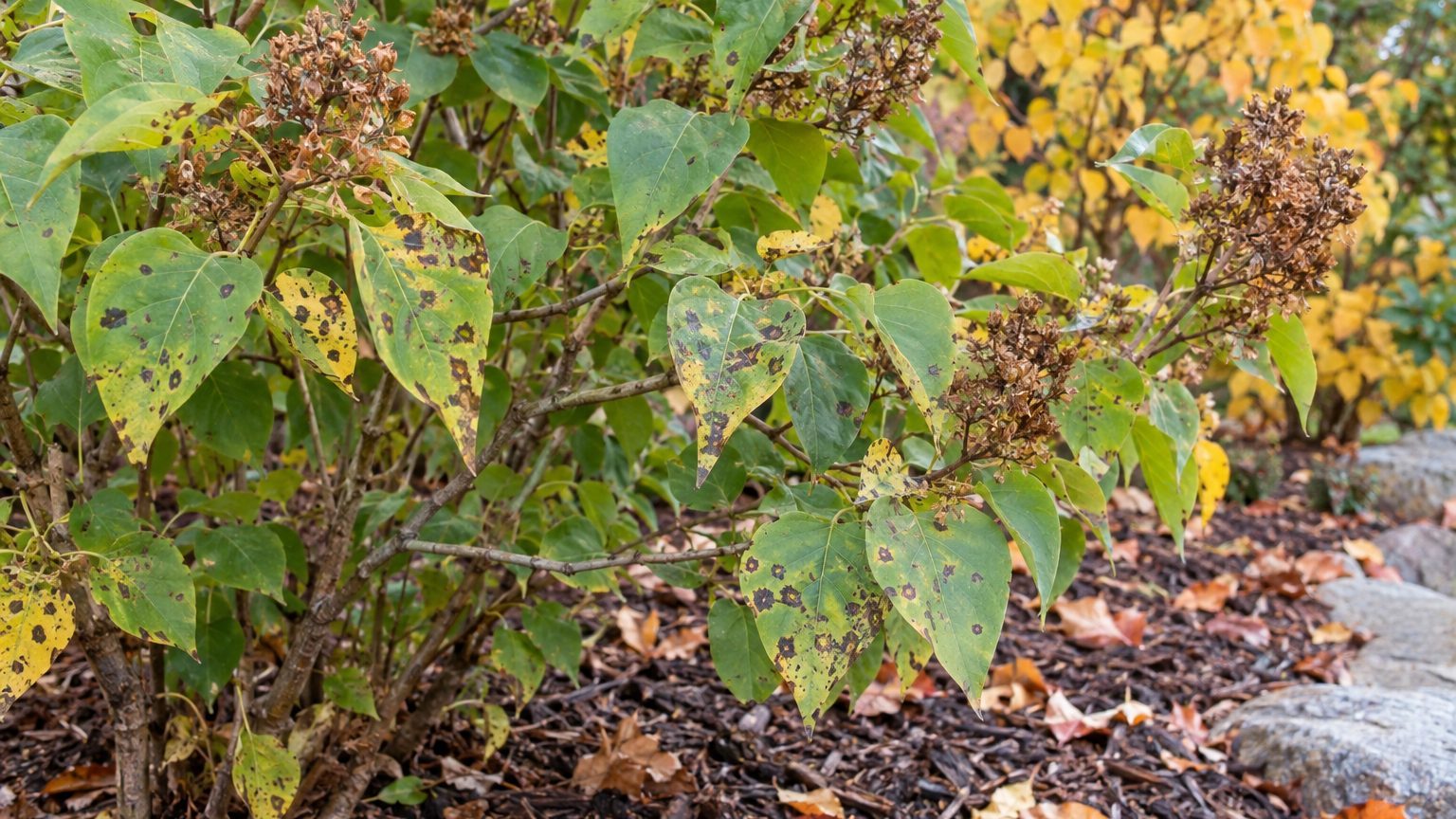
Lilac shoots that looked healthy and then turned black at the tips, as if a flame had passed over them, may be showing signs of bacterial blight. The disease is caused by a bacterium that enters through wounds; in Oregon, cool, wet spring weather favors its development. Catching it early and pruning out infected tissue helps limit the amount of diseased material on the shrub.
Bacterial Blight: What You See

At first, leaves may seem healthy before the young growth changes suddenly.
- Dark black streaks form on one side of young shoots, and the affected shoot is soon girdled and killed.
- Leaves look singed, then turn completely brown to black and stay hanging on the branch.
- Small, brown, water-soaked spots show up on the leaves, sometimes ringed by yellow halos, and they run together into larger dead patches.
- Flower clusters go limp and brown, and unopened buds turn black.
- Leaves that were spotted before they fully expanded may curl and twist.
As the disease advances, dead blotches creep inward from the leaf edges, and whole shoots can be blighted.
From the almanac
Lilacs in your state
The dates on this page depend on where you live. Your state's page carries its frost dates, its USDA zones and the year laid out month by month.
Northeast
Southeast
- Alabama
- Arkansas
- Delaware
- Florida
- Georgia
- Kentucky
- Louisiana
- Maryland
- Mississippi
- North Carolina
- South Carolina
- Tennessee
- Virginia
- West Virginia
Midwest
Southwest
West
Pacific Northwest
Canada
Bacterial Blight or Something Else?
Several problems brown lilac leaves and blossoms, so one symptom alone settles little. Look at the pattern on the shoot and the weather that came before it.
Frost injury and ordinary leaf spots can resemble bacterial blight, and each leaves a different trail.
| Looks like | How to tell them apart | What to check |
|---|---|---|
| Frost or winter injury | Blackened new growth and buds after a hard freeze, with no spots on the leaves | Look for dark streaks on one side of the shoot and leaf spots with yellow halos, which are signs associated with bacterial blight |
| Ordinary leaf spot | Scattered spots that stay as spots on mature leaves | Bacterial blight spots quickly grow together and take whole shoots, with brown leaves that stay attached |
Frost-damaged tissue can leave an opening for the bacterium.
What Causes Bacterial Blight, and Where It Is Worst
The cause is a bacterium, Pseudomonas syringae pv. syringae, which enters through open wounds in the plant. It survives the winter in infected twigs and cankers, in dead plant debris, on neighboring plants, or in the soil around the shrub. In Iowa, the disease can spread in spring through wind, splashing rain, insects and pruning tools.
Weather decides how bad a year gets. In Oregon, cool, wet springs favor lilac blight, especially when rain follows a late frost or winter injury. In Maryland, spring frost damage and late fall or winter pruning seem to leave shoots open to infection.
Iowa advice points to the same window: early spring, cool and wet, when the bacterium can infect newly emerging shoots, flower buds and leaves. Common, Chinese, Japanese and Persian lilacs all get it, and white-flowering common lilacs are the most susceptible of the group. The same bacterium also troubles walnut, apple, pear, plum and cherry.
How to Treat Bacterial Blight
Treatment is mostly careful removal of diseased wood, done in a sensible order.
- Prune out infected branches as soon as you notice them, so that the bacterium has less tissue to multiply in.
- Cut well below the diseased tissue, into clean wood, so that no blackened streaks are left behind.
- Disinfect your pruning tools, since tools carry the bacterium from shoot to shoot.
- Discard the infected branches and fallen leaves, because dead debris can harbor the bacterium over winter.
- Water at the base of the shrub and avoid overhead watering, so that splashing water does not move bacteria onto healthy leaves.
- Support the shrub with adequate water and nutrients during the growing season.
For a spray program, seek local advice on products approved where you live, since labels and rules differ from state to state.
How to Prevent Bacterial Blight Coming Back
Prevention follows the lilac’s year, with most of the work falling before and during the wet weeks of spring.
- When you shop for a new lilac, buy disease-free plants and plant them with enough room that air moves between shrubs.
- In early spring, avoid overhead watering, which Pennsylvania advice specifically recommends for that season.
- Prune to open the canopy for air circulation, which slows the spread of the disease.
- Keep the shrub adequately watered and fed during the growing season, because healthy plants resist disease better.
- In late fall and winter, be cautious about pruning, since Maryland observations link late fall or winter pruning with infection.
- Avoid nicking trunks and stems with mowers or trimmers, because every wound is a doorway.
Clean up dead debris around the base so the bacterium has fewer places to wait out the cold.
Where This Comes From
The details here draw on plant-health guidance written for several states. Timing and weather notes hold where they were written, so seek local advice before acting.
Common Questions
Will a Lilac with Bacterial Blight Die?
Bacterial blight kills girdled shoots; remove and destroy the infected growth as soon as you notice it.
Can Bacterial Blight Spread to My Other Trees?
The same bacterium also affects walnut, apple, pear, plum and cherry, so watch those trees near an infected lilac and keep tools clean when moving between them.
Do All Lilacs Get Bacterial Blight?
Chinese, Japanese, Persian and common lilacs can all be infected, and white-flowering common lilacs are the most susceptible.