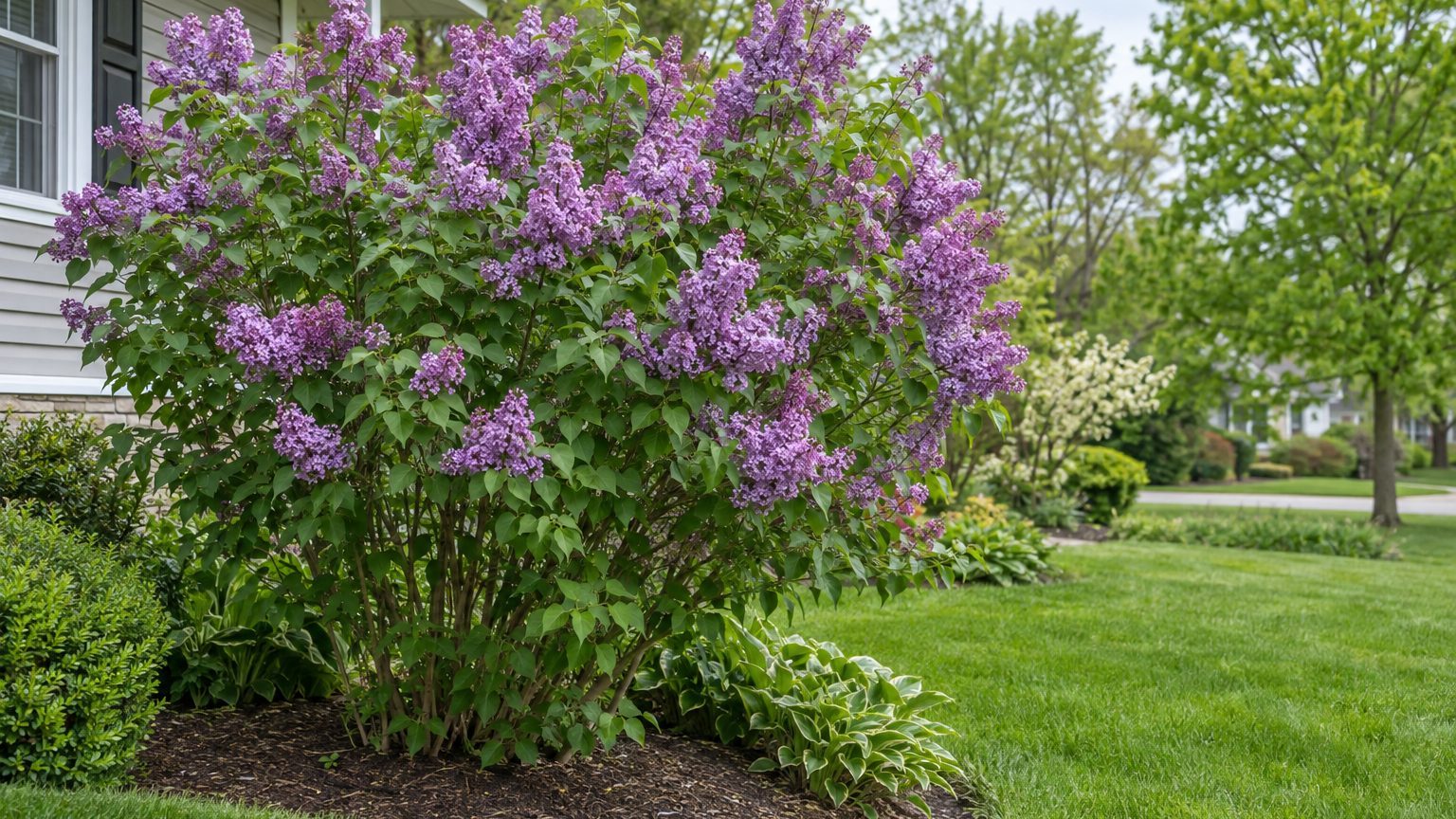
A lilac branch cut in full bloom can fill a room with scent and then droop before the weekend is out. How long it lasts depends mostly on what happens to the stem right after the cut. The way you strip, split and soak the branches decides whether the flowers hold or sag.
How Long Do Cut Lilacs Last in a Vase?
Cut lilacs last only a few days, and handling decides whether you get the short end or the long end. In Ohio, the flowers hold anywhere from 1 to 5 days depending on how they were treated.
In Washington, branches kept out of direct sunlight can last 3-4 days. Lilac type and the weather at cutting time add some variation. Climate mostly changes when your shrubs bloom, not how the cut stems behave once they are indoors.
From the almanac
Lilacs in your state
The dates on this page depend on where you live. Your state's page carries its frost dates, its USDA zones and the year laid out month by month.
Northeast
Southeast
- Alabama
- Arkansas
- Delaware
- Florida
- Georgia
- Kentucky
- Louisiana
- Maryland
- Mississippi
- North Carolina
- South Carolina
- Tennessee
- Virginia
- West Virginia
Midwest
Southwest
West
Pacific Northwest
Canada
How to Cut and Condition Lilacs for a Vase
The steps below follow the order you take them, from the shrub to the vase, and each one protects the stem’s ability to take up water.
- Cut the branches early in the morning and wait until later in the day to arrange them, as advised in Washington, so the stems are well filled with water when they go into the vase.
- Strip the leaves from every stem, because foliage pulls moisture away from the flowers that need it.
- Split the base of each woody stem so water can travel up through the opened capillaries, a split 1 inch long in Illinois, or the bottom 2″ split or smashed in Washington.
- Submerge the stems up to the flowers in cool water, which acts as a curing step, for about 30 minutes in Washington or 1 hour in Illinois.
- Recut the stem ends after the soak, taking 1 inch off at a 45-degree diagonal as Ohio growers do, so fresh tissue is exposed and the stem does not sit flat against the glass.
- Set the branches in a clean, heavy-based vase, as suggested in Ohio, so the top-heavy clusters do not tip it over.
In Illinois, both the recut and the split come after the soak, before the branches go into the vase. Skipping ahead to the vase leaves the flowers thirsty from the start.
How Lilac Type Changes What You Bring Indoors
Not every lilac gives you the same stem. Some carry a heavy scent, others a pretty cluster with little fragrance, and that affects which branches earn a spot in the house.
The handling steps stay the same. What differs is the flower you are cutting.
| Lilac type | What changes | Why it matters |
|---|---|---|
| Spring-blooming lilacs | The classic strong fragrance | Scent is the main reason to bring them indoors. |
| Downy lilac | Fragrant violet-purple flowers packed tightly on a panicle of modest length | Each stem carries a dense, scented cluster that fills a vase. |
| Creamy white early-summer lilac | Huge white clusters, with a scent closer to privet | Cut it for looks, not for perfume. |
If scent is what you want, stick with the spring bloomers and cut them while the show is on. The creamy summer lilac suits arrangements where size and color matter more than fragrance.
Mistakes That Shorten Vase Life
Leaving the Leaves On

Leaves look natural, but they lose moisture steadily, and a woody stem is already slow to deliver water. Strip every leaf below the flowers before the stems go into water, so the blooms get what the stem can supply.
Skipping the Split

A clean cut across a woody stem looks neat but leaves the capillaries closed, so water struggles to reach the flowers. The cost is blooms that wilt soon after cutting. Split or smash the base, and recut after the soak.
Parking the Vase in Sun
A bright windowsill is tempting for a vase of lilacs, yet direct sun shortens their life. In Washington, branches kept out of direct sunlight can last 3-4 days. Put the vase in a bright room away from the glare, and keep it off the top of warm appliances too.
When Should You Cut Lilacs?
Cut when the clusters on the shrub have opened enough to show color and give off scent, on a cool morning with a bucket of water in hand. Bloom months shift with where you live.
- The lilac page for your state gives the months when shrubs bloom there, so you know when to start watching them.
- The same page covers pruning after bloom, which helps the shrub keep flowering in later years.
- Once the clusters color up, take the bucket to the shrub and cut the branches straight into water.
Common Questions
Do Cut Lilacs Need Sugar in the Water?
In Oregon research on forced lilac, antimicrobial chemicals did not open the flowers unless they were combined with a 24% sucrose solution. In that Oregon research, tight buds opened only when the antimicrobial treatments were paired with the sucrose solution.
Should You Remove Spent Flowers from the Shrub?
In Wisconsin, faded blooms can be removed within a week. That keeps the lilac from putting energy into seeds and sends it toward flower buds for next year’s bloom.
Does Room Temperature Matter for Cut Lilacs?
In Oregon research, bud development was a little better but slower at 64°F than at 72-78°F. A cooler room gives a slower, more gradual opening, and a warmer one speeds things up.