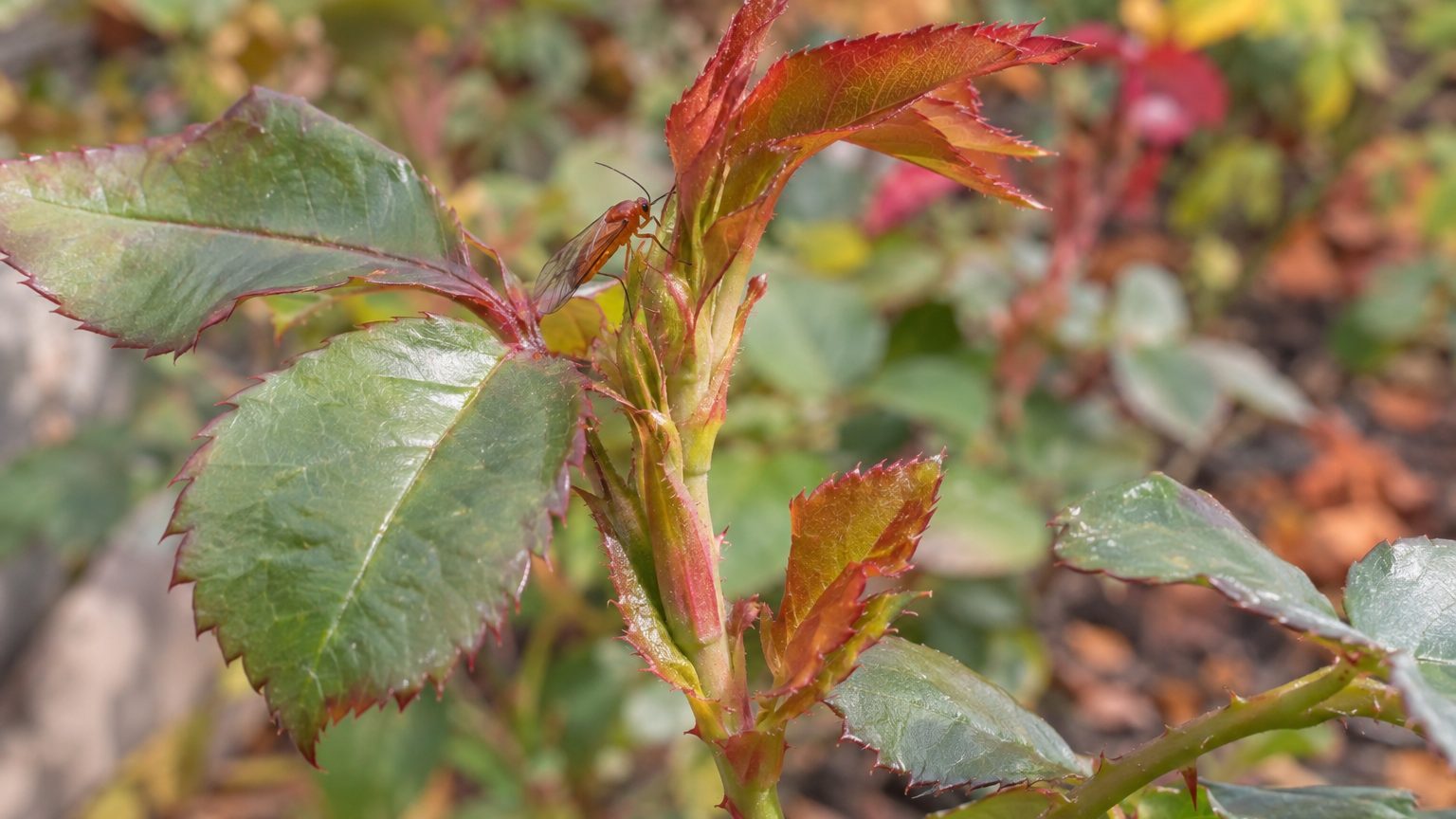
Rose buds that turn black at the tip and never open are a sign worth checking on before you blame the weather. Tiny flies called rose midges lay eggs in new growth, and their larvae do the damage from inside. The pest is uncommon, but where it settles, it can wreck a flush of bloom.
Rose Midge: What You See

Damage on new growth is often easier to spot than the insect, so start with the buds and shoot tips.
- Flower buds come out distorted, bent or misshapen, and some never open at all.
- Shoot tips and bud tips turn black, then wither and die back.
- Injured buds may turn brown or black and drop off before they are fully formed.
- Inside the sepals and the tight new growth, tiny white maggots feed, and in California they grow to only 1/16 inch long.
- The adults are very tiny flies, easy to miss around the plant.
Damage usually appears in July in Illinois, while Oregon and North Carolina report other local timing patterns.
From the almanac
Roses in your state
The dates on this page depend on where you live. Your state's page carries its frost dates, its USDA zones and the year laid out month by month.
Northeast
Southeast
- Alabama
- Arkansas
- Delaware
- Florida
- Georgia
- Kentucky
- Louisiana
- Maryland
- Mississippi
- North Carolina
- South Carolina
- Tennessee
- Virginia
- West Virginia
Midwest
Southwest
West
Pacific Northwest
Canada
Rose Midge or Something Else?
Blackened, deformed buds can have other causes, so look at the larvae and the pattern of damage together. A hand lens helps, since the maggots are so small.
Rose curculio can look similar because its larvae resemble those of the rose midge.
| Looks like | How to tell them apart |
|---|---|
| Rose curculio damage | Rose midge larvae are tiny white maggots, but appearance alone may not separate them from rose curculio larvae. |
| Buds that fail to form for other reasons | Deformed buds alone prove nothing. Check whether the tips are also blackening and withering, and whether maggots are inside the sepals. |
Rose midge damages developing buds and plant terminals.
What Causes Rose Midge, and Where It Is Worst
The cause is a tiny fly, Dasineura rhodophaga. In North Carolina, adults emerge from pupae in the soil early in spring, about when roses begin new growth. Females lay eggs inside the sepals of new flower and leaf buds, and the maggots that hatch feed there.
Several generations can occur in a year, since 2 to 4 generations can occur annually. Damage tends to increase through the season.
The pest is established in Oregon and Washington, and it can be severe there. In Oregon, sampling in 2004 found two peaks of damage, in late June and early July and again in late August and early September. North Carolina reports a similar pattern, with peaks in late June and late August. Maryland describes it as uncommon but possible in rose plantings. In California it was found in a Petaluma nursery in August 1996 and has not been reported since, so it is rarely a problem there.
How to Treat Rose Midge
Treatment starts with removing the infested tissue, because the maggots live inside it.
- Inspect new buds and shoot tips for blackened tissue and distortion.
- Prune out blackened, distorted buds and withered tips, so that the maggots inside are removed from the plant.
- Damage tends to increase through the season.
- If the problem persists, insecticide may be needed.
Control includes pruning out damaged buds. If the problem persists after pruning, insecticide may be needed.
How to Prevent Rose Midge Coming Back
Rose midges emerge from the soil about when roses start new growth.
- In North Carolina, begin checking buds and shoot tips in early spring as new growth starts.
- Look closely at new shoots in late June in North Carolina and in late June and early July in Oregon.
- Check for another peak in late August in North Carolina and in late August and early September in Oregon.
- Whenever you buy new roses, inspect the plants for blackened tips and distorted buds before planting, since the pest can arrive on nursery stock.
Where This Comes From
Common Questions
Can Rose Midge Kill a Rose Bush?
Rose midge damages buds and shoot tips, causing blackened tissue and tip abortion. Repeated damage can still cost you bloom.
Where Do Rose Midges Spend the Winter?
Pupation happens in the soil; in North Carolina, the midges emerge early in spring, about when roses start new growth.
Should You Worry About Rose Midge in California?
It was found in a Petaluma nursery in August 1996 and has not been reported in California since, so it is rarely a pest there.