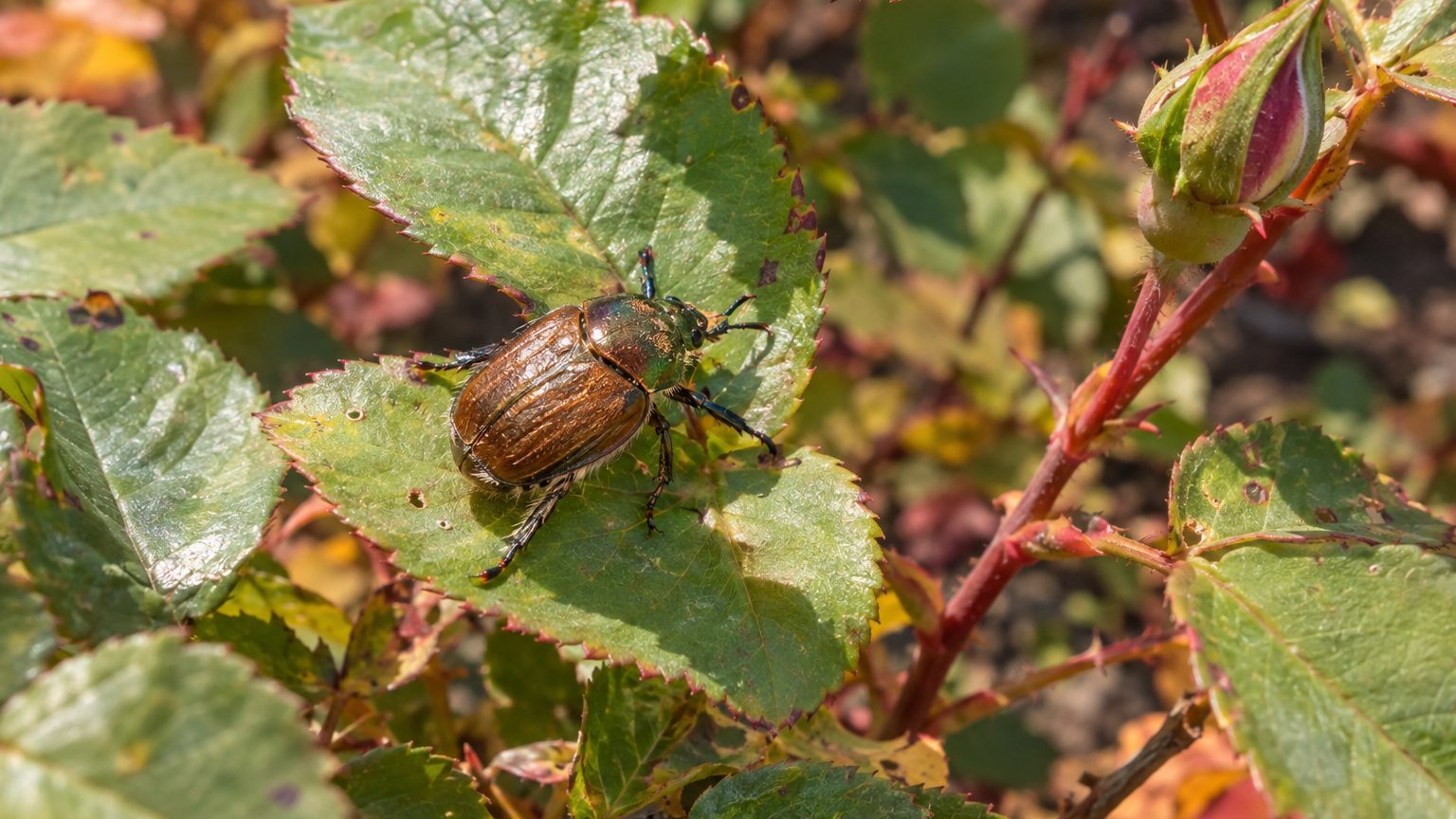
Round holes in the petals of a white, yellow, apricot or pink rose usually point to hoplia beetle. The damage is easy to mistake for something worse, yet the beetle is small and the season for trouble is short. Knowing what the beetle looks like and when it flies makes the fix simple.
Hoplia Beetle: What You See

Look at the open flowers first, because that is where this beetle gives itself away.
- Neat, round holes appear in the petals of open flowers, mostly on white, yellow, apricot and pink roses.
- The adult is oval and about 1/4 inch long, small enough to hide among the petals.
- Its head and thorax are a dark, reddish brown, and the wing covers run from dark to light brown.
- Early buds can be chewed badly enough that the first flowers are destroyed.
- In California, the trouble shows up from late March to May and then stops.
If the holes appear in light-colored blooms and a small brown beetle is sitting inside the flower, you have your answer.
From the almanac
Roses in your state
The dates on this page depend on where you live. Your state's page carries its frost dates, its USDA zones and the year laid out month by month.
Northeast
Southeast
- Alabama
- Arkansas
- Delaware
- Florida
- Georgia
- Kentucky
- Louisiana
- Maryland
- Mississippi
- North Carolina
- South Carolina
- Tennessee
- Virginia
- West Virginia
Midwest
Southwest
West
Pacific Northwest
Canada
Hoplia Beetle or Something Else?
Not every chewed rose is a hoplia problem. A few other kinds of damage get blamed on this beetle, and a quick look at the leaves and the plant’s overall health sorts them out.
The beetle is a flower feeder, so damage that sits anywhere other than the blooms deserves a second look.
| Looks like | How to tell them apart |
|---|---|
| Chewed leaves with holes or ragged edges | Hoplia beetle leaves the foliage alone, so leaf damage with untouched petals comes from another chewing insect. |
| Grubs in the soil near the rose, with a plant that looks weak | Hoplia grubs are crescent-shaped and live in soil, but they do not feed on rose roots, so a declining plant needs another explanation. |
| Holes only in dark-colored blooms | Hoplia adults go for light-colored flowers, so damage on dark roses alone with no beetles in the blooms points elsewhere. |
When the damage sits on pale petals and the foliage looks clean, hoplia beetle is the likely cause. When the leaves are chewed too, look for a different pest.
What Causes Hoplia Beetle, and Where It Is Worst
The beetles live as grubs in the soil and fly into gardens as adults to feed on roses and other flowers. After feeding for several weeks, the adults fly back to their egg-laying sites. There is a single generation each year, which is why the problem arrives and leaves on a fairly fixed schedule.
Hoplia beetle is common in many parts of the state, especially the Central Valley. It is mostly a problem there from Sacramento south to Bakersfield. Adults are generally active from late March to early May, and damage is usually confined to a 2- to 4-week period in late spring.
Outside California, the beetle’s presence and flight period may differ.
How to Treat Hoplia Beetle
Hand removal is the practical response to beetles feeding on the flowers.
- Check the open, light-colored blooms regularly during the flight season, so that you catch beetles before they have chewed through the petals.
- Handpick the beetles off the flowers they are feeding on, so that each one is removed rather than driven to another bloom.
- Shake the blooms gently over a bucket of soapy water, which drops hidden beetles straight into it.
- Leave the beetles in the soapy water, so that they cannot climb out and return to the roses.
- Skip any treatment of the leaves, since the beetles do not feed on them and the foliage is not where they are found.
- Do not use a spray or other product unless it is approved for roses and this beetle in your state.
In California, damage is usually confined to a 2- to 4-week period in late spring, so the routine does not run long. Once the adults have fed and flown back to their egg-laying sites, the roses are left in peace until the next year.
How to Prevent Hoplia Beetle Coming Back
Hoplia beetle cannot be kept away for good, but a gardener who knows the calendar is rarely caught off guard.
- Before the season opens, plan to watch your white, yellow, apricot and pink roses most closely, since those are the blooms the adults prefer.
- As the first buds swell, begin looking inside them and the newly opened flowers, because early buds are the ones the chewing can destroy.
- Through the weeks when adults are flying, keep removing beetles from the flowers so that fewer feed and fewer return to lay eggs.
- After the adults have gone, stop the daily checks and leave the foliage alone, since this beetle does not feed on leaves.
In affected California gardens, repeat the checks and handpicking during the flight season.
Where This Comes From
The details here describe California gardens. Timing and approved products vary by state, so do not apply California dates elsewhere.
Common Questions
Do Hoplia Grubs Eat Rose Roots?
No. The larvae are small, crescent-shaped grubs that live in the soil and feed on roots, but they do not feed on the roots of rose plants.
Do Hoplia Beetles Feed on Flowers Other than Roses?
Yes. The adults fly to gardens where they feed on roses and other flowers.
Is Hoplia Beetle a Problem Outside California?
Hoplia beetle is common in many parts of California. Outside California, its local presence and active period may differ.