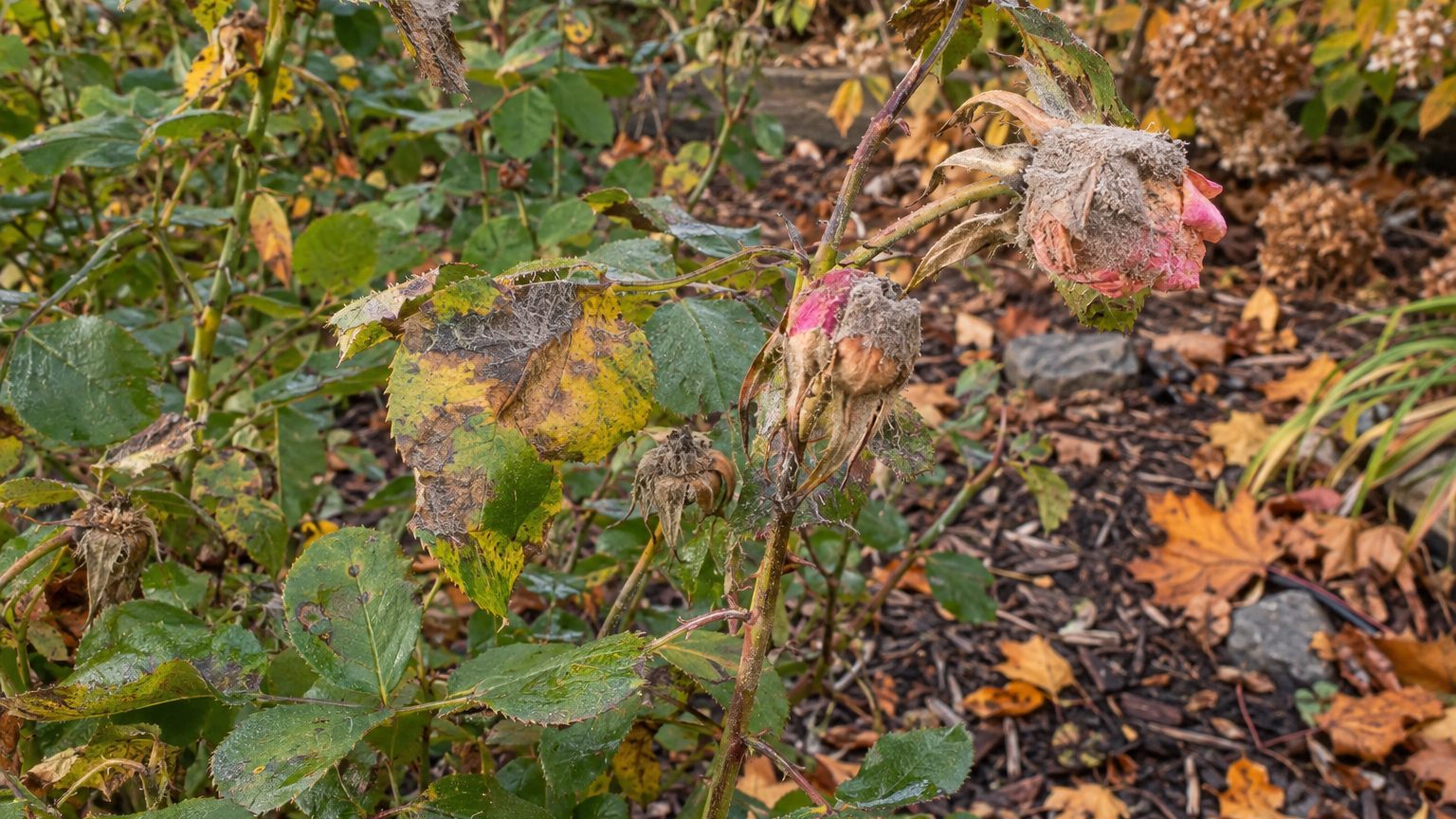
Rose buds that stay shut, then droop under a coat of gray fuzz after a spell of damp, cool weather, are the classic sign of botrytis blight. The fungus Botrytis cinerea causes it, and wet petals favor the disease.
Botrytis Blight: What You See

The disease shows first on flowers and buds, and the gray fuzz is what sets it apart from other rose troubles.
- Woolly gray-brown fungal growth covers decaying petals and buds, and it is easy to see in moist conditions.
- Small, water-soaked lesions or light-colored spots with reddish halos appear on petals, then quickly spread into large, irregular blotches.
- Buds fail to open and often droop, and infected flowers may turn completely brown.
- Canes develop sunken, discolored cankers, with dieback that can run down the stem from the flower.
- In Wisconsin, leaves have also shown dead, irregular patches that may have a bull’s-eye pattern.
A cane girdled by the fungus will wilt above the damage, so any drooping shoot deserves a closer look.
From the almanac
Roses in your state
The dates on this page depend on where you live. Your state's page carries its frost dates, its USDA zones and the year laid out month by month.
Northeast
Southeast
- Alabama
- Arkansas
- Delaware
- Florida
- Georgia
- Kentucky
- Louisiana
- Maryland
- Mississippi
- North Carolina
- South Carolina
- Tennessee
- Virginia
- West Virginia
Midwest
Southwest
West
Pacific Northwest
Canada
Botrytis Blight or Something Else?
Other rose problems can brown petals or kill buds, so check the fuzz, the affected plant part and the weather together. Pair what you see with where it appears and what the weather has been doing.
| Looks like | How to tell them apart |
|---|---|
| Buds that will not open from other causes | Fungal infections such as botrytis can keep buds shut; botrytis also leaves gray-brown fuzz and blotched petals, especially in warmer temperatures. |
| Cane canker from another cause | Botrytis cankers are sunken and discolored and trace back to a diseased flower or an old stub, with fuzzy gray mold on nearby dead tissue. |
| Leaf spots | Botrytis leaf damage is irregular, dead and sometimes bull’s-eyed, and it comes with gray fuzz on nearby flowers or stems in damp weather. |
Petals can also look bruised, with soft brown tips or sides, when botrytis is the cause. If the fuzz is missing, wait for moist weather and look again before deciding.
What Causes Botrytis Blight, and Where It Is Worst
The fungus Botrytis cinerea is the cause. It thrives in cool, wet, humid conditions, and it is most active when temperatures run 62 to 72 °F and the air stays moist. Anything that keeps petals wet for long stretches gives it room to work.
Condensation on flowers at moderate temperatures favors botrytis.
No one region owns this disease. It follows weather rather than a map and is more likely where plants are crowded or ground cover keeps humidity high.
How to Treat Botrytis Blight
Treatment is mostly cleanup, done in dry weather so you do not spread spores while the plant is wet.
- Remove infected buds and flowers as soon as you see them, so that the gray spores stop producing more.
- Cut diseased canes back to healthy tissue, so that cankers cannot keep moving down and girdle the stem.
- Take off stubs left after deadheading or harvest, because those stubs become infected and give the fungus a way into the cane.
- Bag the debris and dispose of it away from the garden, so that it cannot reinfect the plant.
- Open the plant up by thinning crowded growth, so that air moves through and petals dry quickly.
- Water at the soil, not over the blooms, so that buds are not wet for hours.
How to Prevent Botrytis Blight Coming Back
Prevention comes down to keeping humidity low around the plant, which you can do with timing and spacing across the season.
- Prune crowded growth to open the bush and improve air circulation.
- When planting, space roses so that neighboring plants do not crowd each other, which keeps the air circulating.
- Through the growing season, water early in the day at the base, so foliage and buds dry quickly.
- During bloom, snip spent flowers cleanly and remove the stub, because left-behind stubs are an entry point.
- In cool, damp spells of spring and fall, check buds regularly and pull any that look soft or fuzzy.
- In late fall, clear fallen petals and debris from beneath the plant, and thin out ground cover that holds moisture.
Reducing ground cover near the base is worth doing even if the plant looks healthy, since it lowers humidity right where blooms hang.
Where This Comes From
Botrytis blight comes from Botrytis cinerea, a fungus favored by high humidity. Cool, wet, overcast or very humid conditions favor the disease.
Common Questions
Can Botrytis Blight Kill a Rose Bush?
It mainly ruins flowers and buds, but it can also infect canes. Once the fungus girdles a cane, the shoot above it will wilt.
Why Do My Rose Buds Droop and Never Open?
Drooping buds that stay closed are a typical result of botrytis infection, especially when gray-brown fuzz appears on them. Check for fuzz and brown, blotched petals before blaming something else.
Does Gray Mold on Roses Spread to Other Plants?
Botrytis attacks many plants in landscapes, particularly in cool, wet, overcast or very humid conditions. Keeping nearby plants dry and clearing debris helps protect them too.