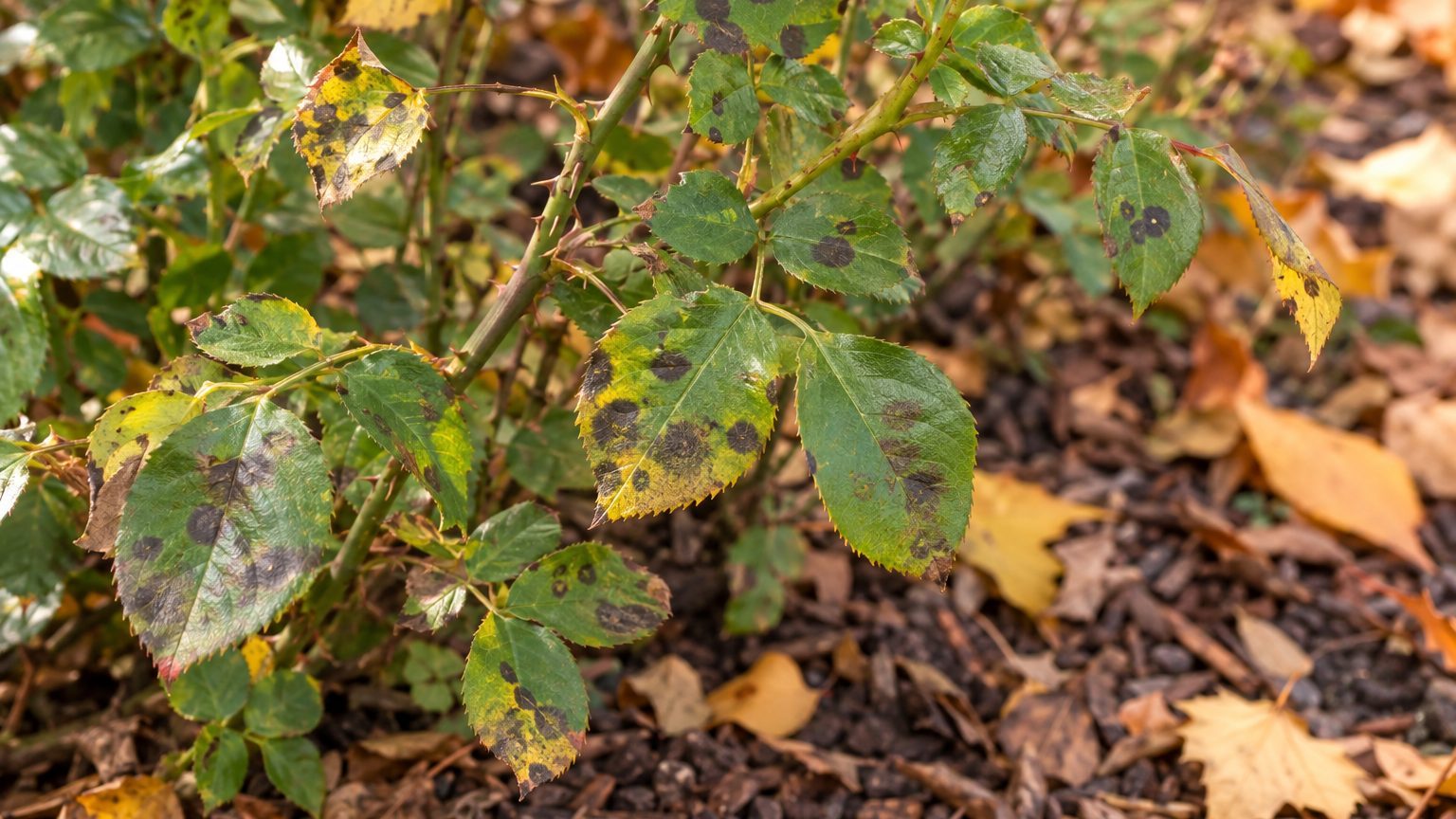
Dark blotches on rose leaves, ringed in yellow, usually show up when the weather turns warm and damp. Soon the lower leaves start dropping, and the bush looks thin by the time the blooms should be at their best. Black spot is a fungal disease of roses, and it can be slowed down once you know how it works.
Black Spot: What You See

The signs show up on the leaves first, and the pattern of dark lesions with yellow around them is what sets this disease apart.
- Dark lesions mark the leaves, and the tissue around each one often turns yellow.
- Leaves are the part of the plant that suffers most, so the damage usually begins there.
- Stipules, the small leaflike growths at the base of a leaf stalk, can carry spots too.
- Pedicels, the slender stalks that hold the flowers, can be infected as well.
- Spots can also turn up on peduncles, hips and sepals, so look at the flower parts, not only the foliage.
- Severe leaf drop happens on the most susceptible roses, leaving bare, weakened canes.
A bush that loses its leaves loses the energy to bloom well, so spotted leaves deserve attention as soon as you see them.
From the almanac
Roses in your state
The dates on this page depend on where you live. Your state's page carries its frost dates, its USDA zones and the year laid out month by month.
Northeast
Southeast
- Alabama
- Arkansas
- Delaware
- Florida
- Georgia
- Kentucky
- Louisiana
- Maryland
- Mississippi
- North Carolina
- South Carolina
- Tennessee
- Virginia
- West Virginia
Midwest
Southwest
West
Pacific Northwest
Canada
Black Spot or Something Else?
Not every spotted or yellow rose leaf has black spot. Yellowing alone is common and has many causes, so it cannot identify black spot.
Look at where the color sits on the leaf and what else is going on around it. Check the lesion pattern and the rest of the plant before choosing a treatment.
| Looks like | How to tell them apart |
|---|---|
| Yellow leaves from poor feeding or watering | Poor feeding or watering may cause yellowing without the dark, feathery-edged lesions typical of black spot. |
| Leaf damage from mites or other insects | Tiny speckles or stippling show up, and a close look at the leaf underside with a hand lens turns up the pests themselves |
| Other leaf spot diseases | Other leaf spot diseases can look similar, so check for black spot’s feathery margins and yellowing around lesions. |
When the signs do not add up, get a diagnosis before choosing a treatment.
What Causes Black Spot, and Where It Is Worst
A fungus called Diplocarpon rosae causes black spot. It attacks only roses, so it will not jump to the other shrubs and flowers in the yard.
The infection cycle starts when rain or overhead sprinklers splash spores from infected leaves or canes left over from the previous season onto new growth. The spores must stay wet for several hours before they can get into the plant.
Conditions that favor the disease are warm and humid, with temperatures in the comfortable warm range that suits the fungus best. In South Dakota, leaf wetness of 6 hours or more favors black spot. Spores require at least 7 hours of wetness before they can germinate.
Black spot is found wherever roses are grown, so no region is free of it. Where warm, wet weather is common, it is considered the most serious rose disease.
How to Treat Black Spot
Treatment starts with cleanup and with changing how the bush gets wet. Work in this order.
- Pick off spotted leaves and bag them, so that the spores on them cannot be splashed onto healthy growth.
- Clear fallen leaves from the soil under the bush, since infected debris is where the next round of spores comes from.
- Water at the base of the plant and avoid wetting the leaves, because the fungus needs wet foliage to infect.
- Stay away from the plants when the foliage is wet, so that your hands and tools do not carry spores from leaf to leaf.
- Thin crowded stems to open the center of the bush, so that air can move through and leaves dry faster after rain or dew.
Once symptoms appear, black spot is hard to control. That is why protecting new growth matters as much as cleaning up the old.
How to Prevent Black Spot Coming Back
Prevention follows the season, because the spores wait on old leaves and canes until wet weather returns.
- In early spring, rake out old leaves around the base and look over the canes for last season’s spots, since that is where the new infection cycle begins.
- Before the weather warms and growth gets going, check the site. Give roses sun and keep large shrubs or trees from shading them.
- As new leaves open, water at the soil line in the morning and switch off overhead sprinklers, so that spores are not splashed upward onto fresh growth.
- Through the warm, humid stretch of summer, prune out crowded stems so that air keeps moving, and keep your hands off the plants when the leaves are wet.
- When you feed the bush, skip high-nitrogen fertilizer. Fertilize only as a soil test indicates.
- After the leaves drop in fall, rake them up and throw them out, so that infected debris does not sit under the bush all winter.
Removing infected debris and keeping leaves dry both help disrupt the infection cycle.
Where This Comes From
Black spot comes from fungal spores spread by rain or overhead irrigation from leaves or canes infected the previous season.
Common Questions
Can Black Spot Kill a Rose?
It can weaken one badly. Left unmanaged, black spot lowers the vigor and bloom of a rose, and it reduces the quality and life span of roses grown outdoors.
Can Black Spot Spread to Other Plants in the Yard?
No. The fungus is a parasite specific to roses, so your other shrubs and flowers are not at risk from it, though every rose nearby is.
Do Some Roses Never Get Black Spot?
Almost none escape. The disease affects nearly all rose cultivars worldwide, though the leaf loss is worst on the most susceptible ones.