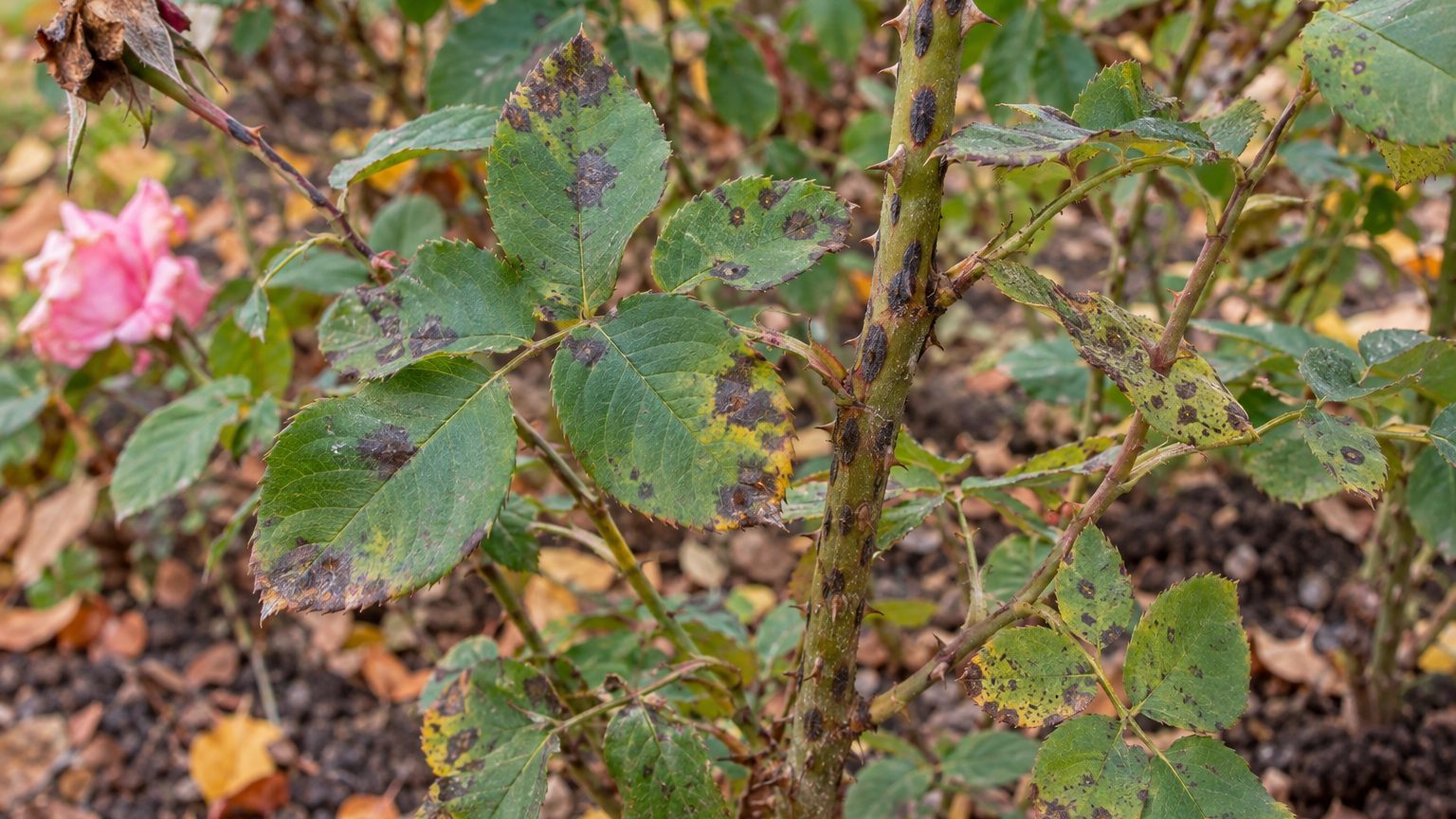
Small dark spots on rose leaves in a wet spring, with centers that later drop out and leave tiny holes, point to anthracnose. The fungus slows the plant down and, left alone, can strip a bush of leaves. Catching it early and cleaning up around the bush keeps it manageable.
Anthracnose: What You See

The leaf spots are the first thing you notice, and they change as they age.
- Centers of the spots turn gray or white and fall out, leaving a shot-hole look, and the spot edges stay smooth.
- Young spots start out red, or sometimes brown to purple.
- Spots are dark purple to black, ringed by a narrow, dull-brown band.
- Small fruiting bodies may show up in the middle of a spot before the center drops.
- Similar spots form on the canes.
If the disease is left untreated, the leaf loss can become severe.
From the almanac
Roses in your state
The dates on this page depend on where you live. Your state's page carries its frost dates, its USDA zones and the year laid out month by month.
Northeast
Southeast
- Alabama
- Arkansas
- Delaware
- Florida
- Georgia
- Kentucky
- Louisiana
- Maryland
- Mississippi
- North Carolina
- South Carolina
- Tennessee
- Virginia
- West Virginia
Midwest
Southwest
West
Pacific Northwest
Canada
Anthracnose or Something Else?
Black spot is the usual confusion, since both put dark marks on rose leaves and the same control steps work on either. The difference is in what happens to the middle of each spot.
Check the edges and centers across the affected foliage before deciding.
| Looks like | How to tell them apart |
|---|---|
| Black spot on leaves | Spots on black spot stay in place and often have fringed edges. Anthracnose spots are smooth edged, and the gray centers drop out. |
| Shot-hole damage from other causes | Anthracnose holes follow gray or white centers with a dark red margin and sometimes tiny fruiting bodies in the middle. Holes without that earlier spot stage point elsewhere. |
Spot anthracnose, the shot-hole form, tends to matter less unless the weather is very hot, too hot for black spot to thrive.
What Causes Anthracnose, and Where It Is Worst
A fungus called Elsinoe rosarum, formerly Sphaceloma rosarum, causes rose anthracnose. It lives on infected plant tissue, including cane spots, and moves to new growth when conditions suit it.
The disease spreads during extended wet weather when temperatures are moderate. Extended wet weather with moderate temperatures favors the disease.
Wet weather and moderate temperatures give the fungus its chance.
How to Treat Anthracnose
Treatment follows the same steps used against black spot, and you work from the plant outward.
- Remove spotted leaves and any fallen ones, so that fungus left on them cannot reinfect the bush.
- Cut out cane spots on affected stems, so that the fungus living there stops feeding new growth.
- Bag the debris and put it in the trash, because leaving it in a pile near the roses keeps the source close.
- Water at the base of the plant, so that leaves dry quickly and stay unfriendly to the fungus.
- Follow the black spot control routine, since those procedures also control anthracnose.
- If you use a pesticide, it must be labeled for black spot or anthracnose, whichever disease you are treating.
Black spot control procedures also control anthracnose, but the pesticide label must still match the disease being treated.
How to Prevent Anthracnose Coming Back
Good sanitation is an important part of prevention.
- Check the canes for spots before leaves open and clear away any debris from last season.
- As new leaves unfold, scan them regularly for the first red or purple spots, since early removal keeps the fungus from building.
- During wet spells in spring, avoid overhead watering and give each bush room for air to move through.
- Through summer, keep picking off spotted leaves and keep the ground beneath the bush clean.
- Rake up every fallen leaf and discard it rather than composting it.
Keep infected leaves and cane spots out of the garden as part of good sanitation.
Where This Comes From
Rose anthracnose comes from the fungus Elsinoe rosarum, formerly Sphaceloma rosarum. It spreads during extended wet weather when temperatures are moderate.
Common Questions
Can a Rose Recover from Anthracnose?
Yes, when the leaf loss is caught early and the bush is cleaned up. Untreated, the disease can cause severe defoliation, which is hard on the plant.
Does Anthracnose Affect the Canes as Well as the Leaves?
It does. Spots similar to the leaf spots form on the canes, so check the stems along with the foliage.
Should You Use the Same Spray for Black Spot and Anthracnose?
Treatment is the same, but any pesticide must be labeled for black spot or anthracnose, whichever disease you are treating.