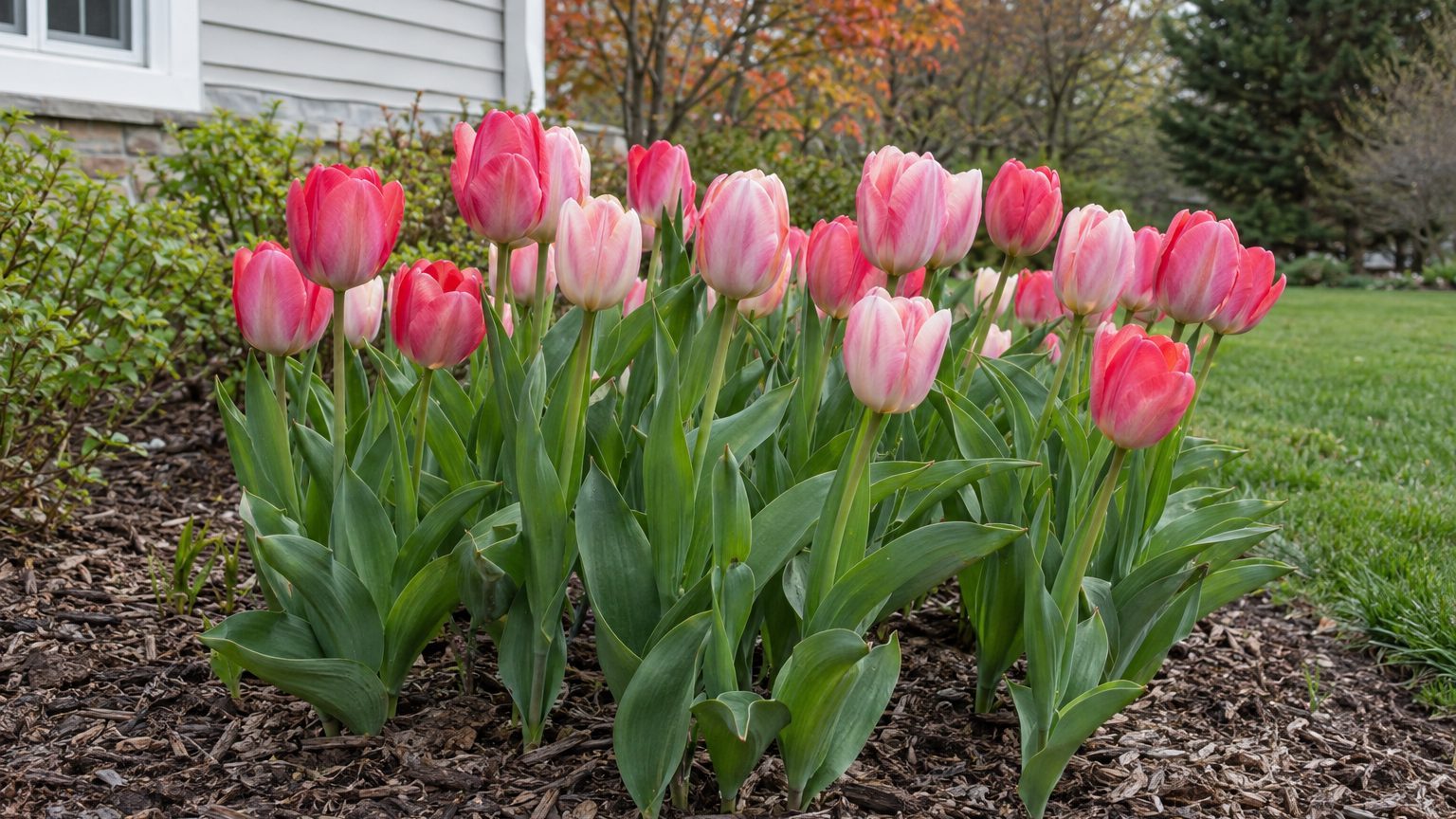
A row of tulips on strong, medium-length stems, each topped with a cup-shaped bloom, is what a Triumph tulip delivers in spring. The bulbs go in the ground in fall and ask little of you until then.
What Is the Triumph Tulip?
Triumph tulips belong to Division 3, a group that makes cup-shaped flowers on strong, medium-length stems. The sturdy stems matter in a front bed, because blooms stay upright instead of leaning over in spring wind and rain.
Plants average 10 to 16 inches tall, which puts them in the middle of a border, taller than a dwarf bulb and shorter than the tall stems of a cut-flower tulip.
Division 3 is one of the largest tulip groups and offers the widest range of flower colors. That makes it easy to find a shade that suits your house, and to plant a block of one color for a bold effect.
From the almanac
Bulbs in your state
The dates on this page depend on where you live. Your state's page carries its frost dates, its USDA zones and the year laid out month by month.
Northeast
Southeast
- Alabama
- Arkansas
- Delaware
- Florida
- Georgia
- Kentucky
- Louisiana
- Maryland
- Mississippi
- North Carolina
- South Carolina
- Tennessee
- Virginia
- West Virginia
Midwest
Southwest
West
Pacific Northwest
Canada
Where Does the Triumph Tulip Grow Best?
Hardiness zones for this tulip are best read from the tag on the bulb package, then matched to the planting months on your state page. Winter cold is what the bulb needs most, so a zone that gives a real winter is where it settles in.
Give it a spot that gets full sun in spring and soil that drains well. Bulbs sitting in water through the cold months tend to rot, so a raised bed or a gentle slope helps if your soil stays wet.
Tulips planted under deciduous trees often do fine, since the branches are bare when the flowers need light. A bed against a south or west wall warms early and can bring flowers on sooner.
How to Plant and Care for the Triumph Tulip Through the Year
Fall Planting
Plant once the soil has cooled below about 60°F. That gives roots time to form before the ground freezes, yet keeps the bulbs from sprouting in fall. Set each bulb pointed end up, and plant in clumps rather than single file so the color reads from the street.
Winter
Winter does the work for you. Cold sets the bulb up to flower, and a layer of mulch over the bed evens out thawing and freezing. Nothing else is needed until shoots appear.
Spring Bloom
Flowers open on stems that stay upright, and they make good cut flowers for a vase. If you cut stems, leave some foliage on the plant. Once petals fade, pinch off only the spent flowers.
After Bloom
Leave the leaves on the plant until they turn brown, because they feed the bulb for next year. Do not cut or tie them while they are green. Tuck annuals or perennials in front of the tulips to hide the fading foliage.
Summer
Once the foliage has browned and come away easily, the bed can be tidied. The bulb rests underground, so choose neighbors that do not need heavy summer watering, and avoid digging in the spot where the bulbs sleep.
Triumph Tulip Weak Points: Animals, Diseases and Staying Power
Triumph tulips are short-term perennials. Most cultivars bloom for only a few years, so plan to refresh the planting rather than count on a permanent display.
Animals are the other weak point. Voles, squirrels, rabbits and deer all eat tulips, so a bed in open view of wildlife may lose bulbs before it ever flowers.
| Issue | How the Triumph Tulip handles it |
|---|---|
| Voles, squirrels, rabbits and deer | Eaten by all of them, unlike daffodils, which are left alone |
| Return year after year | Short-term perennial, blooming only a few years in most cultivars |
| Forcing in pots | Excellent for forcing |
Forcing is where this tulip pays off even when the garden bed fades. Potted bulbs can be chilled and brought to bloom indoors, which suits a gardener who wants flowers inside before spring arrives outside.
Is the Triumph Tulip Right for Your Yard?
It suits a yard with sun, well-drained soil and a real winter, and it rewards anyone who wants bold color on mid-height stems. It suits less well a yard with heavy animal pressure, or a gardener who wants a bulb that returns without effort.
- If you want flowers for a vase or an indoor display, pot some bulbs for forcing and plant the rest in a sunny bed.
- If deer, voles or squirrels visit often, plant daffodils alongside, since daffodils are left alone and last longer as perennials.
- Before you buy bulbs, open your state page to see which planting months fit your yard.
Common Questions
Can You Plant a Triumph Tulip Bulb That Is Still in the Bag?
Yes. A bulb left in the bag does better planted late than stored over winter, so plant it as long as the ground can be dug.
How Long Do Triumph Tulips Need Cold to Flower?
Most spring-flowering bulbs need about 12 to 16 weeks of cold. Where winters are too mild to give it, tulips are chilled in the refrigerator before planting.
Do Triumph Tulips Need the Same Chilling as Alliums?
Yes. According to Iowa State University Extension, alliums need the cold of winter to bloom, and tulips depend on winter cold, so a mild-winter yard calls for pre-chilled bulbs.