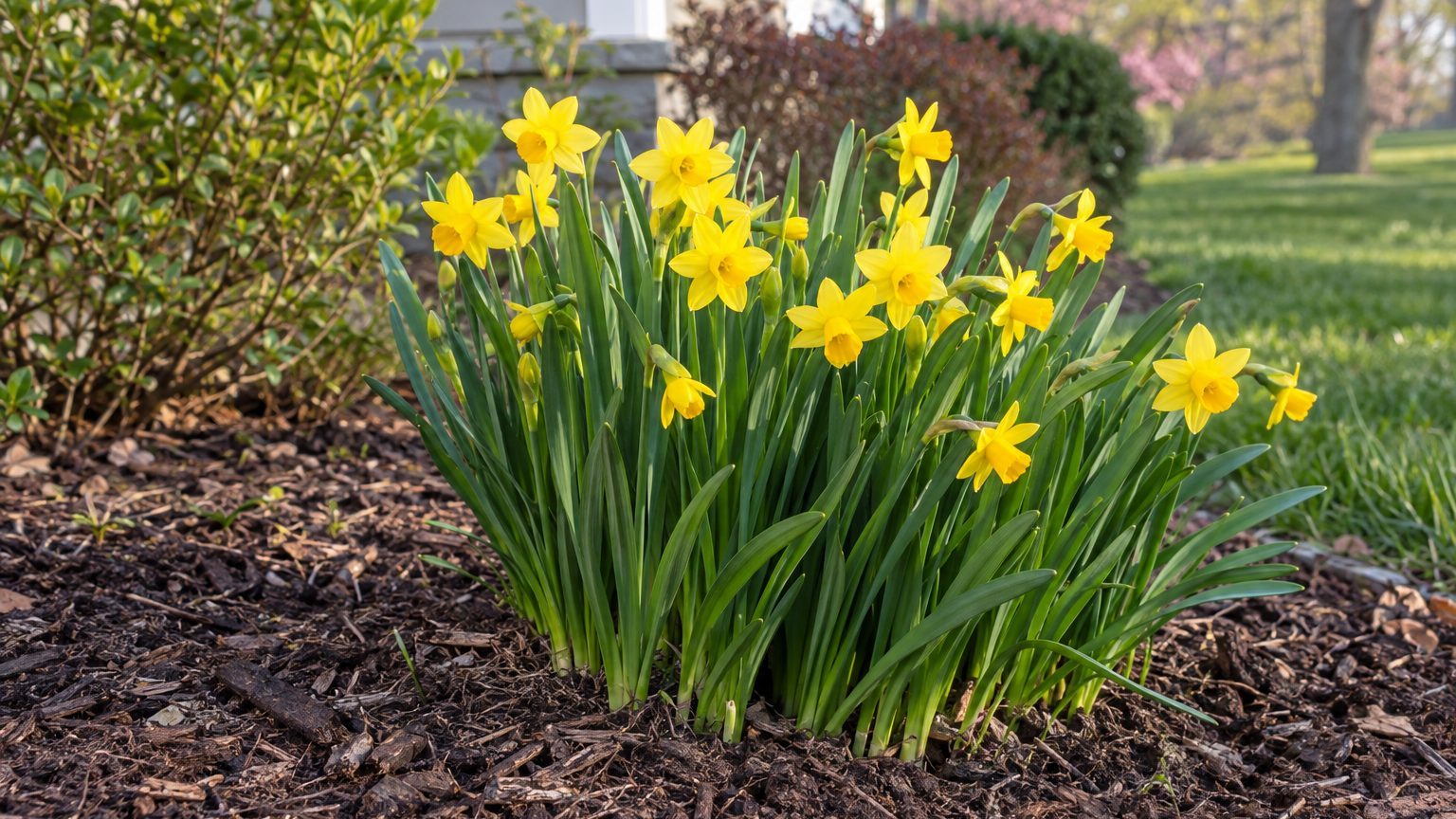
Little gold daffodils on six-inch stems open while the garden still looks mostly brown, and that early color is what draws people to Tete-a-Tete. It is a miniature, reliable bulb that suits front beds, borders and pots.
What Is the Tete-a-Tete Daffodil?
Tete-a-Tete is a dwarf daffodil that stands only about six inches tall. Each stem carries 1 to 3 flowers with yellow petals and a yellow-orange corona. Its low height makes it easy to see at the front of a bed.
A daffodil society places it in Division 12, a miscellaneous class for selections that do not fit the other groups. Its foliage is tidy and only about eight inches long.
In most years, Tete-a-Tete is the first daffodil to bloom, appearing about the first of March. Timing shifts with the local climate, so a cold spring holds the flowers back and a mild one brings them sooner.
From the almanac
Bulbs in your state
The dates on this page depend on where you live. Your state's page carries its frost dates, its USDA zones and the year laid out month by month.
Northeast
Southeast
- Alabama
- Arkansas
- Delaware
- Florida
- Georgia
- Kentucky
- Louisiana
- Maryland
- Mississippi
- North Carolina
- South Carolina
- Tennessee
- Virginia
- West Virginia
Midwest
Southwest
West
Pacific Northwest
Canada
Where Does the Tete-a-Tete Daffodil Grow Best?
In Iowa, Tete-a-Tete is hardy throughout the state, which covers USDA hardiness zones 4 and 5. That confirms the bulb is hardy throughout Iowa.
It is easy to grow in full sun or part shade.
Outside Iowa, check your state page before planting. The plant tag or bulb package will also confirm how a particular lot is rated.
How to Plant and Care for the Tete-a-Tete Daffodil Through the Year
Fall Planting
Plant once the soil has cooled below about 60°F. That gives the roots time to form before the ground freezes, yet keeps the bulbs from sprouting in the fall. Set the bulbs where their low flowers will be easy to see. The package lists the planting depth.
Winter
Winter is the quiet stretch. The bulbs sit underground, and the cold is part of what prepares them to flower. Leave the bed alone, and mark the spot so spring digging or fall planting nearby does not slice into the clump.
Spring Bloom
The small gold flowers open early in the season. The stems are short and sturdy. Plant them where you will notice them from a window or walkway, since they are easy to miss from a distance.
After the Bloom
Remove only the faded flowers and leave the leaves until they turn brown. Let other spring plantings grow up around the fading foliage so it is hidden without being cut.
Summer
By summer the foliage has died back and the bulbs rest below ground. This is a quiet time to think about crowding, since Tete-a-Tete multiplies freely and should be divided every 5 to 10 years.
Tete-a-Tete Daffodil Weak Points: Animals, Diseases and Staying Power
Tete-a-Tete has few weak points in the garden. Animals that raid other bulbs generally pass daffodils by, and the clump grows denser each year rather than fading.
The one thing to manage is its own success. A bulb that multiplies this freely eventually needs more room.
| Issue | How the Tete-a-Tete Daffodil handles it |
|---|---|
| Voles, squirrels, rabbits and deer | Left alone, unlike tulips and crocus |
| Returning each year | Branches freely and makes new bulbs each season |
| Flowering over time | Keeps flowering freely year after year |
| Crowded clumps | Divide every 5 to 10 years |
That makes it a sensible bulb for beds where deer or rabbits have already cleaned out the tulips. Dividing a thick clump also gives you free bulbs to plant elsewhere in the yard.
Is the Tete-a-Tete Daffodil Right for Your Yard?
It suits gardeners who want small, early gold color in a sunny or partly shaded spot and who like a bulb that returns without replanting. It is less suited to anyone wanting tall flowers for cutting or a bold show seen from the street.
- Choose it for the front edge of a bed, along a path or in a container, where six inches of height is an advantage.
- Skip it where you want height and large blooms, and pair it with taller bulbs instead.
- Look up your state page for planting months before you buy, then set the bulbs in the ground when the soil has cooled.
Common Questions
Can You Plant Tete-a-Tete Bulbs That Are Still in the Bag Late in the Season?
Yes. A bulb still in the bag is better planted late than stored over the winter, so plant as long as the ground can be dug.
Do Daffodils Last Longer than Tulips?
Generally yes. Tulips are often short-lived in the garden, while daffodils last longer and are the more reliable perennial bulb.
Does Tete-a-Tete Need Winter Cold to Flower?
Most spring bulbs need about 12 to 16 weeks of cold to flower. Check your state page before planting Tete-a-Tete in a mild-winter area.