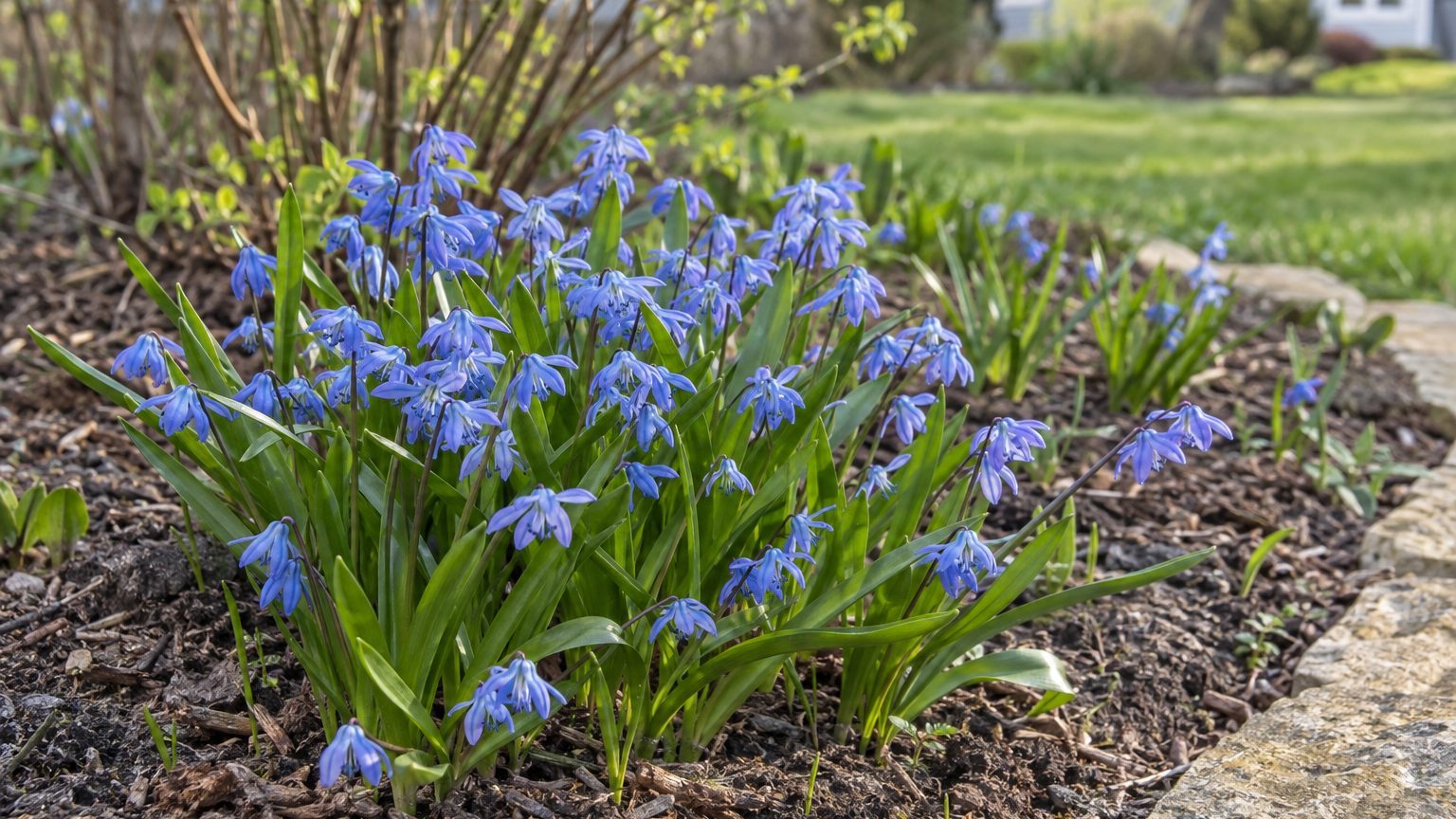
Small blue bells nodding just above bare soil are one of the first signs that the yard is waking up after winter. That is Siberian squill, a spring bulb that settles into lawns and garden beds and comes back on its own. Its bloom time, height, hardiness zones and yearly care are all straightforward once you know how it behaves.
What Is the Siberian Squill?
Siberian squill is Scilla siberica, a small spring bulb grown for deep blue, bell-like flowers that hang from the stalk. Each stalk carries 1 to 3 flowers, and the stems stand 4-6 inches tall, so the blooms sit low and read best in groups.
The leaves are narrow and strap-like. A mature plant carries 3 to 4 of them, each about 6 inches long, and they stay modest enough that the plant never overwhelms its neighbors. The overall height stays under 2 feet.
What sets it apart is how freely it multiplies. It naturalizes by seeds and by bulb offsets, which is why a few bulbs can become a blue carpet across a lawn, a woodland edge or a bed.
From the almanac
Bulbs in your state
The dates on this page depend on where you live. Your state's page carries its frost dates, its USDA zones and the year laid out month by month.
Northeast
Southeast
- Alabama
- Arkansas
- Delaware
- Florida
- Georgia
- Kentucky
- Louisiana
- Maryland
- Mississippi
- North Carolina
- South Carolina
- Tennessee
- Virginia
- West Virginia
Midwest
Southwest
West
Pacific Northwest
Canada
Where Does the Siberian Squill Grow Best?
Siberian squill is listed for hardiness zones 2, 3, 4b, 5a, 5b, 6a, 7, 8. That is a wide spread, and it fits a plant described as extremely cold hardy. Check your zone on a hardiness map before buying bulbs.
It does well in open lawns, along woodland edges and in garden beds. In open areas it spreads rapidly, so give it room where a growing patch will be welcome.
Bloom timing shifts with the climate. In central Iowa, Siberian squill typically blooms in early to mid-April. For the planting months that suit your own area, open the page for your state.
How to Plant and Care for the Siberian Squill Through the Year
Fall
Plant the bulbs once the soil has cooled below about 60°F. That timing lets roots form before the ground freezes, yet keeps the bulbs from sprouting too soon. Scatter them in loose groups rather than rows, since the clumps will fill in naturally.
Winter
Little is needed from you. The bulbs sit underground and take the cold, which suits a plant this hardy. Skip winter fussing and let the soil do the work.
Bloom
Flowers open in early spring, and in central Iowa that means early to mid-April. The show is brief, because flowering normally lasts for 10 to 14 days. Enjoy it up close, since the blooms hug the ground.
After Bloom
Leave the leaves alone until they turn brown, because they feed the bulb for next year. Remove only the faded flowers. Since the plant also spreads by seed, clipping spent flowers before seed forms slows its march if it is already moving faster than you like.
Summer
By summer the foliage has faded and the bulbs rest underground. In a lawn, the leaves have usually browned by the time regular mowing resumes. Established clumps need no watering or feeding to return the next spring.
Siberian Squill Weak Points: Animals, Diseases and Staying Power
Few spring bulbs are as untroubled by wildlife. The plants contain toxic alkaloids, so deer, rabbits, and other herbivores seldom browse on Siberian squill.
Its staying power is also strong. Seeds and offsets keep the colony growing year after year, and that same energy is what can make it a nuisance.
| Issue | How the Siberian Squill handles it |
|---|---|
| Deer and rabbits | Seldom browse it because of toxic alkaloids |
| Cold winters | Extremely cold hardy |
| Spreading | Spreads readily in lawns and gardens and can become a problem |
| Return each year | Naturalizes by seeds and bulb offsets |
Narcissus bulb fly is among the common insect problems for this bulb. Check bulbs before planting and discard any that feel soft or hollow.
Is the Siberian Squill Right for Your Yard?
It suits a yard where you want early blue color that returns without replanting, especially under trees, along edges or scattered through grass. It is a poorer fit where you want every plant to stay exactly where you put it.
- You will find low blue flowers in early spring that last about 10 to 14 days, so plant them where you walk past often.
- Choose another bulb if you want tidy, contained clumps, because squill moves into lawns and neighboring beds.
- Planting months differ from place to place, so open the State by State Garden page for your state before you buy bulbs.
Common Questions
Does Siberian Squill Need a Cold Winter to Bloom?
Most spring-flowering bulbs need about 12 to 16 weeks of cold to flower. Siberian squill is extremely cold hardy, so a freezing winter is no obstacle for it.
What Can You Plant with Siberian Squill?
It pairs well with other early bulbs such as crocus and snowdrops. The blue of the squill sets off their colors against bare, dormant ground.
Can You Still Plant Squill Bulbs That Are Left in the Bag?
Yes. A bulb still in the bag is better planted late than stored over the winter, so plant as long as the ground can be dug.