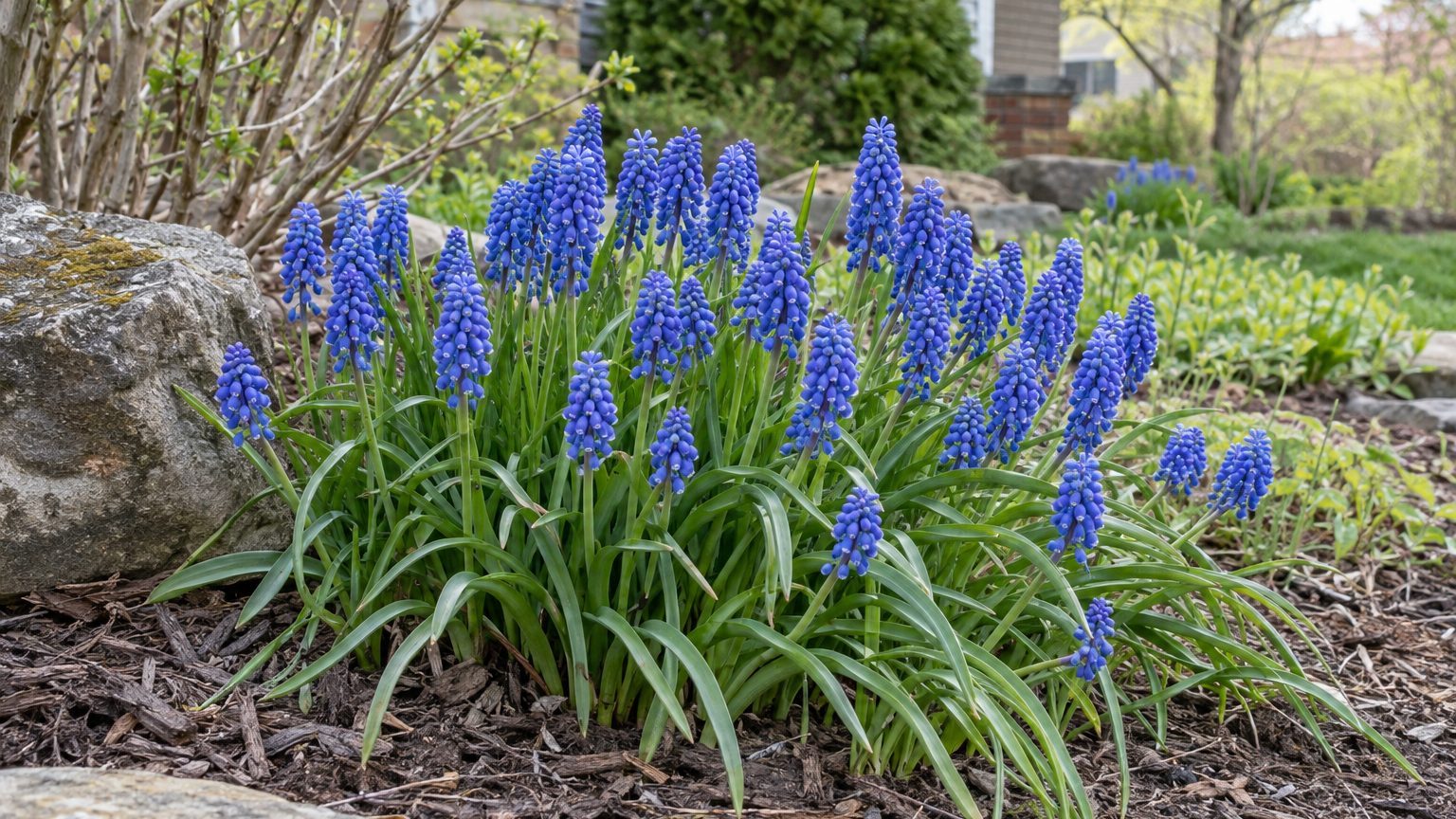
Grape hyacinths show up in early to mid-spring as little blue tufts at the edge of a bed, usually in a crowd rather than alone. They are small spring bulbs that come back each year, and they ask very little once planted. Bloom time, height, zones and yearly care all follow from how the plant is built.
What Is the Grape Hyacinth?
Grape hyacinth is the common name for Muscari, a genus of spring-blooming perennial bulbs in the asparagus family. Despite the name, it is a close relative of the true hyacinth, and the two bloom at roughly the same time of year.
The flowers are tiny, round and densely packed on the stem, usually deep blue and purple, like an upside-down bunch of grapes. Some species and varieties bring white, pink or yellow instead.
A clump measures 6 to 9 inches tall and up to 6 inches wide. That small size is why gardeners tend to plant it en masse for a stronger effect.
From the almanac
Bulbs in your state
The dates on this page depend on where you live. Your state's page carries its frost dates, its USDA zones and the year laid out month by month.
Northeast
Southeast
- Alabama
- Arkansas
- Delaware
- Florida
- Georgia
- Kentucky
- Louisiana
- Maryland
- Mississippi
- North Carolina
- South Carolina
- Tennessee
- Virginia
- West Virginia
Midwest
Southwest
West
Pacific Northwest
Canada
Where Does the Grape Hyacinth Grow Best?
Grape hyacinth is rated for USDA Hardiness Zones 4-8. Within that range it does well in full sun to partial shade, in cool and moist conditions.
Average, well-drained soil suits it. The plant has evolved to go dormant through harsh, hot summers and to emerge in early spring after winter rains, so it settles in where spring is cool and the ground drains rather than stays soggy.
It tolerates summer drought once dormant, but it wants moisture while it is actively growing. If you are not sure which zone your yard sits in, look up your local hardiness zone before planting.
How to Plant and Care for the Grape Hyacinth Through the Year
Fall

Plant the bulbs in fall, once the soil has cooled below about 60°F. That gives the roots time to form before the ground freezes, without pushing the bulbs to sprout too early. Set them in groups so the small flower spikes read as a drift of color.
Foliage often appears in the fall, so green leaves poking up before winter are normal and not a sign of trouble. A bulb still unplanted goes in as soon as the ground can be dug.
Winter

Winter does the work. Most spring bulbs need about 12 to 16 weeks of cold to flower.
Spring Bloom
Flowers open in early to mid-spring, slightly fragrant on some types. Keep the soil moist during this growing season, since the plant likes cool, damp conditions while it is in leaf and flower.
After Bloom
Remove only the faded flowers. Leave the leaves in place until they turn brown, because they feed the bulb for next year’s show.
The plants naturalize over time, so clumps can thicken and spread.
Summer
Summer is the dormant stretch. The plant tolerates summer drought while dormant. Mark the spot or tuck summer annuals nearby, and avoid digging where the bulbs sleep.
Grape Hyacinth Weak Points: Animals, Diseases and Staying Power
Animals mostly leave it alone. The plants are toxic, which lets them flourish without browsing from rabbits, deer and other herbivores. Deer may damage them occasionally, but nothing like what tulips and crocus suffer.
Problems from pests and disease are minor. Aphids and spider mites may appear, and yellow mosaic virus can occur, but there are no serious insect or disease problems.
| Issue | How the Grape Hyacinth handles it |
|---|---|
| Deer and rabbits | Resistant, with only occasional deer damage |
| Insects | Aphids and spider mites may be seen |
| Disease | Yellow mosaic virus can occur |
| Return each year | Naturalizes over time |
| Summer drought | Tolerated while dormant |
Staying power is the strength and the catch. Because it naturalizes readily, grape hyacinth can turn weedy and crowd out other plants, so give it a bed where spreading is welcome rather than next to delicate neighbors.
Is the Grape Hyacinth Right for Your Yard?
It suits gardeners who want low, cool-colored spring drifts that return on their own, in sun or part shade with ordinary, well-drained soil. It is a poor match for a tidy, tightly controlled bed, since it spreads.
- Plant it under shrubs, along walks and in lawn edges where spreading clumps are an asset, setting bulbs in fall once the soil has cooled.
- Skip it beside small, slow perennials that it could crowd out, or pick a spot you can leave to fill in.
- Check the Grape Hyacinth page for your state to confirm zone and planting months before you buy bulbs.
Common Questions
Do Grape Hyacinths Come Back Every Year?
Yes. They are perennial bulbs and naturalize over time, so clumps usually grow larger with each spring.
Are Grape Hyacinths Safe Around Pets and Children?
The plants are highly toxic, which is why animals avoid them. Plant them where dogs, children and grazing pets are unlikely to dig or chew.
Can Grape Hyacinths Grow in the Shade?
They do well in full sun to partial shade. Deep shade is outside the range they are known for, so aim for a spot with some light.