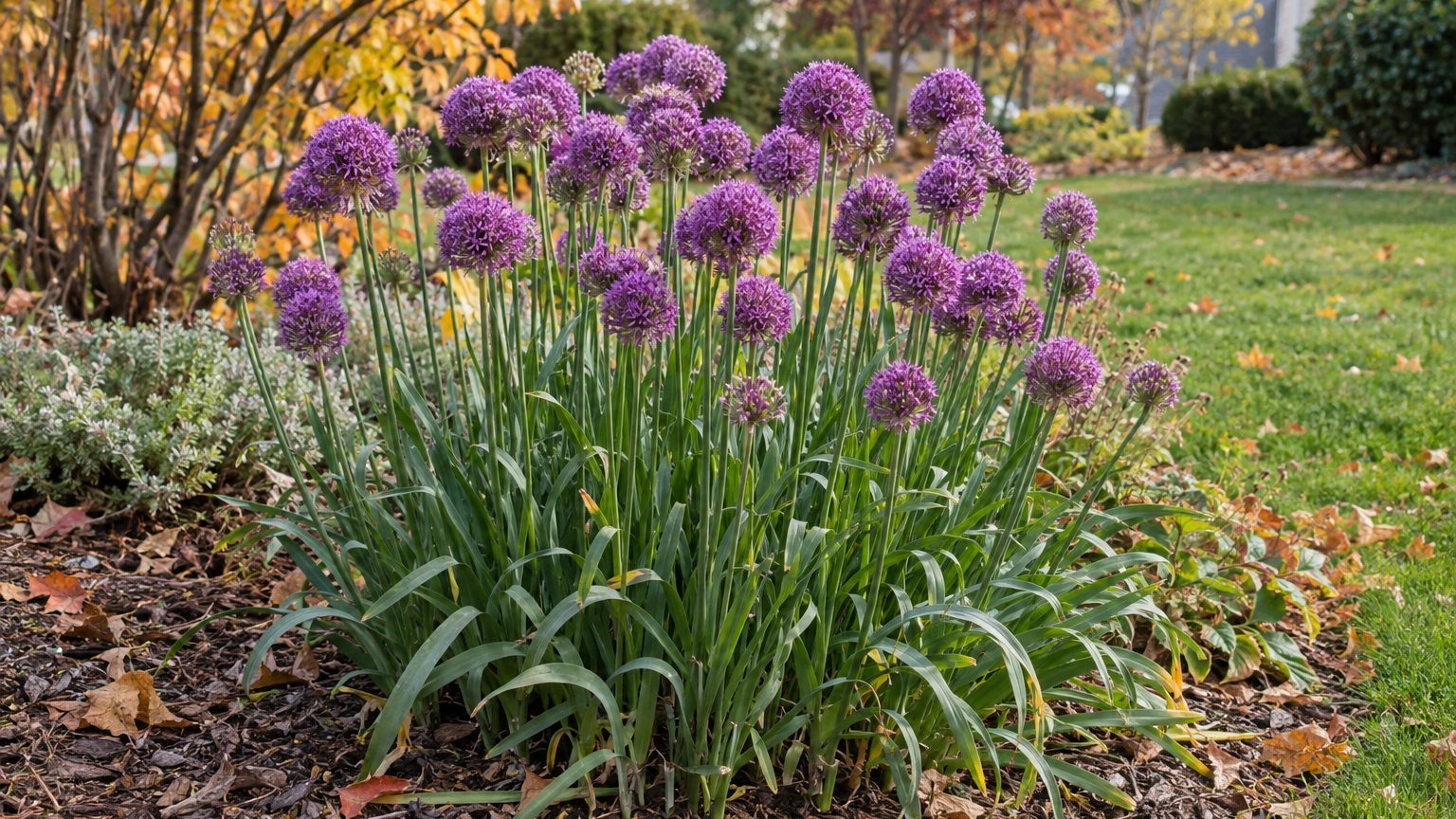
In early summer, small flower heads appear maroon at the base and fade to purple near the top. That is the drumstick allium, Allium sphaerocephalon. It is a small, easygoing ornamental onion, and its bloom time, height, hardiness and yearly care are all simple to plan around.
What Is the Drumstick Allium?
Drumstick allium is an ornamental onion. The flower heads are small, about the size of a quarter, and they open in early summer. Color shifts across each head, maroon at the base fading to purple near the top, which gives the bloom its two-tone look.
The heads average a bit over two inches in diameter and ride on scapes about 20 inches in height. Another measure puts the whole plant at 1 ft. 0 in. to 2 ft. 0 in., a range worth remembering when you choose a spot in a border.
The leaves strongly resemble those of chives and can grow 2 to 3 feet tall. They often stand taller than the flower stems, so the blooms tend to float among the foliage rather than rise clear above it.
From the almanac
Bulbs in your state
The dates on this page depend on where you live. Your state's page carries its frost dates, its USDA zones and the year laid out month by month.
Northeast
Southeast
- Alabama
- Arkansas
- Delaware
- Florida
- Georgia
- Kentucky
- Louisiana
- Maryland
- Mississippi
- North Carolina
- South Carolina
- Tennessee
- Virginia
- West Virginia
Midwest
Southwest
West
Pacific Northwest
Canada
Where Does the Drumstick Allium Grow Best?
Drumstick allium is hardy in USDA zones 4a, 4b, 5a, 5b, 6a, 6b, 7a, 7b, 8a, 8b. According to Iowa State University Extension, alliums need a chill period to bloom. Look up your zone before buying and the match is easy to judge.
Good drainage matters. Plant the bulbs in well-drained soil. Once established, the plant is resistant to drought, which makes it a good neighbor for dry, open spots.
The plant frequently reseeds and forms small colonies in suitable sites, so a good location can reward you with more plants over time. For month-by-month timing in your own state, check your state’s page on this site.
How to Plant and Care for the Drumstick Allium Through the Year
Fall Planting
Fall is the time to plant these bulbs. Wait until the soil has cooled below about 60°F, which gives roots time to form before the ground freezes without tempting the bulbs to sprout early. Set each bulb 2 to 4 inches deep in well-drained soil.
Winter
Winter asks nothing of you. Alliums need the cold of winter to bloom, so a mild winter can hold the flowers back the way it can with tulips and hyacinths. The bulbs rest underground, and the roots keep settling in.
Bloom
Flowers open in early summer, which is later than most spring bulbs. In the leaf stage before bloom you will notice the chive-like foliage, which can reach 2 to 3 feet. Let the heads stand in the garden and enjoy the color shift from maroon to purple.
After Bloom
When the flowers fade, remove only the faded heads. Leave the leaves on the plant until they turn brown, because they are feeding the bulb for next year. If you want seedlings, leave some heads in place, since the plant frequently reseeds.
Summer
By summer the foliage is browning and the plant is going dormant. Once the leaves have turned brown, you can tidy them away. The plant is drought resistant. Mark the spot or tuck in summer perennials nearby, so you do not dig into the bulbs by accident later.
Drumstick Allium Weak Points: Animals, Diseases and Staying Power
This is a low-trouble bulb. Animals that devour tulips and crocus mostly leave it alone, and serious insect or disease problems are not expected. That suits a yard where deer visit or where past plantings vanished overnight.
Staying power comes from the plant itself. It spreads by bulblets and by self-seeding, yet it is not considered aggressive, so a clump grows gradually rather than taking over a bed.
| Issue | How the Drumstick Allium handles it |
|---|---|
| Deer | Resistant |
| Other animals | Normally not susceptible |
| Insects | No serious problems |
| Disease | No serious problems, though downy mildew may occur |
| Drought | Resistant |
| Spread | Bulblets and self-seeding, not aggressive |
Downy mildew is the one disease to watch for.
Is the Drumstick Allium Right for Your Yard?
It suits a gardener who wants a bloom that arrives after the spring bulb rush in a yard with well-drained soil. It is a poor fit where soil stays soggy, or where you want a single tidy clump that never seeds.
- You will find small purple and maroon heads in early summer, on stems about 20 inches tall, so plan the spot in fall when the bulbs go in.
- You will find chive-like leaves that brown after bloom, so place the plants where neighboring perennials can cover the fading foliage.
- Open your state’s page on this site to check the planting months for your area before you buy bulbs.
Common Questions
Can You Plant Drumstick Allium Bulbs Late?
Yes. A bulb still in the bag is better planted late than stored over the winter, so plant as long as the ground can be dug.
Do Drumstick Alliums Make Good Cut Flowers and Attract Butterflies?
They are considered a good cutting flower, and they attract butterflies.
Is Drumstick Allium a Good Swap for Tulips That Fade Out?
Tulips are often short-lived in the garden, while this allium spreads by bulblets and seed. It also blooms at the end of the spring bulb season, so it fills a gap tulips leave behind.