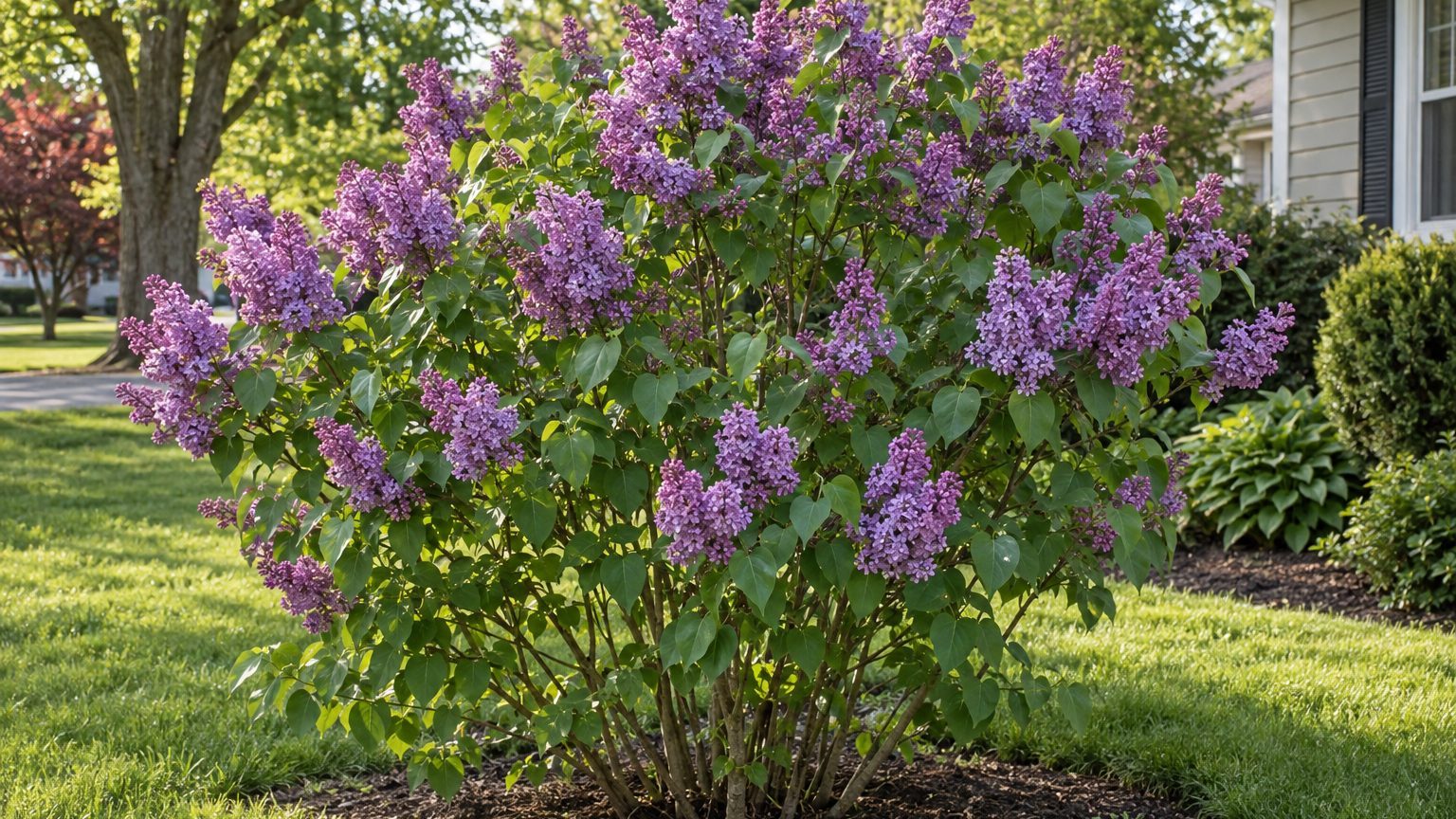
A lilac covered in pink to purple clusters, with fragrance reaching the sidewalk, is one of the plain pleasures of spring. Ludwig Spaeth is a common lilac that gives you that show on a shrub of manageable size.
What Is the Ludwig Spaeth Lilac?
Ludwig Spaeth is a cultivar of Syringa vulgaris, the common lilac. It grows as an upright, multi-stemmed shrub that reaches about 10 ft. tall, so it works as a screen or a back-of-the-border plant.
The flowers are pink to purple and open in panicles of cymes. Those clusters are fragrant, which is why the shrub earns a spot near a patio, a front walk or an open window.
Mature width is about 8 ft., and growth is moderate. You will not need to wait forever for it to fill its spot, but it will not outrun the space you give it either.
From the almanac
Lilacs in your state
The dates on this page depend on where you live. Your state's page carries its frost dates, its USDA zones and the year laid out month by month.
Northeast
Southeast
- Alabama
- Arkansas
- Delaware
- Florida
- Georgia
- Kentucky
- Louisiana
- Maryland
- Mississippi
- North Carolina
- South Carolina
- Tennessee
- Virginia
- West Virginia
Midwest
Southwest
West
Pacific Northwest
Canada
Where Does the Ludwig Spaeth Lilac Grow Best?
This lilac is rated for zones 3-7, which covers the cold half of the country well and gets uncertain where winters stay mild and summers stay muggy. Lilacs set flower buds after a real winter chill, so the regions below differ mainly in cold and humidity.
- Upper Midwest: In Minnesota’s Red River Valley and across North Dakota, the cold sits at the hardy end of the range, and the shrub gets the winter it needs.
- Wasatch Front and Colorado’s Front Range: Dry air and cold winters suit lilacs, and the main job is steady watering through the dry season.
- New England: Maine, Vermont and New Hampshire sit comfortably inside the zones, though humid summers invite the leaf problems described further down.
- Gulf Coast: Mild winters and heavy summer humidity fall outside the range, so buds form poorly and the shrub struggles.
The state selector just below this section takes you to the page for your own state, where the local picture is laid out.
How to Care for the Ludwig Spaeth Lilac Through the Year
Bloom

Spring is the payoff. Plant it where you pass often, because the scent is the main reward, and cut a few stems for a vase once the panicles open.
Full sun matters here, since this cultivar does not tolerate full shade. A shaded plant grows leaves and few flowers.
Pruning
Prune right after the flowers fade. Prune lilacs right after they bloom, since cutting later removes the coming bloom.
Remove spent clusters and take out crowded or crossing stems so air can move through the shrub. Good airflow helps with the disease pressure this cultivar tends to face.
Summer
Summer is for keeping the leaves clean and the roots cool. Spread mulch under the canopy, keeping it off the stems, and water at the base rather than over the foliage.
Wet leaves in warm weather encourage the problems this lilac is known for, so give the plant room and avoid crowding it with neighbors.
Fall
Rake up fallen leaves from beneath the shrub and put them in the trash rather than the compost pile. Disease can overwinter in that litter and return in spring.
Fall is also a sound time to plant a new shrub, since the roots settle in before the ground freezes.
Winter
Winter is the season this lilac needs. Leave it uncovered and unfussed over.
In the colder end of its range, a layer of mulch over the root zone helps protect young plants. Established shrubs need no special winter care.
Ludwig Spaeth Lilac Diseases and Weak Points
Disease is the weak point to plan around. This cultivar frequently has disease problems, so site and care matter more than they do with a tougher shrub.
The strengths are more practical. Deer tend to leave it alone, and the plant puts up with some conditions that would trouble other shrubs.
| Threat | How Ludwig Spaeth handles it |
|---|---|
| Disease | Frequently has problems, so give airflow and clean up leaves |
| Full shade | Intolerant, so plant in sun |
| Deer | Resistant |
Pruning for open structure and clearing fallen leaves are the two habits that do the most to reduce disease. A sunny, breezy spot does much of the work before you lift a tool.
Is the Ludwig Spaeth Lilac Right for Your Yard?
It suits a sunny yard with room for a shrub about 10 ft. tall and 8 ft. wide, in a place with a cold winter. It is a poor match for deep shade or for a hot, humid climate.
- If you want fragrance and spring color with modest work, a sunny corner and a yearly prune after bloom are enough.
- If your yard is shaded or sits on the Gulf Coast, look at other shrubs instead.
- Check the page for your state to see how this lilac fits your local climate before you buy.
Common Questions
Are Ludwig Spaeth Lilac Flowers Edible?
Yes, the flowers are edible. Use only blooms from plants that have not been sprayed.
Does Ludwig Spaeth Lilac Attract Pollinators?
It does. The fragrant clusters draw pollinators in spring, which makes it a good companion for a mixed border.
Can Ludwig Spaeth Lilac Grow in Clay Soil?
It tolerates clay soils. Plant it so the crown sits level with the ground and avoid spots where water stands after rain.