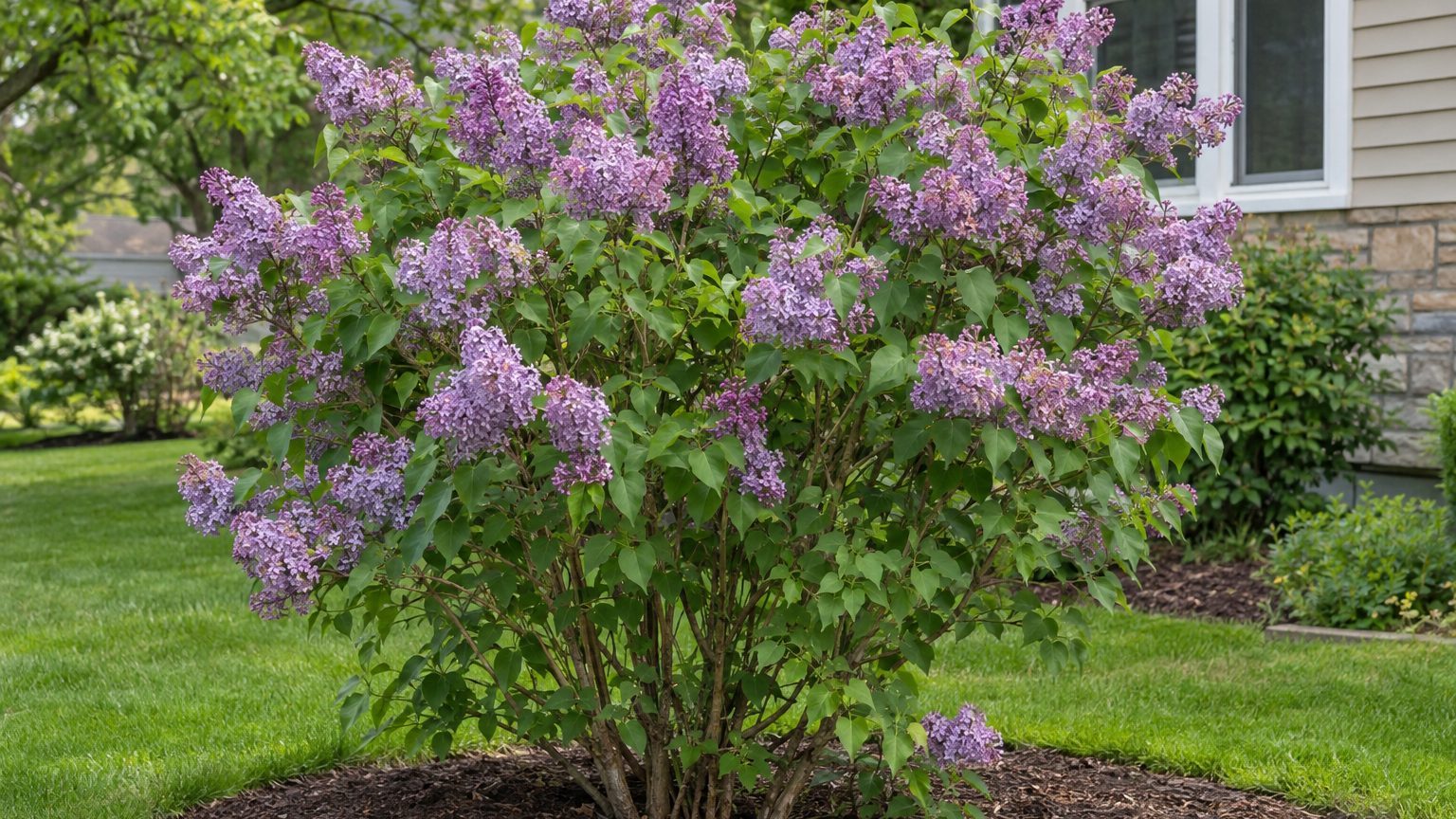
A lilac covered in pink panicles in the middle of June makes a memorable sight. James Macfarlane is a Preston lilac that gives that late show and handles cold well. It suits a homeowner who has room for a tall, upright shrub.
What Is the James Macfarlane Lilac?
James Macfarlane belongs to the Canadian or Preston lilacs, Syringa x prestoniae. These are very hardy hybrids between Late Lilac (Syringa villosa) and Nodding Lilac (Syringa reflexa), and the cold tolerance of those parents shows in how the group behaves through hard winters.
The shrub is deciduous and upright, reaching 8-10 ft tall and 6-8 ft wide. That is a full-sized lilac, so it needs real room rather than a spot beside a doorway.
Rosy-purple buds open to single pink flowers, carried in large pyramidal clusters called panicles. The fragrance is mild.
From the almanac
Lilacs in your state
The dates on this page depend on where you live. Your state's page carries its frost dates, its USDA zones and the year laid out month by month.
Northeast
Southeast
- Alabama
- Arkansas
- Delaware
- Florida
- Georgia
- Kentucky
- Louisiana
- Maryland
- Mississippi
- North Carolina
- South Carolina
- Tennessee
- Virginia
- West Virginia
Midwest
Southwest
West
Pacific Northwest
Canada
Where Does the James Macfarlane Lilac Grow Best?
As a very hardy Preston lilac, this one is suited to cold winters.
- Cold-winter yards: The very hardy Preston lilac is built for cold conditions.
- Cold climates: Hardiness is one of this lilac’s defining traits. Flowers open in the second or third week in June.
- Give this upright, full-sized shrub room to reach its mature size.
The state selector just under this section leads to the page for your state, with local timing for planting and care.
How to Care for the James Macfarlane Lilac Through the Year
Bloom

Flowers usually open the second or third week in June.
Pruning
Check your state page before pruning.
Summer
Use your state page to guide summer care.
Fall
Check your state page for the local planting window.
Winter
James Macfarlane is a very hardy Preston lilac.
James Macfarlane Lilac Diseases and Weak Points
This variety has excellent resistance to powdery mildew.
James Macfarlane is also very hardy.
| Threat | How James Macfarlane handles it |
|---|---|
| Powdery mildew | Excellent resistance |
| Hard winter cold | Very hardy, as a Preston lilac |
Is the James Macfarlane Lilac Right for Your Yard?
It fits a yard with room for an upright shrub that reaches its full mature size. It does not fit a small bed or a tight side yard.
- Choose a spot where its mature width will not crowd nearby plants.
- Pick another shrub if you want fragrance that carries across the yard, since the scent here is mild.
- Open the state page for local planting and pruning guidance.
Common Questions
How Does James Macfarlane Differ from Miss Canada Lilac?
Both are Preston lilacs and usually bloom in the same stretch of June. The pink flowers of Miss Canada are more vibrant, while James Macfarlane has a softer pink.
Where Should You Plant a James Macfarlane Lilac?
Choose a spot with room for its mature width. Keep it far enough from walls, walks and other plants that the branches do not crowd.
Can You Grow James Macfarlane Lilac as a Hedge?
Check local guidance before using it as a hedge.