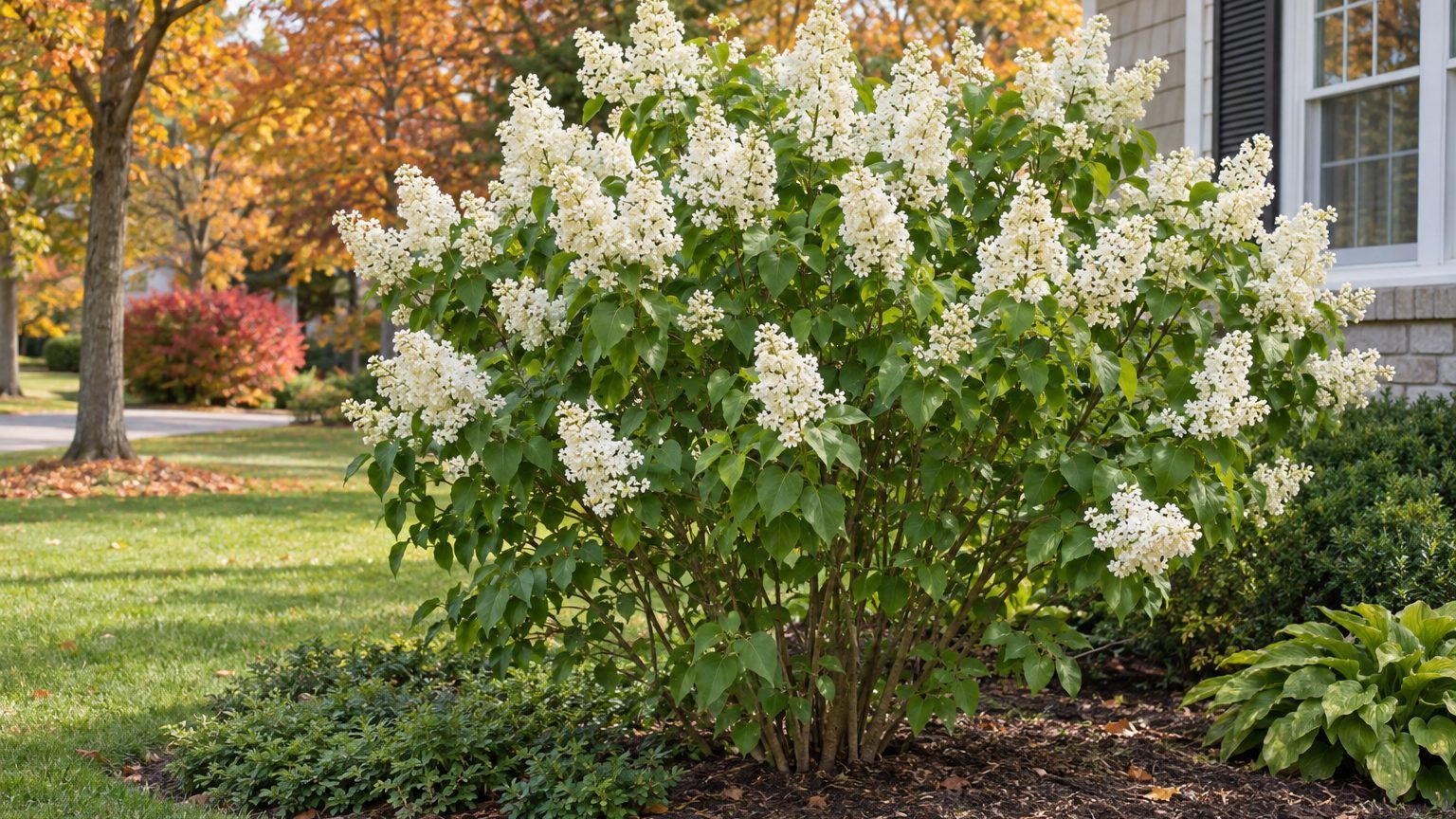
A tree lilac in bloom is dressed in creamy white flowers, and Ivory Silk has a compact, upright form. It is a Japanese tree lilac that grows in USDA hardiness zones 3 to 6.
What Is the Ivory Silk Lilac?
Ivory Silk is a cultivar of Syringa reticulata, the Japanese tree lilac. It grows as a tree with an upright, oval habit and a compact, dense form.
The flowers are creamy white and appear in large numbers. Some people find their scent heavy and unpleasant, closer to privet than to old-fashioned lilac, so it is worth sniffing a blooming tree before you plant one by a window or patio.
For the mature height and spread, check the plant tag at the nursery, since sizes vary a little with growing conditions.
From the almanac
Lilacs in your state
The dates on this page depend on where you live. Your state's page carries its frost dates, its USDA zones and the year laid out month by month.
Northeast
Southeast
- Alabama
- Arkansas
- Delaware
- Florida
- Georgia
- Kentucky
- Louisiana
- Maryland
- Mississippi
- North Carolina
- South Carolina
- Tennessee
- Virginia
- West Virginia
Midwest
Southwest
West
Pacific Northwest
Canada
Where Does the Ivory Silk Lilac Grow Best?
Ivory Silk is hardy in USDA zones 3 to 6. The state selector just below this section takes you to the page for your own state.
- Upper Midwest: a hard winter does not trouble a tree rated down to zone 3.
- New England and the Northeast: cooler hills suit it.
- Ohio Valley and Mid-Atlantic: a spot with morning sun and decent air movement helps.
- Deep South and Gulf Coast: long heat and humidity with too little winter chill make the tree a poor bet.
The tree adapts to a wide range of soils and environments.
How to Care for the Ivory Silk Lilac Through the Year
Bloom

Flowers come in alternate years on this cultivar, so a quiet season is normal and not a sign that something is wrong.
Pruning
A tree that has grown tired or ragged can be cut to the ground to rejuvenate it completely.
Summer
Fall
Winter
The tree is hardy in zones 3 to 6.
Ivory Silk Lilac Diseases and Weak Points
Ivory Silk is a tough tree with a few habits worth knowing. Most of them are about timing and age rather than pests, and each has a simple answer in the yard.
| Threat | How Ivory Silk handles it |
|---|---|
| Winter cold | Hardy in zones 3 to 6, |
| Off years for flowers | Blooms in alternate years, so a quiet season is part of its pattern |
| Old, overgrown wood | Can be cut to the ground to rejuvenate it completely |
Is the Ivory Silk Lilac Right for Your Yard?
It suits a yard with room for an upright, oval tree in USDA hardiness zones 3 to 6. It is a poor match for anyone who dislikes the scent of privet.
- Check the state page for your area to see the planting window and the pruning months that fit your climate.
- Walk by a tree lilac in bloom at a local park or garden center before you buy, and decide whether you can live with the fragrance.
- Pick a spot with open sun and room for the canopy, then mark it and plan to plant in fall.
Common Questions
Will Ivory Silk Lilac Bloom When It Is Young?
Yes. It has a compact, dense form that produces a large amount of flowers even at a young age, which is one reason it is widely planted.
Can You Plant Ivory Silk Lilac in a Difficult Spot?
It adapts to a wide range of soils and environments, so it can work in awkward places where fussier trees fail. Keep the tree inside its hardiness range.
What Does the Bark of Ivory Silk Lilac Look Like?
The bark is cherry-like and mahogany colored, which sets it apart from other lilacs. The color is easy to enjoy in winter, when the branches are bare.