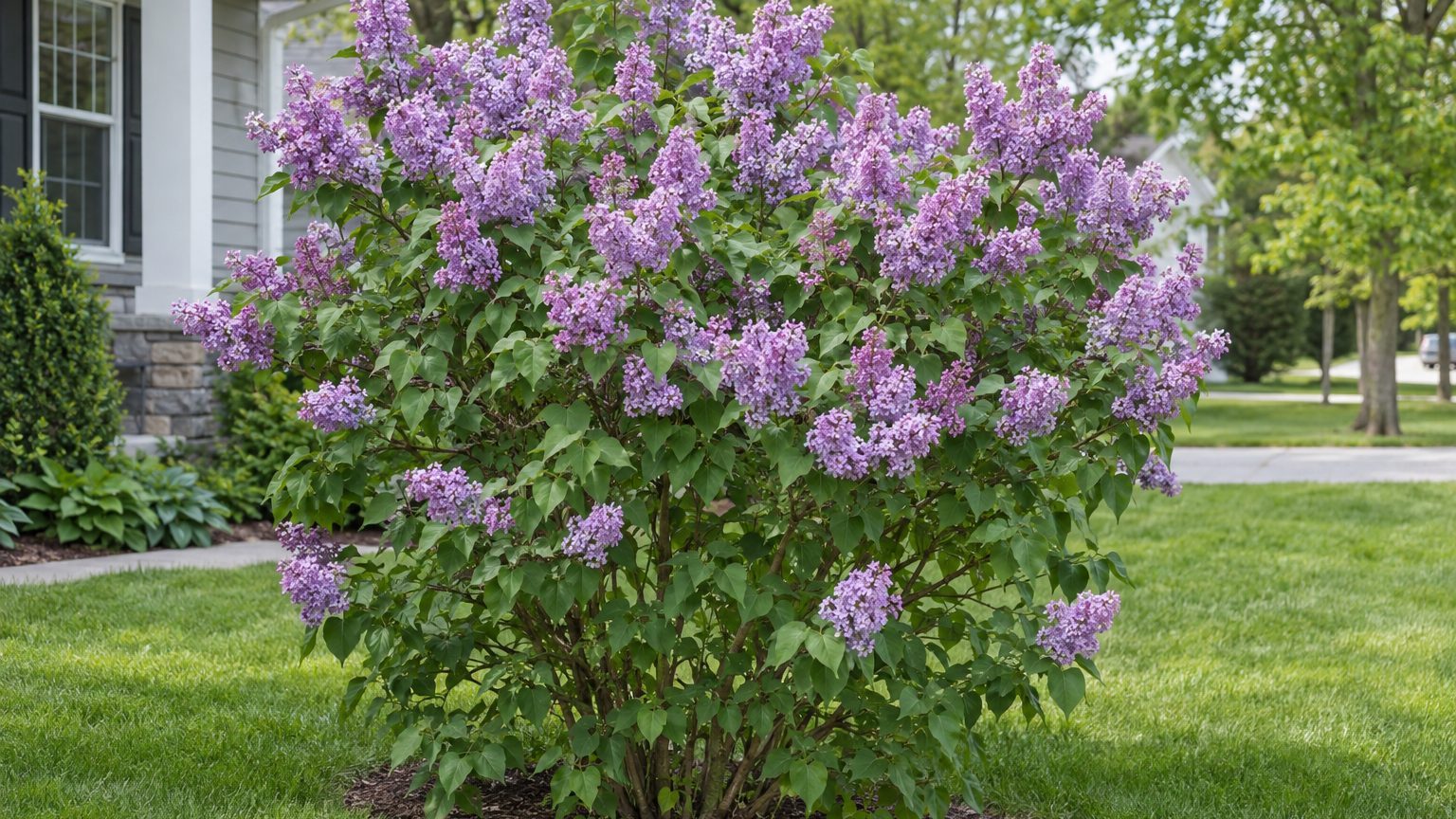
Gardeners in humid regions often want a lilac with stronger resistance to powdery mildew. Betsy Ross is a lilac with increased resistance to powdery mildew.
What Is the Betsy Ross Lilac?
Betsy Ross is a Syringa cultivar with increased disease resistance. It was the first release from a lilac genetic improvement program.
Its breeding starts with Syringa oblata, a lilac collected in China in 1976 and used in the cross that produced it. The resulting cultivar has greater resistance to powdery mildew, the biggest lilac disease problem in the Washington, D.C., area.
Nurseries around the country began testing the plant in 1992. For the mature height and spread, check the plant tag.
From the almanac
Lilacs in your state
The dates on this page depend on where you live. Your state's page carries its frost dates, its USDA zones and the year laid out month by month.
Northeast
Southeast
- Alabama
- Arkansas
- Delaware
- Florida
- Georgia
- Kentucky
- Louisiana
- Maryland
- Mississippi
- North Carolina
- South Carolina
- Tennessee
- Virginia
- West Virginia
Midwest
Southwest
West
Pacific Northwest
Canada
Where Does the Betsy Ross Lilac Grow Best?
Betsy Ross is rated for USDA hardiness zones 5-7.
- Washington, D.C., area and the Mid-Atlantic: Powdery mildew is the biggest lilac disease problem in the Washington, D.C., area. Betsy Ross has greater resistance to powdery mildew.
- Ohio River Valley and the central states:
- Gulf Coast and Deep South:
- Upper Midwest and northern New England:
The state selector just below this section leads to the page for your own state, where the local picture is spelled out.
How to Care for the Betsy Ross Lilac Through the Year
Spring Bloom

Flowering is the payoff, and it depends on the plant getting full sun, which is where this shrub thrives. Choose a site in full sun.
Let the blooms finish on the plant, or cut stems for a vase if you like.
Pruning After Bloom
Check local lilac guidance before pruning Betsy Ross.
Summer
Betsy Ross has greater resistance to powdery mildew.
Keep mulch back from the stems so the bark stays dry.
Autumn
Winter
The cold is part of the plan.
Betsy Ross Lilac Diseases and Weak Points
Powdery mildew is the biggest disease problem for lilacs in the Washington, D.C., area.
Betsy Ross was bred to resist it. That is the reason to choose it over older lilacs in humid regions.
| Threat | How Betsy Ross handles it |
|---|---|
| Powdery mildew | Greater resistance to powdery mildew |
Resistance lowers the risk without removing it. Give it full sun.
Is the Betsy Ross Lilac Right for Your Yard?
This lilac suits a yard with a sunny spot and a climate inside zones 5-7. It is a good match for gardeners who want lilac flowers with greater resistance to powdery mildew.
- It works in a sunny border, as a specimen plant, as a hedge or in a mass planting.
- It is a poor fit for sites without full sun or climates outside zones 5-7.
- Check your state’s page for local timing, then choose a spot that gets full sun.
Common Questions
Where Did the Betsy Ross Lilac Come From?
It came from a lilac genetic improvement program. The cross used a Syringa oblata lilac collected in China in 1976.
Can You Use Betsy Ross Lilac as a Hedge?
Yes. It can be planted as a hedge, as a specimen, as a background shrub in a border, or in a mass planting, as long as the site gets full sun.
When Did Betsy Ross Lilac Become Available?
Distribution to cooperating nurseries throughout the United States began in 1992.