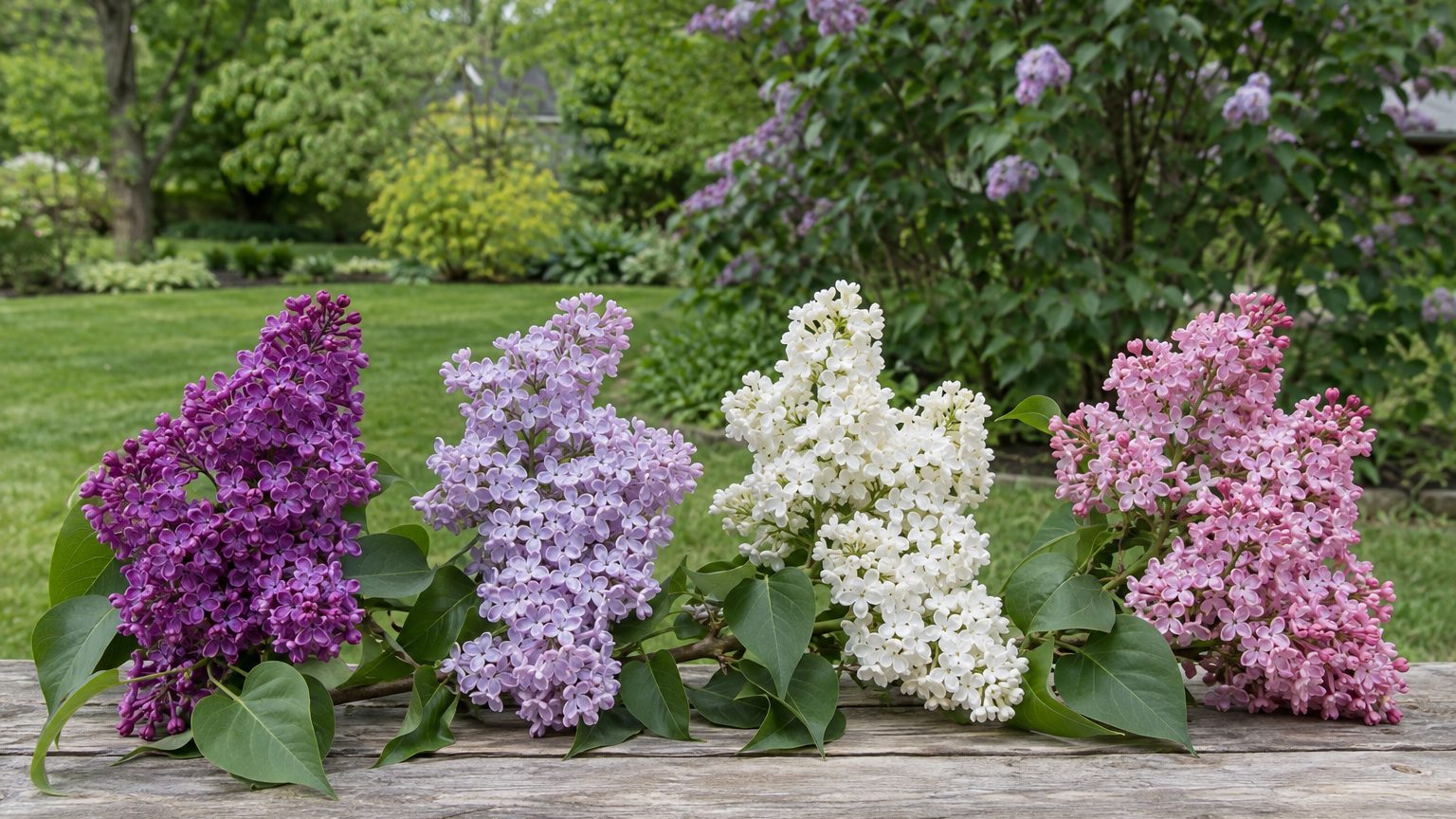
Lilacs open across Nebraska yards from late April into May, and the fragrance carries over the fence. Nebraska winters suit them, so the real choice is which type fits your site, your space and your tolerance for upkeep. These are the lilacs worth planting in Nebraska and how to match them to your yard.
Best Lilacs to Grow in Nebraska

Common lilacs, early hybrids, Meyer lilac and disease-resistant species can all suit Nebraska because its cold winters give lilacs the rest they need to mature their flower buds. Nebraska spans USDA hardiness zones 4a to 5b. They want a sunny site with good air circulation. Hot, humid summers are what trouble them.
Common Lilac

Syringa vulgaris is the lilac most people grow, and it suits Nebraska’s cold winters. The weak point is blight, since most cultivars are susceptible.
If you want this classic shape and scent, look for ‘Edith Cavell’, ‘Glory’, ‘Ludwig Spaeth’ or ‘Pink Elizabeth’, which have been seen with less disease in gardens.
Early Hybrid Lilacs

Hybrids between S. oblata and S. vulgaris are well suited to cold climates. They are vigorous and look much like French hybrids, only earlier.
Early bloom is the catch. Plant them where late spring frosts are less frequent, because a late freeze can take the flowers.
Meyer Lilac
Syringa meyeri is slow growing, with dense foliage and a broadly rounded shape. Its dense, rounded habit makes it easy to place near a patio or along a walk.
Its lavender-purple flowers are fragrant.
Superba
The cultivar ‘Superba’ is heat tolerant and mildew resistant, with dark pink, single flowers. That combination suits a hot, humid Nebraska summer.
Japanese Tree Lilac
Syringa reticulata is often listed as a small tree rather than a large shrub. Give it room overhead and use it as a lawn specimen or a street-side accent instead of a hedge.
Blight-Resistant Species
Lilac blight is difficult to control, so buying resistant plants is the easier path. Some species have shown resistance, including S. josikaea, S. komarowii, S. microphylla, S. pekinensis and S. reflexa.
Ask your nursery for these by botanical name when you want a plant that needs less watching.
Nebraska — the year and the numbers
- State
- Nebraska
- USDA zones
- 4a-5b
- Last spring frost
- April 12 to April 23
- First fall frost
- October 15 to October 26
- Annual rain
- 32 in
- Lawn zone
- cool-season
- Source
- NOAA NCEI U.S. Climate Normals 1991-2020, 32F freeze probabilities · Omaha
How to Choose a Lilac for a Nebraska Garden
Start with the problem your yard poses, not the flower color. Most lilacs are happy in Nebraska winters, so the choice usually comes down to summer humidity, late spring frost, available space and how much attention you want to give.
The rows below match common situations to a type that fits.
| Your situation | What suits it in Nebraska | Why |
|---|---|---|
| Very cold winter | Common lilac or an early hybrid | Nebraska spans USDA hardiness zones 4a to 5b, and early hybrids are well suited to cold climates |
| Hot, humid summer | ‘Superba’ | It is heat tolerant and mildew resistant |
| Little time for upkeep | A blight-resistant species or cultivar | Blight is hard to control, so resistance saves the work |
| Small space | Meyer lilac or ‘Palibin’ | Meyer grows slowly with a rounded shape, and ‘Palibin’ is compact |
| Frost-prone spot in spring | Common lilac in place of an early hybrid | An early bloom makes flowers vulnerable to a late freeze |
| Room for a small tree | Japanese tree lilac | It is often listed as a small tree, not a large shrub |
‘Palibin’ is worth a look for tight spots because it blooms heavily on a compact plant. Its reddish purple buds open to pink flowers.
Which Lilacs Suit Different Parts of Nebraska
Nebraska’s hardiness runs from zone 4a to 5b, and frost timing shifts with the ground you garden on. That changes how much risk an early bloomer carries.
- Omaha and the Missouri River side: At the Omaha reference point, the last spring frost falls April 12 to April 23, and gardens outside the city often see it later. Early hybrids can work here if you choose a sheltered spot.
- The Panhandle: Higher ground brings colder winters and a later last frost than the cities to the east. Favor common lilacs, which bloom later, over early hybrids that open before frost has passed.
Check frost timing in your own county before you commit to an early bloomer.
Lilac Buying Mistakes to Avoid in Nebraska
Skipping Blight Resistance
Most common lilac cultivars are susceptible to blight, and once it sets in, it is difficult to control. You lose foliage and flowers you waited years for.
Buy resistant varieties whenever you plant new lilacs, such as ‘Edith Cavell’ or ‘Ludwig Spaeth’, or one of the resistant species.
Planting Early Bloomers in a Frost Pocket
Early hybrids open sooner than French hybrids, and a late freeze can strip the flowers. The plant survives, but the display does not.
Put them where late spring frosts are less frequent, or choose a common lilac that blooms later.
Buying a Pot Without Knowing Adult Size
A small lilac in a nursery pot can grow into a large shrub, and a Japanese tree lilac grows into a small tree. A plant that outgrows its spot gets pruned at the wrong time.
A lilac blooms on last year’s wood and sets next year’s flower buds in summer, soon after it flowers. Prune in May or June, right after the flowers fade, and not in late summer, fall or winter. Matching the plant to the space from the start, with a Meyer lilac or a compact cultivar for tight corners, keeps the pruning light.
Where to Get Lilac Advice in Nebraska
University of Nebraska–Lincoln Extension [link: https://extension.unl.edu/] publishes lilac selection and pruning guidance written for Nebraska yards, and its county offices can answer questions about your own soil and site.
- Read the extension lilac guides before you shop, so you can name varieties when you reach the nursery.
- Contact your county extension office when a lilac looks unhealthy, and bring a leaf or shoot with you.
- Visit a local garden during bloom, late April through mid-May, to see which lilacs you want in your own yard.
Common Questions
When Do Lilacs Bloom in Nebraska?
Most lilacs flower from late April through May, and later species and cultivars carry into June. Early hybrids open first.
Do Lilacs Need Full Sun in Nebraska?
Lilacs thrive in sunny sites with good air circulation. Give them an open spot, not a cramped corner against a wall.
Can You Cut Back an Overgrown Lilac in Nebraska?
Yes. You can cut the whole plant back close to the ground in late winter, in March or April. The next flowers are the price, since the plant will not bloom for a few years afterward.